

Tamil is one of Singapore’s four official languages, and it has a stage life of its own. Tamil theatre in Singapore ranges from family comedies staged in community halls to experimental works at major arts centres, often with English surtitles so anyone can follow along. Whether you grew up speaking Tamil, are learning it, or simply enjoy live performance, this guide explains the kinds of shows you will find, the groups and festivals that keep the scene going, where performances happen, and how to make your first visit enjoyable.
A Short History of Tamil Drama on Singapore’s Stage
Tamil drama arrived with the communities who settled here from South India in the 19th and early 20th centuries. Early performances drew on traditions such as street theatre and musical drama, staged at temples, community halls and estates, often linked to festivals.
Over the decades, amateur drama societies and later professional companies took shape. Television and radio drama on Tamil-language channels also built audiences and trained a generation of performers and writers. Today the scene blends heritage forms with contemporary Singaporean stories about family, migration, identity and life in a multicultural city. Many works are original scripts by local playwrights, while others adapt Tamil literature or classic plays from around the world.
For background on the wider community, see our guide to the Tamil community and heritage.
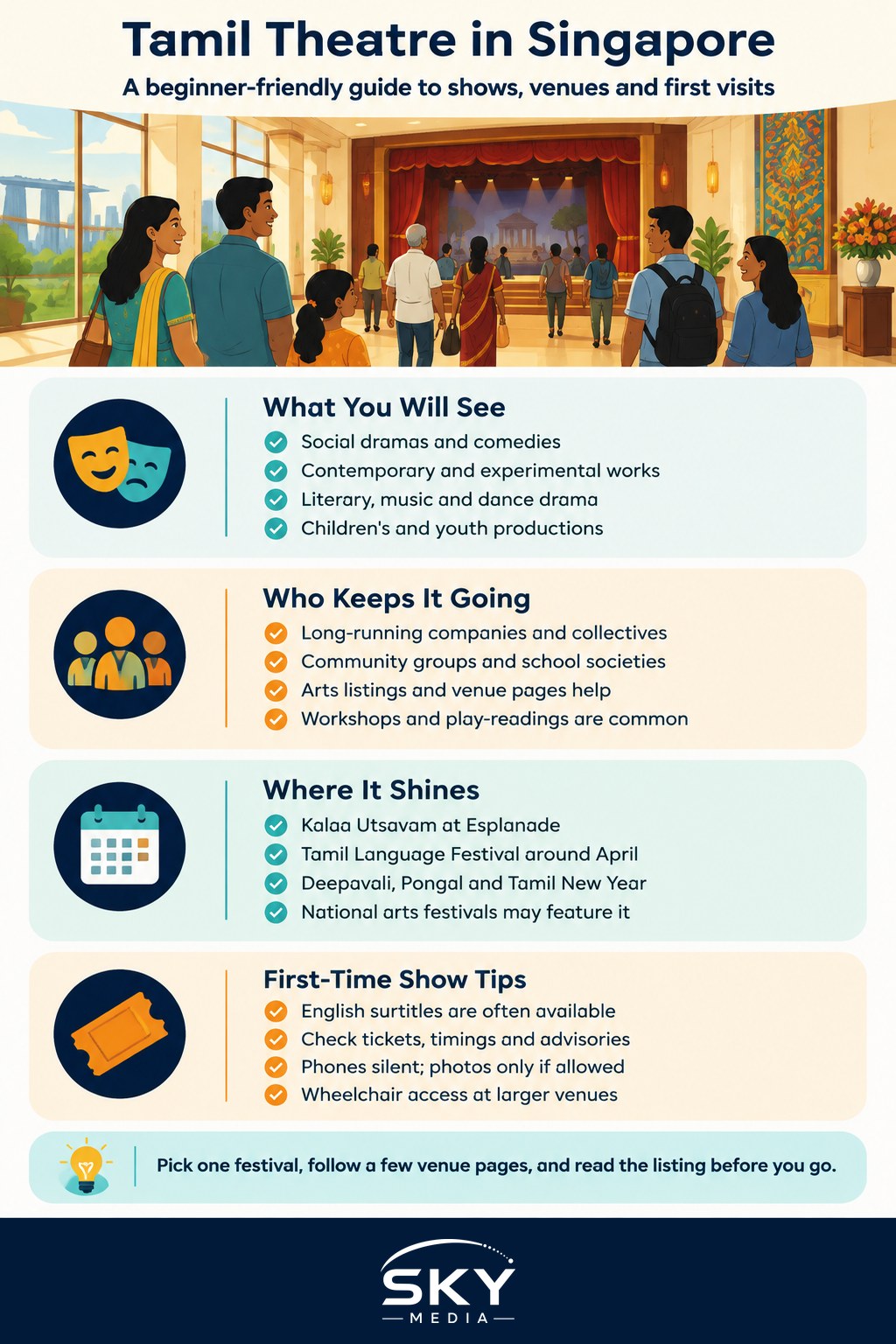
Types of Tamil Theatre You Might See
The range is broader than many newcomers expect:
- Social dramas and comedies: Popular, accessible plays about family life, marriage, generations and everyday Singapore. These often draw multi-generational audiences.
- Contemporary and experimental theatre: Physical theatre, multilingual works and devised pieces that mix Tamil with English, Malay or Mandarin.
- Literary adaptations: Stagings of Tamil epics, poetry and novels, or Tamil versions of world classics.
- Musical and dance drama: Productions that weave in Carnatic music or classical dance forms such as Bharatanatyam to tell mythological or historical stories.
- Children’s and youth productions: School drama clubs, student showcases and family shows that help young people use Tamil creatively. Our guide to children’s theatre and family shows has wider ideas for younger audiences.
Drama Groups and Who Is Behind the Scene
Singapore’s Tamil theatre is sustained by a mix of long-running companies, smaller independent collectives, community groups and school or university drama societies. Some groups have been active for decades and are known for popular social plays; others focus on contemporary, experimental or bilingual work and have toured or collaborated internationally.
The easiest way to discover them is to follow arts listings and the social media pages of major venues, which announce upcoming Tamil productions. Many groups also run acting workshops, play-reading sessions and youth programmes, which are a good way to get involved if you would like to perform, write or work backstage. When choosing a workshop, check the language level expected, the age range, the time commitment and the cost.
Festivals Where Tamil Theatre Shines
Several recurring festivals and seasons are good entry points:
- Indian arts festivals at major arts centres: Esplanade, Theatres on the Bay hosts an annual festival of Indian arts, Kalaa Utsavam, which typically features dance, music and theatre, including Tamil-language work and free outdoor performances.
- Tamil Language Festival: Held annually around April, this community-wide festival promotes the use of Tamil through many events, which often include plays, storytelling and drama for students and families.
- Singapore-wide arts festivals: National arts festivals sometimes commission or feature Tamil or multilingual productions.
- Festive community programmes: Around Deepavali, Pongal and Tamil New Year, community clubs and heritage institutions may stage cultural performances. See Pongal and Tamil New Year in Singapore for what those festivals involve.
Dates, line-ups and ticketing change every year, so check the official festival or venue website for current programmes.
Where Performances Happen
Tamil theatre is staged across venues of very different sizes. Here is what to expect from each kind:
| Venue type | Typical shows | What to expect |
|---|---|---|
| Major arts centres | Professional and festival productions | Ticketed seating, surtitles often available, strict start times |
| Black-box and smaller theatres | Experimental, intimate or new works | Small audiences, close to performers, sometimes free seating |
| Community clubs and halls | Social dramas, cultural nights | Relaxed, family-friendly, often lower-priced or free |
| Heritage centres and outdoor stages | Festival performances and short pieces | Casual, drop-in, good for first-timers and children |
Little India is a natural area to explore around a show, with heritage spaces and plenty of places to eat before or after.
What to Expect at Your First Show
- Language: Many contemporary productions, especially at larger venues, provide English surtitles. Community plays may not, so check the listing if you do not understand Tamil.
- Tickets: Larger venues sell through their official ticketing partners; community shows may sell through the organising group or at the door.
- Timing: Arrive early. Latecomers may be held until a suitable break.
- Etiquette: Phones on silent, no photos or recording unless the company says it is allowed. Applause, laughter and audience reactions are welcome at comedies and musical dramas.
- Dress: Smart casual is fine almost everywhere. Some audience members wear traditional attire, especially at festival performances.
- Age advisory: Check ratings and content advisories before bringing children.
- Talks and post-show dialogues: Some productions hold a short discussion with the director or cast after the performance. These are a friendly way to understand the play’s background, ask questions and meet others in the audience.
- Accessibility: Larger venues usually provide wheelchair seating and lifts. If you need assistance, contact the venue’s box office before the show so staff can help.
Using Theatre to Learn or Practise Tamil
Watching Tamil theatre is an enjoyable way to hear natural, expressive speech. Learners often find it helps to read a synopsis beforehand, watch with surtitles, then try a show without them later. Students taking Tamil in school may also find that plays and drama activities build confidence in speaking. For language support, see learning Malay or Tamil in Singapore.
Getting Started
Pick one festival this year, follow a couple of venue and group pages for announcements, and bring a friend who has never seen a Tamil play. With surtitles and a relaxed community scene, Tamil theatre in Singapore is one of the most welcoming ways to experience the country’s cultural life.
Further reading: Best Black Box Theatres in Singapore for Intimate Shows · Peranakan Theatre and Storytelling in Singapore · Malay-Language Theatre in Singapore: Where to Start