
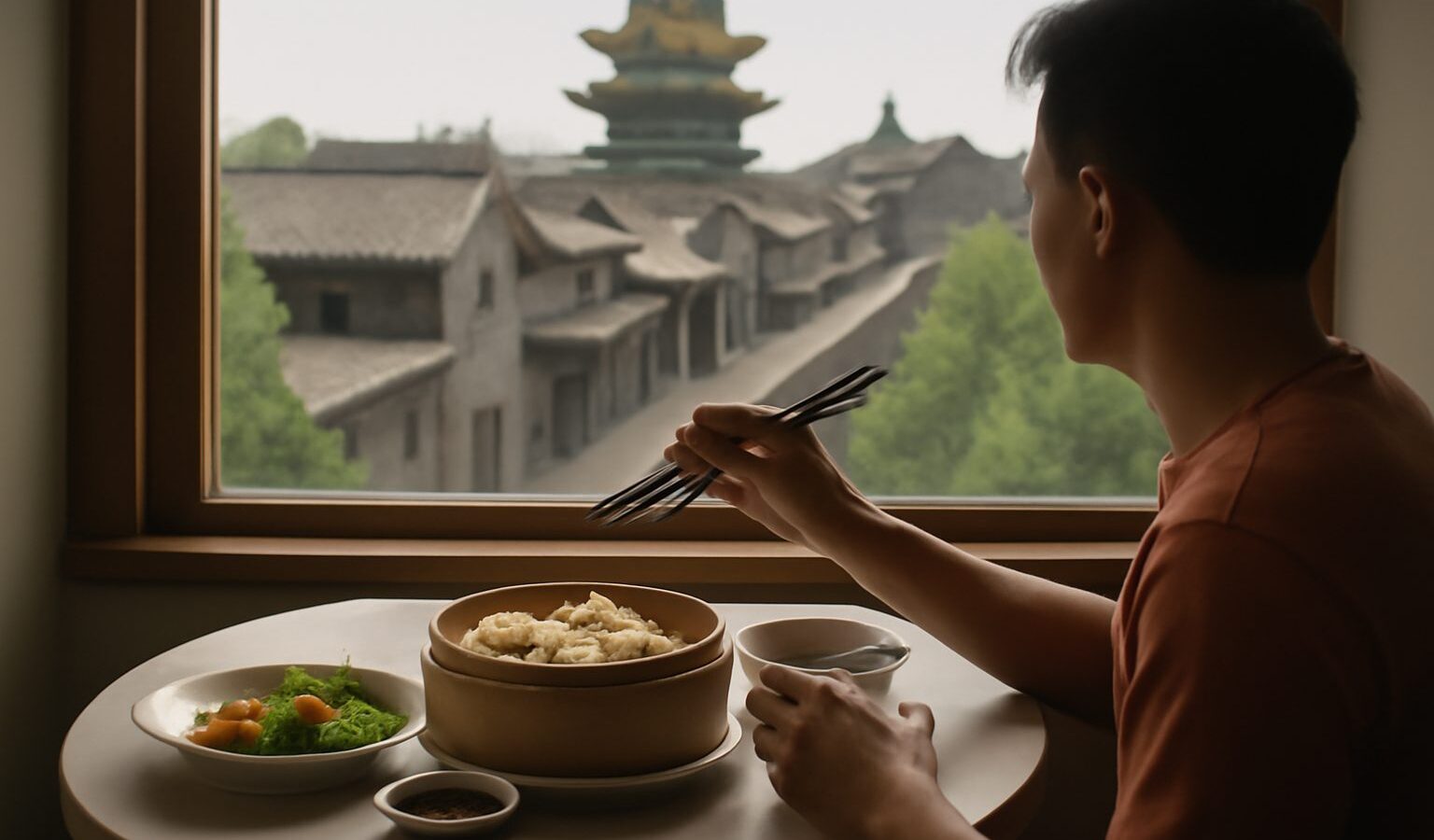
Pingyao is a remarkably well-preserved walled city in China’s Shanxi province, a place where you can walk atop centuries-old ramparts and wander lanes of grey-brick courtyard houses. Once a banking centre that helped shape early Chinese finance, its old town survives almost intact and carries UNESCO World Heritage status. For a Singapore traveller drawn to history rather than skyscrapers, planning Pingyao from Singapore is a step back into an older China.
Getting to Pingyao From Singapore
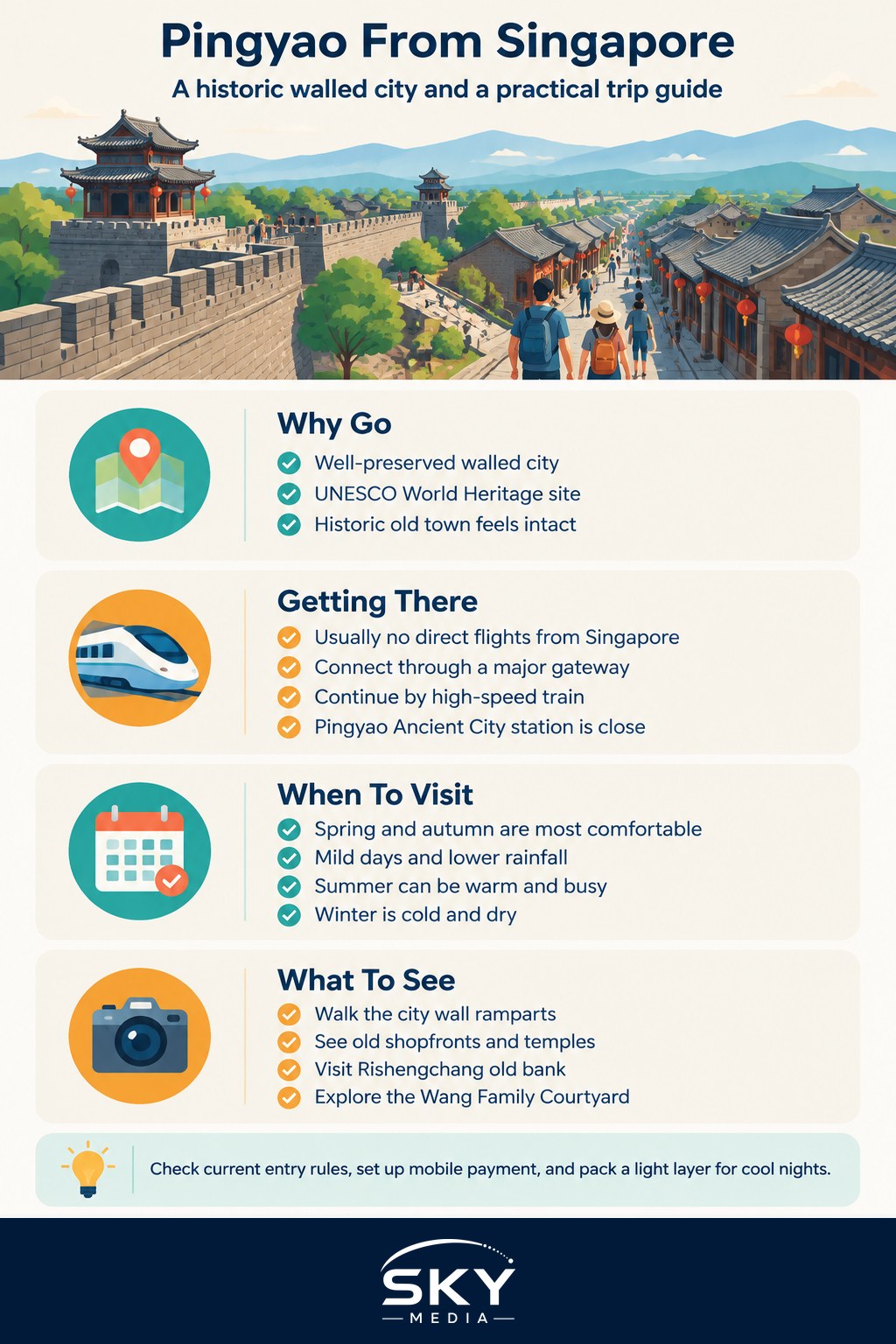
Be realistic about the journey. There are usually no direct flights from Singapore to Pingyao, so you will connect through a major gateway and continue by high-speed rail. Common gateways include Beijing and Shanghai, both connected to Pingyao by China’s fast train network.
From Beijing or another hub you take a high-speed train to Pingyao Ancient City station, which sits close to the old town, then a short taxi or walk brings you to the walls. The provincial capital, Taiyuan, is another rail junction you may pass through. Because routings, train times and flight options change, verify current details yourself rather than trusting a fixed timetable, and our guide to finding cheap flights from Singapore will help with the first leg from home.
Best Time to Visit
Shanxi has a continental climate with real seasons. Spring and autumn are the most comfortable times to visit, with mild days and lower rainfall, ideal for walking the walls and exploring on foot. Summer is warm and can be busy with domestic tourists, while winter is cold and dry, sometimes bitterly so, though a dusting of snow on the old rooftops is atmospheric if you are prepared for the chill. Aim for late spring or early autumn if you want the easiest weather.
Highlights of Pingyao
The city wall is the headline sight, a broad rampart you can walk for long stretches, looking down over the maze of tiled roofs within. Inside, the main streets are lined with old shopfronts, temples and former merchant homes.
The Rishengchang, often described as one of China’s earliest draft banks, tells the story of how Pingyao became a financial powerhouse, with its old counters and strongrooms preserved. The former county government office, or yamen, gives a sense of imperial administration, and several temples and towers punctuate the skyline.
Beyond the walls, the region has more to offer. The Wang Family Courtyard, a sprawling complex of mansions, showcases the wealth of old Shanxi merchants, while the ancient Buddhist grottoes and temples of the wider province reward a longer stay. Evening is a good time to stroll the lantern-lit lanes once the day-trippers thin out.
Food to Try
Shanxi is famous across China for its noodles and its love of vinegar. Try the region’s hand-cut and knife-shaved noodles, served with rich toppings, and taste the aged Shanxi vinegar that locals add to almost everything. Local snacks include steamed buns and various wheat-based dishes, reflecting a cuisine built on grain rather than rice. Small eateries within the walls serve hearty, affordable plates, and the courtyard guesthouses often cook simple regional meals.
Getting Around
The old town of Pingyao is compact and best explored on foot, as its narrow lanes are made for walking. Cycling is also popular, and bicycles or electric carts can help you cover more ground within the walls. For sights outside the town, such as the Wang Family Courtyard, hire a taxi or arrange local transport, and confirm return timings so you are not stranded. Between cities you will rely on the high-speed trains, which are punctual and comfortable.
A Simple Itinerary Idea
Two days suits Pingyao. On day one, walk a long stretch of the city wall, visit the old bank and the yamen, and lose yourself in the lanes, staying overnight in a traditional courtyard guesthouse to soak up the atmosphere after dark. On day two, take a half-day trip to the Wang Family Courtyard or a nearby temple, then continue your journey. Pair it with a bigger China stop, and our guide to building a travel itinerary from Singapore can help you combine it with somewhere like Zhangjiajie.
Practical Tips
China entry rules change, so verify the latest requirements for a Singapore passport with the Chinese embassy and with ICA well before booking, and do not assume a past arrangement still holds. Mobile payment dominates in China, so set that up in advance and carry a little cash as backup. Nights are cool even in warmer months within the thick-walled courtyards, so pack a light layer. Arrange travel insurance before you travel. If your trip mixes warm cities with a cold Shanxi visit, our packing tips for tropical and cold trips will help.
Pingyao offers something rare in fast-changing China, a whole living town that still looks and feels historic. Quiet, walkable and full of character, it is a memorable detour on any China trip from Singapore.
Frequently Asked Questions
When is the best season to visit Pingyao? Spring and autumn are the most comfortable, with mild days and lower rainfall, ideal for walking the walls. Aim for late spring or early autumn for the easiest weather. Winter can be bitterly cold, though snow on the old rooftops is atmospheric.
What is the Rishengchang in Pingyao? It is often described as one of China’s earliest draft banks, and tells the story of how Pingyao became a financial powerhouse, with old counters and strongrooms preserved. It sits among the former merchant homes and shopfronts in the old town.
Is it worth staying in a courtyard guesthouse? Yes, a traditional courtyard guesthouse lets you soak up the atmosphere after dark once day-trippers thin out. Nights are cool even in warmer months in the thick-walled courtyards, so pack a light layer.
How do I get from the station to the old town? Take a high-speed train to Pingyao Ancient City station, which sits close to the old town, so the transfer is simple. A short taxi ride or walk brings you to the walls. The old town is best explored on foot or by bicycle.
What should I eat in Pingyao? Shanxi is famous for noodles and vinegar. Try hand-cut and knife-shaved noodles with rich toppings, taste the aged Shanxi vinegar, and look for steamed buns and wheat-based dishes. Small eateries within the walls serve hearty, affordable plates.
Further reading: Datong From Singapore · Luoyang From Singapore: A Travel Guide