
Singapore does not really have four seasons, but it certainly has a wet one. The year-end monsoon brings heavy, sudden downpours, flooded underpasses, and long spells of poor visibility. A car that copes fine in dry weather can feel unsafe the moment the rain hammers down. A little monsoon car care singapore drivers do before the wet season sets in makes the difference between white-knuckle driving and staying calm and in control. This guide walks through the checks that matter most.
Start with your tyres
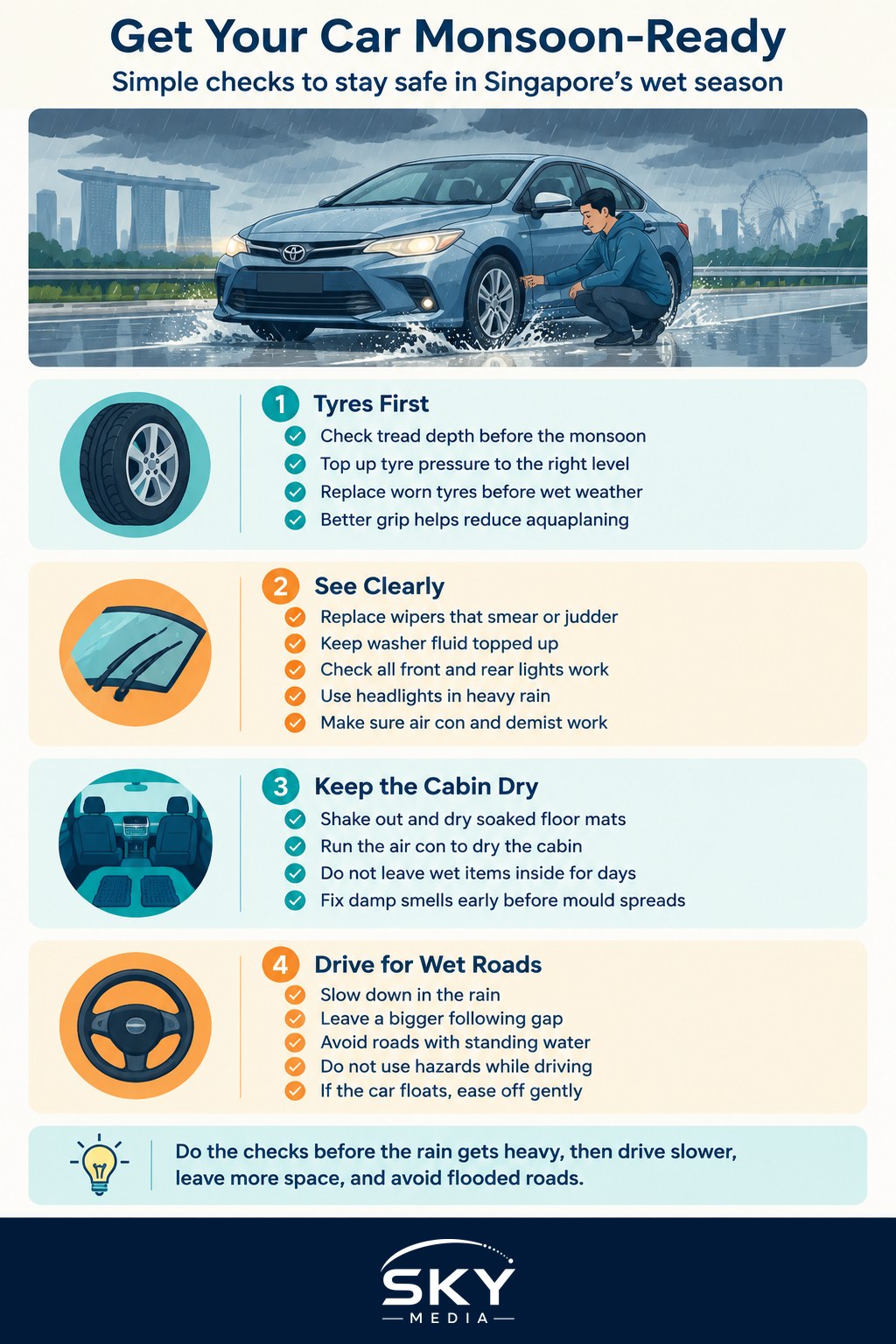
Your tyres are the only thing connecting you to a wet road, so they are the first thing to sort out. In the rain, worn or under-inflated tyres cannot clear water fast enough, and the car starts to float on a film of water in what is called aquaplaning. That is a terrifying and dangerous loss of grip.
Check two things. First, tread depth. Deeper tread channels water away, so tyres near the legal limit are far more likely to aquaplane. If your tread is low, replace the tyres before the monsoon, not after a scare. Second, pressure. Correctly inflated tyres grip and clear water better, so check them and top up to the pressure listed in your owner’s manual or the door sticker. Our guide to tyre care and when to replace them covers both tread and pressure in detail.
See and be seen
Visibility collapses in a heavy downpour, so your wipers and lights have to be in top condition.
- Wipers. In our climate, rubber blades harden and split quickly. If your wipers smear, streak, or judder, replace them. Fresh blades transform how well you can see, and they are cheap. Our guide to replacing your wiper blades shows how simple it is.
- Washer fluid. Keep the reservoir topped up, because road grime turns to a blinding smear the moment the wipers drag it across a dry screen.
- Lights. Check that all your lights work, front and rear, including brake lights and indicators. In heavy rain you should switch on your headlights so other drivers can see you, and working lights are essential for that. If a bulb has gone, replace it before the wet season sets in.
- Demisting. Warm, wet weather fogs up the inside of your windscreen fast. Make sure your air conditioning and demist function work, since a clear screen inside matters as much as a clear one outside. If your air con struggles, get it looked at before the season.
Beat the humidity inside the car
The monsoon is not just about rain on the road. The damp gets into the cabin, and a car that is constantly wet inside develops musty smells and mould. Wet floor mats, a leaking door seal, or a blocked drainage channel can all trap water.
Keep a few habits. Shake out and dry floor mats when they get soaked, run the air con to dry the cabin, and do not leave wet umbrellas or clothes sitting inside for days. If you already smell that damp, musty odour, tackle it early with a thorough dry-out and clean before it spreads.
Drive to the conditions
Preparing the car is half the job. The other half is adjusting how you drive when the rain comes. Even a well-prepared car cannot defy physics on a flooded road.
- Slow down and leave more space. Stopping distances lengthen in the wet, so ease off and double your following gap.
- Avoid flooded roads. Do not drive into water when you cannot judge its depth. Just a small amount of moving water can be dangerous, and driving into a flooded underpass can stall or wreck your engine. If in doubt, turn around and find another way.
- Use your lights, not your hazards. Headlights on in heavy rain help others see you. Keep hazard lights for a genuine stop, not for driving in the rain.
- Ease off if you feel the car float. If you start to aquaplane, do not brake hard or wrench the wheel. Lift off the accelerator gently and hold the wheel steady until grip returns.
Our guide to driving in wet weather goes deeper on these techniques, and it is worth reading before the season peaks.
Keep an emergency kit and a plan
Flash floods and stalled traffic are part of the wet season here. A small emergency kit, a charged phone, and a plan for what to do if you break down all help you stay calm. If the worst happens and you find yourself in rising water, your safety comes first, so leave the car and get to higher ground rather than trying to save the vehicle. For a wider view of severe weather driving, see what to do in a flash flood.
The bottom line
Monsoon car care is really about a handful of sensible checks done before the rain arrives. Sort your tyres for grip, fit fresh wipers and keep washer fluid topped up, make sure every light works, and keep the cabin dry against our humidity. Then drive to the conditions: slow down, leave room, keep your lights on, and never gamble on a flooded road. Do this and the wet season becomes something you handle with confidence rather than dread.
Frequently Asked Questions
How can I check if my tyres are good enough for heavy rain? Check tread depth and pressure. Deeper tread channels water away, and worn tyres near the legal limit are far more likely to aquaplane. Top up to the pressure in your owner’s manual or on the door sticker.
What should I do if my car starts to aquaplane? Do not brake hard or wrench the wheel. Lift off the accelerator gently and hold the steering steady until grip returns. Slowing down before the rain gets heavy lowers the chance of it happening.
Is it safe to drive through a flooded underpass? Do not drive into water when you cannot judge its depth. A flooded underpass can stall or wreck your engine, so turn around and find another way if in doubt. Your safety comes before saving the car.
How do I stop my windscreen fogging up in heavy rain? Use your air conditioning and demist function, and make sure they work well before the monsoon. If your air con struggles, get it checked early. A clear screen inside matters as much as one outside.
How do I get rid of a musty smell inside the car after the rain? Dry the cabin by shaking out and drying floor mats, running the air con and not leaving wet umbrellas or clothes inside. Check door seals and drainage channels. Deal with the smell early before mould spreads.
Further reading: Getting Your Home Ready for the Monsoon Season · How to Prevent Foggy Car Windows in Heavy Rain · Recovering From a Skid or Aquaplaning