
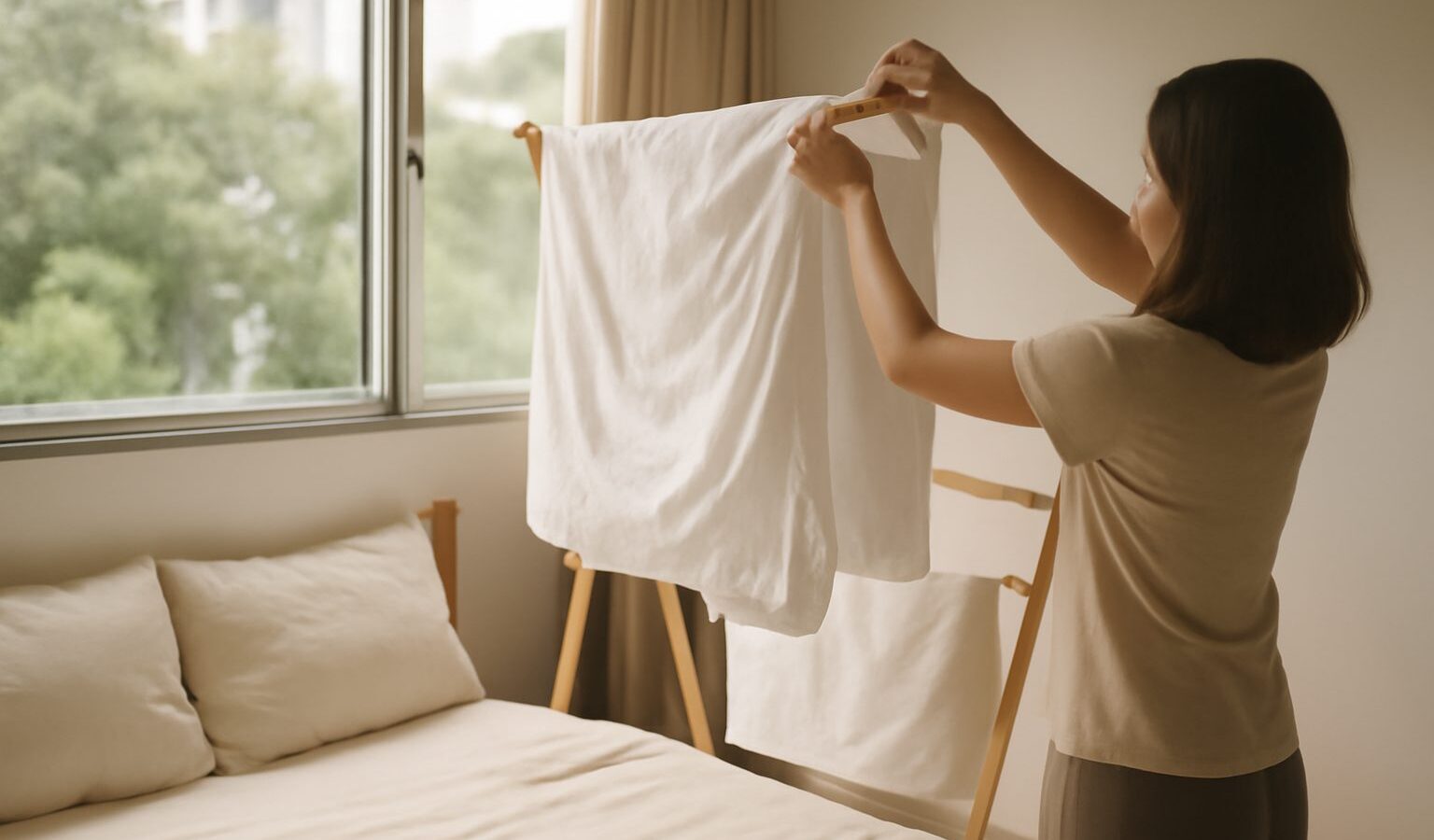
Sheets, duvets and pillows are the hardest things in the laundry basket to get properly dry. They are big, they are thick, and in a climate where the air rarely feels dry, they can hold on to moisture long after a T-shirt would be ready to fold. If you want to dry bedding in Singapore without that faint musty smell creeping back by the second night, it helps to treat bedding as its own job rather than just another load of washing.
This guide focuses only on bedding: flat and fitted sheets, pillowcases, duvet covers, the duvet or comforter itself, and pillows. For everyday clothes, our guide on how to dry clothes in humid weather covers the basics.
Why Bedding Is Harder to Dry Than Clothes
Clothes are small pieces of fabric with lots of exposed surface. Bedding is the opposite. A queen sheet folded over a single pole is effectively two or four layers of damp cotton pressed against each other, with very little air moving between them. A duvet is worse still: its filling traps water deep inside, well away from the surface you can feel.
In humid weather, evaporation is slow because the surrounding air is already carrying a lot of moisture. That means:
- The outside of a duvet can feel dry while the core is still damp.
- Folded edges and seams on sheets dry last and often get missed.
- Pillows can stay damp in the centre for a long time, which is where odours and mould tend to start.
- Bedding put back on the bed slightly damp absorbs body heat and sweat overnight, which makes the problem worse.
The goal is simple: spread the fabric out, keep air moving across it, and give thick items enough time to dry right through.
Drying Sheets, Pillowcases and Duvet Covers
Thin cotton or linen bedding is the easiest part to get right, as long as you avoid folding it back on itself.
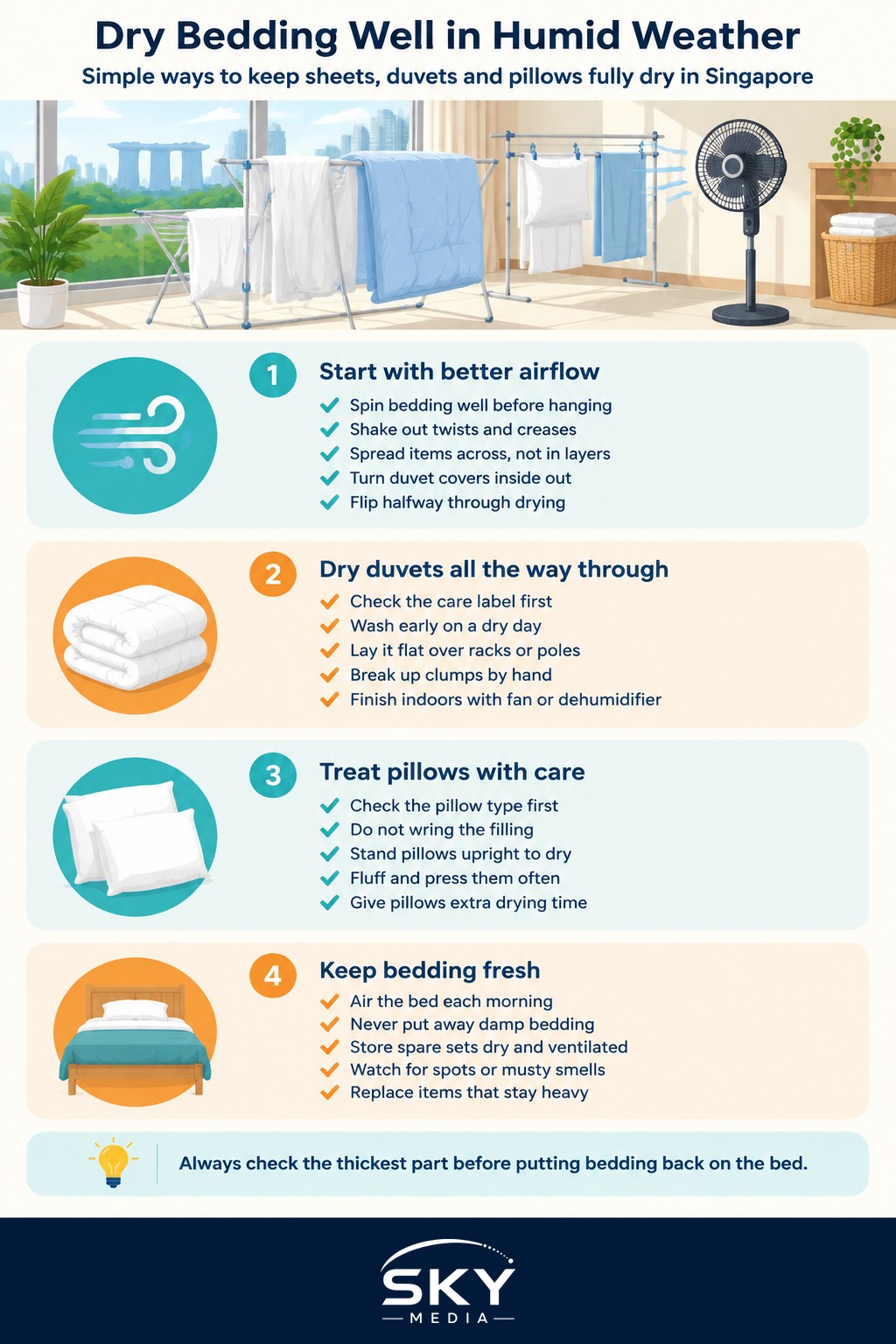
Spin well first. Use the highest spin your machine and the fabric label allow.
Shake out every piece. Sheets come out of the drum twisted. Give each one a firm shake before hanging so the fibres open up and creases do not trap moisture.
Hang across, not over. On a bamboo pole or rack, drape a sheet across two poles if you can, so it forms a wide shallow “U” instead of a tight double layer. If you only have one pole, peg the sheet by one edge so it hangs as a single layer.
Turn duvet covers inside out. The inside of a duvet cover, especially the corners, is where damp lingers. Turning it inside out and hanging it open lets air reach those corners.
Rotate halfway. After a few hours, flip the sheet so the part that was on the inside of the fold is now exposed.
If you are still choosing what to buy, lighter weaves dry faster. Our guide to choosing bedding and sheets for a tropical climate explains which fabrics suit local conditions.
Drying a Duvet or Comforter Without a Musty Core
Before washing a duvet or comforter, check the care label. Some fillings, such as certain down or wool products, may recommend professional cleaning, and some are too large for a home machine. If in doubt, follow the manufacturer’s instructions or ask a laundry service that handles bulky items.
If your duvet is machine washable, these steps help it dry all the way through:
- Wash in the morning on a dry day. Starting early gives you the most daylight and airflow.
- Spread it as flat as possible. Lay it over two or three poles, or over a sturdy drying rack, so the filling is spread in a thin even layer rather than bunched.
- Break up clumps by hand. Every hour or two, pat and shake the duvet to separate clumped filling. Clumps are where water hides.
- Flip it regularly. Turn it over so both sides get equal air and any sunlight.
- Use a dryer if the label allows. On a low heat setting, a tumble dryer with a couple of clean dryer balls or tennis balls helps keep the filling fluffy. Check partway through and re-spread the filling.
- Finish indoors with airflow. If it is still slightly damp in the evening, bring it in and lay it over a rack in front of a fan or near a dehumidifier overnight.
How to tell it is truly dry: squeeze a thick section firmly in the middle. If it feels cool, heavy or slightly clammy, it is not ready. Dry filling feels light and evenly warm.
Drying Pillows Safely
Pillows are the item most likely to develop odours and mould, because the filling is dense and sits against your face and hair every night.
- Check the type first. Polyester fibre pillows are often machine washable. Memory foam and latex pillows usually should not be soaked or tumble dried; manufacturers commonly recommend spot cleaning and airing instead. Always follow the label.
- Squeeze, do not wring. Press water out gently with your hands or with a towel. Wringing can tear the filling.
- Dry them standing up. Prop pillows upright on a rack or against a pole so air reaches both faces, and turn them often.
- Fluff and press regularly. Like duvets, fibre pillows clump. Break the clumps up every so often.
- Give it extra time. A pillow often needs noticeably longer than a sheet. When in doubt, leave it an extra few hours in front of a fan.
Indoor and Outdoor Options Compared
Here is how the main drying options compare for bedding.
| Drying method | Best for | Watch out for |
|---|---|---|
| Outdoor bamboo pole or rack in sun | Sheets, duvet covers, washable duvets on dry days | Sudden afternoon rain; secure items well on high floors |
| Indoor rack with a fan | Sheets and pillowcases on wet days | Slow for thick items; place the fan to blow across, not just at, the fabric |
| Indoor rack with a dehumidifier in a closed room | Duvets and pillows that need extra hours | Empty the water tank; keep the door closed so it works efficiently |
| Tumble dryer on low heat | Washable duvets and fibre pillows | Check the care label; overloading leaves damp patches |
| Bulky-item laundry service | Large or delicate duvets and comforters | Ask how they dry thick items before you hand them over |
If you rely on outdoor poles, keep an eye on the weather forecast from the Meteorological Service Singapore, as showers can arrive quickly in the afternoon. Our wider guide on drying laundry in humid weather in Singapore has more on setting up racks and airflow at home.
Keeping Bedding Fresh Between Washes
Drying properly is half the battle. The other half is stopping moisture from building up again once bedding is back in use.
- Air the bed in the morning. Pull back the duvet for a while after you get up so the sheet and mattress can release overnight sweat.
- Never make the bed with damp bedding. Even a slightly damp pillowcase can start to smell within a day or two.
- Store spare sets dry and ventilated. Fold only when completely dry, and avoid packing them tightly into airtight bags in a warm cupboard. A cupboard with some airflow, plus moisture absorbers, helps.
- Watch for warning signs. Grey or black spots, a persistent musty smell, or a pillow that always feels heavy are signs it may be time to replace the item.
If anyone in the household has sensitive skin, clean, completely dry bedding can make sleep more comfortable. Readers managing skin conditions may find our guide on managing eczema in Singapore’s humid climate useful, and should follow their doctor’s advice.
Getting bedding fully dry takes a bit more patience than ordinary laundry, but the routine is simple: spin hard, spread wide, keep the air moving, and test the thickest part before anything goes back on the bed.
Further reading: How to Choose Bath Towels That Dry Fast in Singapore’s Humidity · Choosing a Mattress Protector for Humid Singapore Nights