
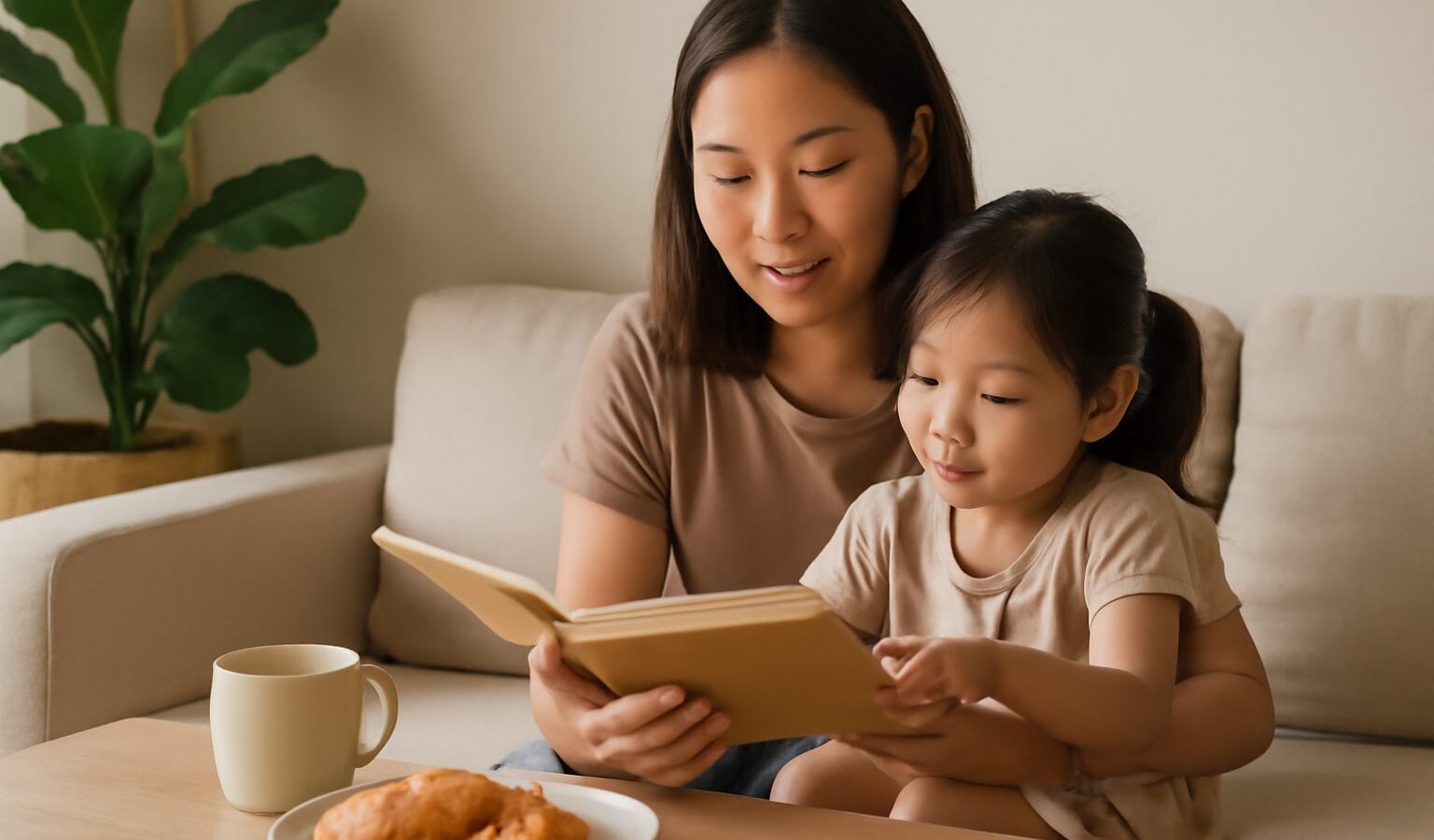
Reading aloud to children in Singapore is one of the simplest, most joyful things you can do together, and it quietly does an extraordinary amount of good. You do not need to be a trained teacher or a dramatic performer. You just need a book, a few minutes, and your child close beside you. Whether your little one is a toddler pointing at pictures or an older child who still loves a bedtime story, reading aloud builds language, closeness and a lifelong love of books. This guide shares why it matters and how to do it well.
Why reading aloud matters so much
When you read aloud, you give your child far more than a story. You give them words. Books use richer, rarer language than everyday chatter, so a child who is read to hears vocabulary they would rarely meet otherwise. Over months and years this quietly expands the words they understand and, in time, the words they use.
Reading aloud also builds listening and attention. Following a story asks a child to hold ideas in mind, picture events and wait to see what happens next. These are the very skills that later support reading, writing and learning across every subject.
Just as important is the warmth. Curling up with a book signals that your child is safe, loved and worth your time. Many children remember the feeling of being read to long after they forget the plots. In a busy Singapore household, story time can become a calm island in the day for both of you.
Finally, reading aloud shows children that books are a source of pleasure, not just schoolwork. A child who links reading with comfort and delight is far more likely to pick up a book on their own.
How to read aloud well
You already have everything you need, but a few gentle habits make story time richer.
Slow down. New readers, and listeners, need time. Reading a touch more slowly than feels natural gives your child room to take in the words and the pictures.
Use your voice. You do not need funny accents unless you enjoy them. Simply raising or lowering your voice, pausing before a surprise, or whispering a secret keeps a story alive.
Point and pause. With younger children, run your finger under the words now and then, or pause on a picture and wonder aloud. “Where do you think the cat is hiding?” invites your child into the story.
Follow their lead. If your child wants to stop and talk about a page, let them. If they want the same book for the tenth night running, that repetition is doing valuable work. Children learn deeply from hearing a favourite again and again.
Let it be imperfect. Some nights will be short, sleepy or interrupted. That is completely fine. The habit matters more than any single reading.
Choosing books your child will love
The best book is the one your child wants to hear. Follow their interests, whether that is dinosaurs, buses, princesses or the moon. Enthusiasm carries a reading further than any award sticker.
Mix things up so reading stays fresh. Here is a simple way to think about variety.
| Book type | Why it helps |
|---|---|
| Picture books | Build vocabulary and love of illustration for younger children |
| Rhyming stories | Tune the ear to sounds and make joining in easy |
| Non fiction | Feed curiosity about the real world and animals |
| Local stories | Reflect Singapore life so children see themselves in books |
| Chapter books | Stretch attention and imagination for older children |
Singapore makes this wonderfully easy. Your neighbourhood library is a treasure chest, and borrowing means your child can sample widely without any pressure. Let them choose some titles themselves, even the ones you might not pick. Ownership of the choice builds ownership of the reading.
Do not rush to hand over books that feel too grown up. A gentle stretch is good, but a story far beyond your child can turn reading into a chore. Comfortable and enjoyable beats impressive every time.
Making it a lasting habit
The families who read aloud most are not the ones with the most time. They are the ones who tie reading to something that already happens. Bedtime is the classic anchor, but breakfast, the commute or a quiet weekend afternoon all work.
Keep books within easy reach. A basket of books by the sofa or a small shelf at your child’s height invites spontaneous reading. When books are visible and handy, they get picked up.
Let siblings share the moment. Reading to two children of different ages is entirely possible. Older ones often enjoy revisiting simpler stories, and younger ones love reaching up towards longer tales.
As your child grows, keep reading aloud even after they can read alone. Sharing a chapter book together, one reading to the other or taking turns, keeps the closeness alive and lets you enjoy richer stories together. Reading aloud is not only for the very young.
When reading aloud feels hard
If your own reading confidence is low, or English is not your first language, please do not let that stop you. Your child benefits from hearing any language read with love, so reading in your mother tongue is wonderful too, and it nurtures bilingual growth that serves Singapore children well. You can also let audiobooks join in now and then, listening together and talking about the story.
Some children wriggle, wander off or seem uninterested. Younger children especially may only sit for a page or two, and that is normal. Keep sessions short, follow their energy, and try again another time. Never turn story time into a battle. The goal is warmth, not endurance.
Reading aloud to your children asks so little and gives so much. A few minutes, a shared book and a cosy corner add up, night after night, to a child who knows more words, feels more loved and carries a quiet love of stories into the rest of their life.
Explore more
Teaching Young Children to Read
Teaching Kids Spelling
Learning Mandarin in Singapore
Supporting a Child’s Wellbeing During School