

A large delivery in Singapore is a different animal from an ordinary parcel. A shoebox can sit in a locker or with the condo guardhouse, but a three-seater sofa, a washing machine or a wardrobe cannot be left at the door and collected later. Bulky items usually need two or more movers, a clear path through the lift and corridor, sometimes installation, and someone to check the item before it is accepted. If everyone in the household works office hours, that becomes a real puzzle. This guide walks through how to plan around it, who can stand in for you, and what to sort out before the truck arrives.
If you are mainly dealing with small online orders, our guide on how to receive parcels safely in Singapore condos covers lockers, guardhouses and porch theft. Here we focus only on items that are too big, heavy or fragile for those options.
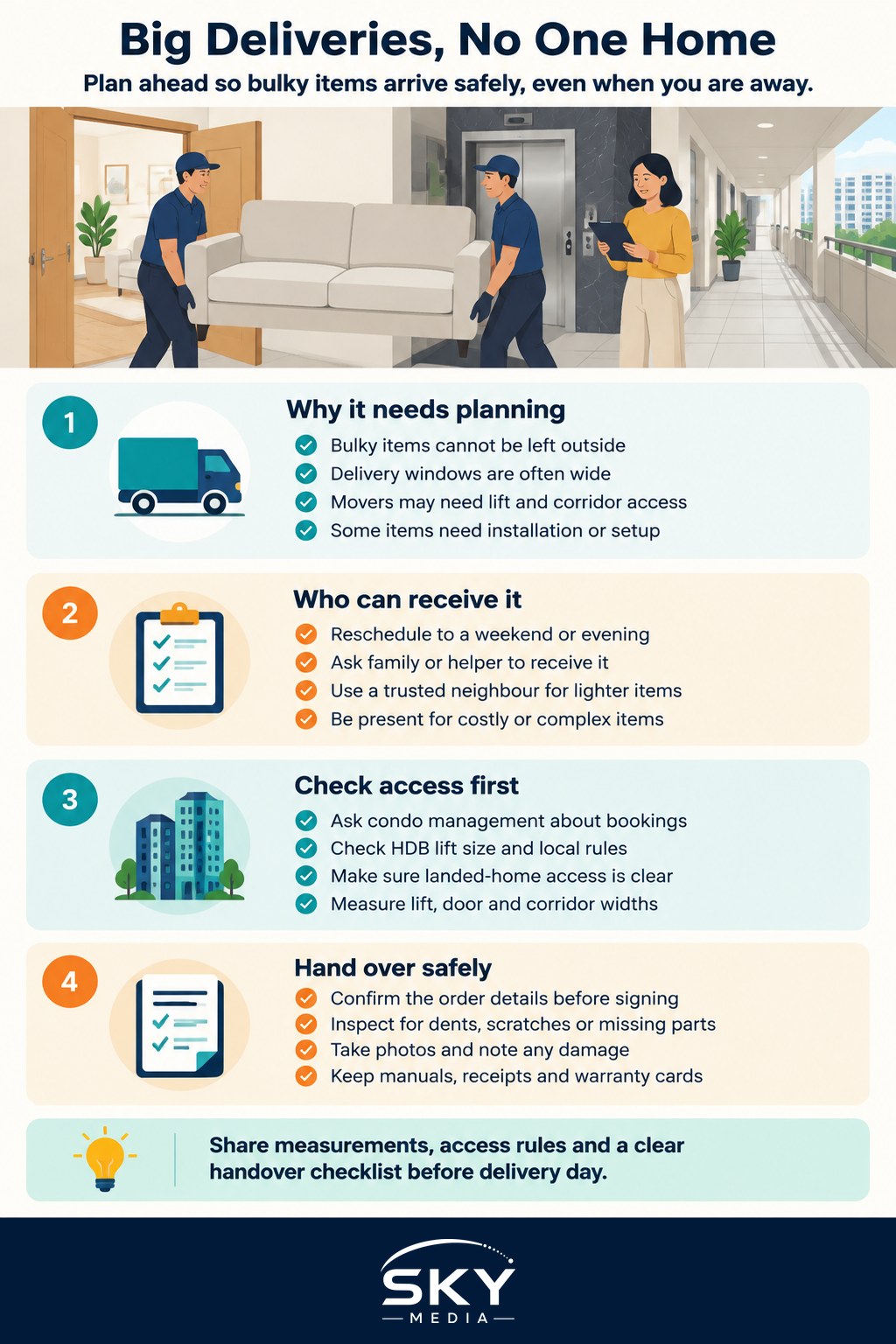
Why Bulky Deliveries Need Different Planning
Ordinary parcels are designed to be left. Big-ticket items are designed to be handed over. A few things make them harder:
- They usually need a signature. Retailers and logistics firms often require someone to sign a delivery order, and many will not leave a large item unattended at all.
- Delivery windows are wide. Instead of a precise time, you may get a morning or afternoon slot, or a call on the day.
- Movers need access. They have to get from the loading point to your unit, which can involve a lift, a gate, a corridor and your front door.
- Installation may be bundled. Washers, dryers, built-in ovens and some fridges are often connected by the delivery team, which needs someone present to confirm the location and check that it works.
- Old items may be removed. If you arranged for a disposal or trade-in, someone needs to point out which item goes.
- Damage claims are time-sensitive. Most sellers want any damage noted at handover. If nobody checks, it can be harder to raise a dispute later.
Because of this, “no one is home” rarely means “just leave it outside”. It means finding the right stand-in, or rearranging the delivery so it fits your life.
Your Options When You Cannot Be There
There is no single right answer. The best choice depends on your building, the item and how much you trust the person helping you.
| Option | Works best for | What to watch out for |
|---|---|---|
| Reschedule to a weekend or evening slot | Furniture and appliances with flexible stores | Weekend slots fill up fast and may cost extra; ask the seller |
| Ask a family member or helper to receive it | Most items, including installation | Brief them on the checklist; confirm the seller accepts a third-party signature |
| Ask a trusted neighbour | Light furniture with no installation | Only if they are comfortable letting movers in; avoid for large appliances |
| Take a half day or work from home | Built-in appliances and expensive pieces | Ask your manager early; delivery windows can run late |
| Use a smart lock or lockbox with the seller’s consent | Repeat deliveries from a trusted store | Only for items needing no inspection; check your home insurance terms |
Whatever you choose, tell the seller in writing who will receive the item. Some retailers ask for the receiver’s name and phone number in advance, and the movers may call that person directly on the day.
Sorting Out Building Access Before Delivery Day
Many failed big deliveries in Singapore are not about the recipient at all. They happen because the movers arrive and cannot get the item up.
For condominiums. Most condos are run by a management corporation, known as the MCST (Management Corporation Strata Title), through a managing agent. Many require residents to book a service lift, register the delivery with the guardhouse or pay a refundable deposit for moving bulky items. Some also restrict delivery hours on weekends and public holidays, or require lift padding. Rules differ from building to building, so check your condo’s house rules or contact the management office well before the delivery date. If you will not be home, ask whether the guard can let the movers into the service lift under your booking.
For HDB flats. HDB blocks generally do not require a lift booking, but lifts are shared and smaller than condo service lifts. Measure the lift interior if you are buying something tall, such as a wardrobe or a large fridge. If there is renovation going on in your block, lifts may be busier during the day. If you are unsure about any local rules, check with your Town Council.
For landed homes. Parking and gate access are the main issues. Make sure the truck can stop safely nearby and that the gate can be opened by whoever is receiving.
Measure Twice, Then Share the Numbers
A sofa that does not fit the lift is a problem nobody at home can solve on the spot. Before ordering, measure and write down:
- Lift door width and height, and the interior depth
- Your main door width when fully open, including any gate
- Corridor width and any tight corners between the lift and your unit
- The exact spot where the item will sit, including clearance for doors and ventilation
Send these measurements to the seller and ask whether the item, in its packaging, will fit. Some stores can deliver furniture partially disassembled or arrange for assembly at home. If you are new to Singapore and still learning how flats are laid out, our piece on what no one tells you about moving to Singapore explains why compact layouts surprise so many newcomers.
A Handover Checklist for Whoever Receives It
If someone else is standing in for you, give them a short written checklist. It saves phone calls and protects your claim if something goes wrong.
- Confirm the order. Check the model, colour and quantity against the delivery order or a screenshot of your purchase.
- Inspect before signing. Look for dents, scratches, tears and missing parts. For appliances, check that the box was not crushed.
- Take photos. Ask your stand-in to photograph the item, the packaging and the delivery order, and send them to you before the movers leave.
- Note any damage on the form. If there is a problem, write it on the delivery order before signing, rather than signing first and complaining later.
- Check installation. For washers or fridges, ask the team to switch the appliance on so you know it powers up. Some fridges need to stand upright for a period before being turned on, so follow the manual.
- Confirm what leaves. If old furniture or appliances are being removed, point them out clearly so nothing else is taken by mistake.
- Keep the paperwork. Warranty cards, manuals and receipts should go in one place.
Check the seller’s returns policy beforehand so your stand-in knows whether they can refuse a badly damaged item.
Protecting Your Home While Strangers Are Inside
Letting movers into an empty home, or a home with only a helper or elderly relative, can feel uneasy. A few simple steps help:
- Keep valuables, documents and cash out of sight in a locked room or drawer.
- Clear a path from the door to the item’s location so movers do not wander through bedrooms.
- Lay down old towels or cardboard to protect flooring from heavy trolleys.
- Ask the seller for the delivery team’s details or vehicle number if they provide it.
- Make sure your stand-in has your phone number and the seller’s hotline.
When It Makes Sense to Simply Be There
For very expensive items, built-in appliances, or anything that needs hacking, plumbing or electrical work, it is usually worth being present yourself, even if that means rescheduling. Placement and fit decisions come up during installation. For flat-pack furniture and simple pieces, a well-briefed family member or neighbour is often enough.
The key is to plan the delivery as carefully as the purchase. Check building rules, share measurements, brief your stand-in and get everything in writing, and a large delivery becomes far less stressful even when you are at work.
Further reading: Same-Day Delivery Within Singapore: Lalamove, GoGoX and Courier Options · How to Handle a Missed Parcel Delivery in Singapore · How to Receive Registered Mail in Singapore