
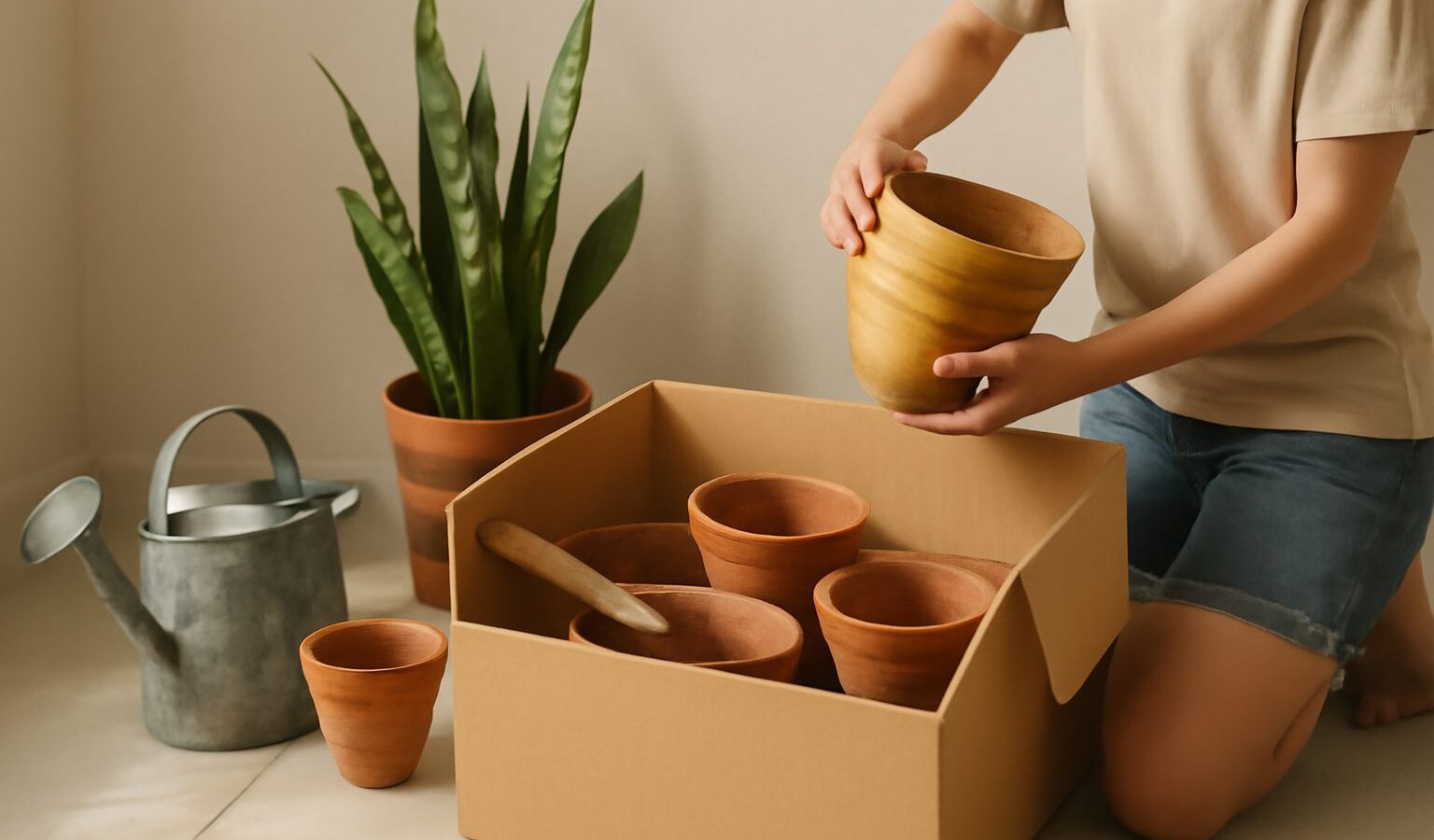
Anyone who gardens on a corridor, balcony or windowsill eventually ends up with a stack of empty pots. Black plastic nursery pots from plant shops, cracked terracotta, chipped ceramic planters, seedling trays, old soil and half-used fertiliser all pile up. Working out how to recycle plant pots in Singapore is less obvious than it seems, because many gardening items are not what the blue recycling bin was designed for.
This guide focuses only on gardening waste and supplies. For general rules about what goes in the blue bin, read our guide on how to recycle correctly in Singapore.
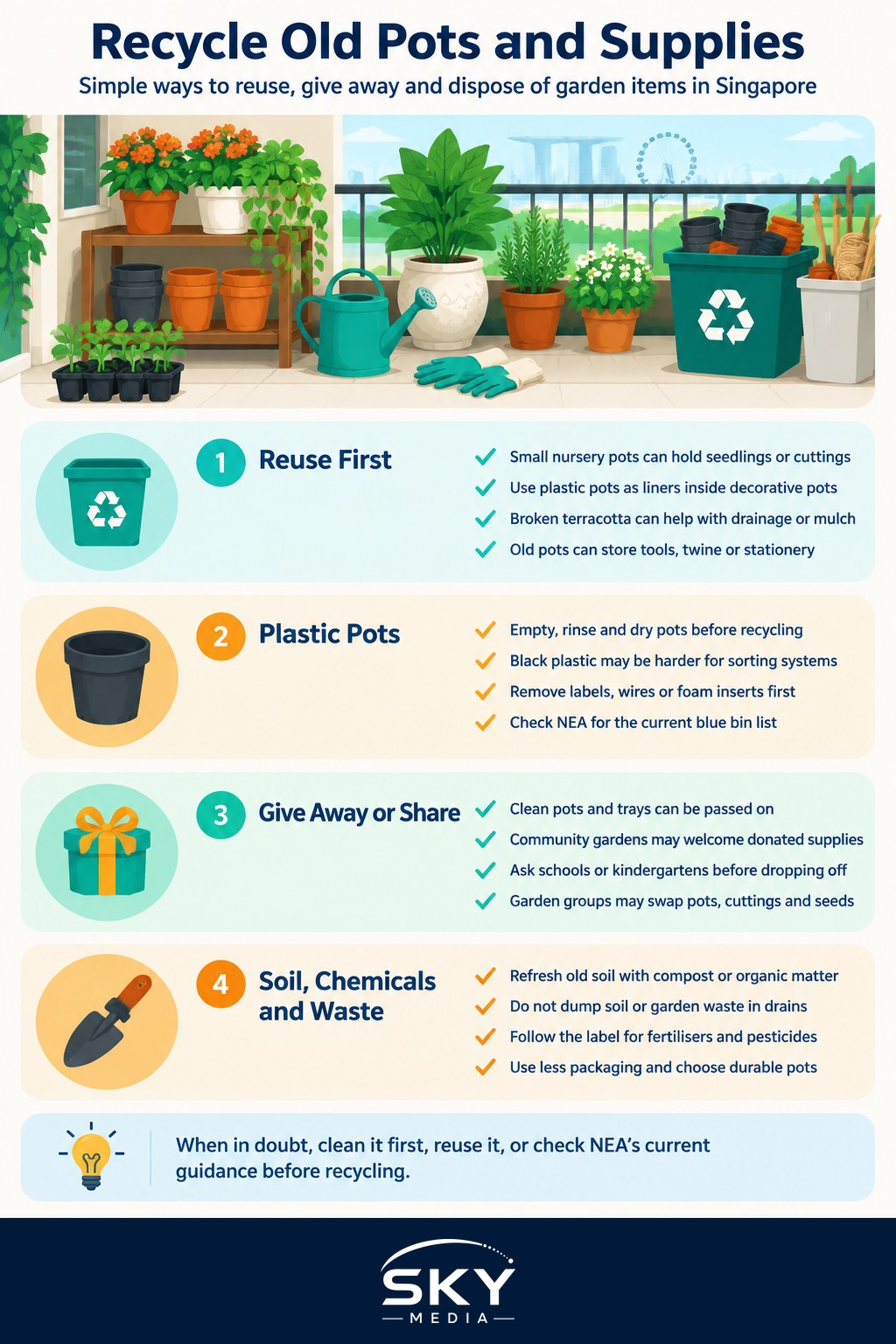
Start With Reuse: The Greenest Option
Before anything goes in a bin, ask whether it can be used again. Pots are durable, and reuse avoids the uncertainty of whether an item will actually be recycled.
- Repot and propagate. Small nursery pots are perfect for cuttings, seedlings and divided plants.
- Use pots as cache liners. A plain plastic pot can sit inside a decorative pot, making it easy to lift plants out for watering or cleaning.
- Turn broken terracotta into drainage or mulch. Smash cracked clay pots into small pieces and use them over drainage holes or as a decorative top layer. Wear gloves and be careful of sharp edges.
- Repurpose as organisers. Old pots can hold tools, twine, pegs or stationery.
- Swap sizes with friends. As plants grow, one gardener’s too-small pot is another’s perfect fit. Our guide to choosing the right pot size for your plant explains why size matters.
Clean pots before reusing them. Scrub out old soil, rinse, and let them dry fully in the sun. This helps prevent pests and plant diseases from passing to your next plant.
Plastic Pots and the Blue Recycling Bin
Plastic plant pots are the trickiest item. Some rigid plastics are accepted in Singapore’s blue recycling bins, but gardening pots raise particular issues:
- Soil contamination. Dirty items can contaminate a whole bin of recyclables. If you recycle a pot, it must be emptied, rinsed and dry.
- Black plastic. Many nursery pots are made from black plastic, which some sorting systems find harder to identify. Whether it is accepted can depend on the facility.
- Mixed materials. Pots with metal wires, foam inserts or attached labels may need these removed first.
Because acceptance rules can change and vary by material, check the National Environment Agency (NEA) website for the current list of what can go in the blue bin. If you are unsure, reuse or donate the pot instead of guessing. “Wishcycling”, putting doubtful items in the blue bin in the hope they will be recycled, can do more harm than good.
What to Do With Each Type of Gardening Item
| Item | Best option | Notes |
|---|---|---|
| Clean plastic nursery pots | Reuse, give away, or recycle if NEA lists the material as accepted | Remove all soil and rinse first |
| Terracotta and clay pots | Reuse whole, or break up for drainage | Not suitable for the blue bin |
| Ceramic and glazed planters | Reuse, give away, or dispose as general waste if broken | Wrap broken pieces safely before disposal |
| Seedling trays and plastic saucers | Reuse for propagation or as drip trays | Thin, brittle plastic may not be recyclable |
| Old potting soil | Refresh and reuse in your own pots | Do not dump in parks or drains |
| Fertiliser and pesticide containers | Follow the label’s disposal instructions | Never pour leftover chemicals down the drain |
| Broken metal tools | Ask about metal recycling options | Clean off soil and wrap sharp parts |
Giving Away Pots and Supplies
Many people are happy to take unwanted gardening items, especially pots in good condition.
Community gardens. Under NParks’ Community in Bloom programme, residents run gardens in many housing estates, schools and organisations. Some welcome donated pots, trays and tools. Ask the garden’s organisers first rather than leaving items at the gate.
Neighbourhood groups. Estate chat groups, residents’ networks and online giveaway communities are an easy way to pass on a stack of pots. Clean pots with a clear photo go quickly.
Schools and kindergartens. Some run gardening activities and may appreciate small pots and seedling trays. Contact the school before dropping anything off.
Fellow gardeners. Gardening interest groups often swap supplies, cuttings and seeds among members.
When giving pots away, make sure they are clean, free of pests and not cracked in a way that could cause injury.
Old Soil, Plant Matter and Garden Waste
Used potting mix does not need to be thrown out every time a plant dies. It can usually be refreshed:
- Remove old roots, stones and debris.
- Spread the soil out to dry in the sun, which can help reduce some pests.
- Mix in fresh compost or organic matter to restore nutrients and structure.
- Use it for hardy plants first, and keep a separate batch for seedlings.
If soil came from a plant that was clearly diseased or infested, it is safer not to reuse it for other plants.
Plant trimmings and dead plants can be composted if you have a compost bin or worm bin, or used as mulch after drying. In HDB flats, small amounts of plant waste usually go in the general waste chute, bagged. Do not dump soil or garden waste in common corridors, parks, drains or along nature areas. Larger garden clearances may need a bulky waste removal arrangement through your town council or a licensed waste collector.
If you garden in a flat, our guide to gardening and growing plants in an HDB flat covers corridor rules and space planning.
Chemicals, Fertilisers and Hazardous Items
Gardening chemicals need extra care. Pesticides, fungicides and some concentrated fertilisers can be harmful to people, pets and waterways.
- Read the label. Product labels usually include disposal guidance. Follow it.
- Use up what you have where it is safe and appropriate, rather than throwing away half-full bottles.
- Never pour chemicals into sinks, floor traps or drains. Singapore’s drains lead to waterways and reservoirs.
- Keep products in original containers with labels intact until disposal, so it is clear what they are.
- Ask NEA or the product supplier if you have a large quantity of chemicals to dispose of, or are unsure what is safe.
- Store safely in the meantime, out of reach of children and pets.
Buying Less to Throw Away Less
The easiest way to reduce gardening waste is to bring less of it home in the first place.
- Buy plants without extra decorative plastic packaging where possible.
- Choose durable pots you intend to keep for years over cheap pots that crack in the sun.
- Ask plant sellers whether they will take back their own nursery pots. Some may accept clean ones for reuse, but policies vary, so always ask first.
- Grow from cuttings and seeds, which uses smaller containers.
- Plan your container garden so you are not constantly buying new pots as plants grow.
Recycling plant pots in Singapore takes a little more thought than tossing a drinks bottle in the blue bin, but most gardening supplies can find a second life. Clean them, reuse what you can, give away what you cannot, and check NEA’s current guidance for anything that is left.
Official sources: National Environment Agency (NEA)