
If you have ever stood over a bin holding a greasy pizza box, unsure whether it belongs with the recyclables, you are not alone. Recycling in Singapore is refreshingly simple once you understand one core idea: nearly all household recyclables go into a single blue bin, and the rest of the system is about keeping that bin clean and knowing where the odd items go. This guide walks you through the blue recycling bin, e-waste, bulky items, and the reality of where our rubbish actually ends up, so you can build habits that stick.
The Blue Recycling Bin: One Bin for Everything
Most neighbourhoods use a commingled system, which is a fancy way of saying you do not need to sort. Paper, plastic, metal, and glass all go into the same blue recycling bin. HDB blocks usually have one at ground level, and many landed and condo estates have their own arrangements through the National Environment Agency’s (NEA) recycling programme.
This is the opposite of what many newcomers expect, especially those used to four or five separate coloured bins back home. In Singapore, the sorting happens later at a materials recovery facility. Your job is simply to put clean, dry recyclables in, and keep everything else out.
What Can Be Recycled
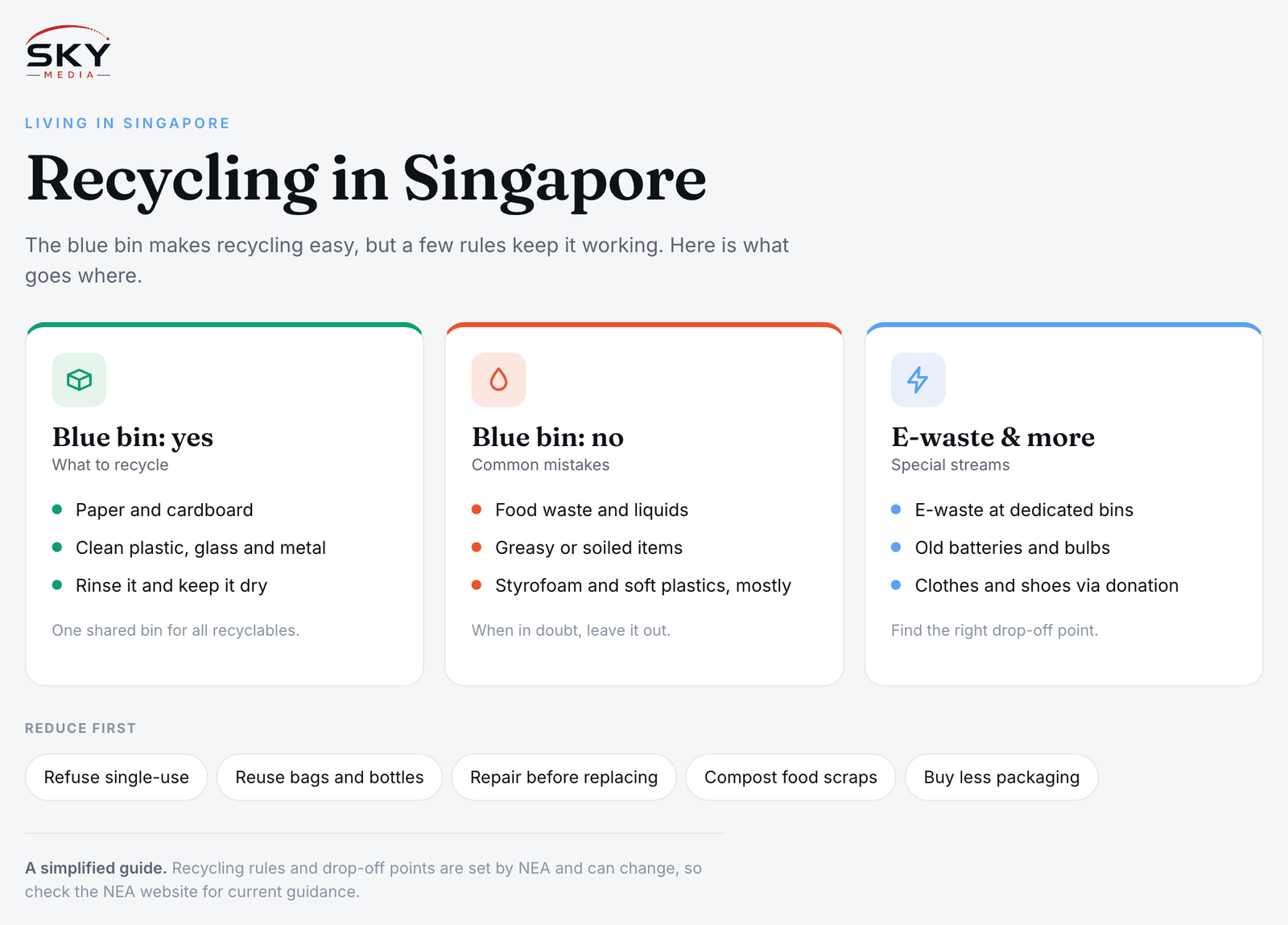
Here is the short answer on what can be recycled at the blue bin:
- Paper: newspapers, magazines, office paper, cardboard boxes (flattened), paper bags
- Plastic: drink bottles, detergent and shampoo bottles, food containers, clean plastic bags
- Metal: drink cans, food tins, clean aluminium foil and trays, metal caps
- Glass: bottles and jars (rinsed)
A good rule of thumb: if it is a clean, empty container made of one of those four materials, it very likely belongs in the blue bin. Rinse out anything that held food or liquid, and let it dry before you toss it in.
The Contamination Problem: Recycle Clean
Here is the part that trips up almost everyone. When food, liquid, or grease gets mixed in, it can contaminate an entire batch of otherwise good recyclables, and the whole lot may end up being thrown away. Getting this right matters more than recycling a few extra items.
A clean bottle recycled is worth more than ten dirty ones, because contamination can send the good with the bad straight to incineration.
Keep these out of the blue bin:
- Food waste and food-soiled items (that greasy pizza box, used tissues, oily takeaway containers)
- Styrofoam and disposable cutlery
- Used diapers, sanitary products, and cotton wool
- Ceramics, mirrors, and light bulbs
- Batteries, cables, and electronics (these have their own routes, covered below)
Quick tips to recycle right
- Empty it. Pour out leftover drink or sauce.
- Rinse it. A quick swish of water is enough; it does not need to be spotless.
- Keep it dry and loose. Do not bag your recyclables tightly; loose items are easier to sort.
- When in doubt, leave it out. One dirty item is not worth risking a whole batch.
E-Waste in Singapore
Old phones, laptops, chargers, batteries, and light bulbs should never go in the blue bin. Under Singapore’s regulated e-waste singapore framework, there is a dedicated national scheme run by an appointed operator (ALBA) that provides collection points for electronic waste across the island.
You will find e-waste collection bins at many community centres, shopping malls, supermarkets, and some retailers, especially for small items like phones, batteries, and cables. Larger electronics such as televisions, laptops, and household appliances can often be handed over when you buy a replacement, as many retailers offer take-back services. For the current list of drop-off points and what each accepts, check the NEA website or the national e-waste scheme’s site, as locations are updated over time.
Bulky Items and Waste Disposal
Furniture, mattresses, and large appliances count as bulky waste, and they do not belong at the recycling point or the rubbish chute. For general waste disposal of big items, your town council is the point of contact. Most town councils allow residents a number of free bulky item removals, and you simply arrange a collection date and leave the item at the agreed spot.
Because rules, quotas, and fees vary between town councils, look up your own town council’s page or give them a call before you drag a sofa downstairs. If an item still has life in it, consider donating it or passing it on through a giveaway group first.
Where Does It All Actually Go?
It helps to understand the bigger picture. Singapore is small and has no space for sprawling landfills, so most non-recyclable rubbish is incinerated. The waste is burned at waste-to-energy plants, which reduces its volume dramatically and generates electricity in the process.
What remains is ash, and that ash is barged out to Semakau Landfill, an offshore island landfill that is the country’s only one. It is a finite space, which is exactly why reducing waste and recycling correctly matters so much here. Every clean item you divert from the incinerator is one less scoop of ash heading to Semakau.
This reality also reframes the goal. The aim is not to recycle furiously, but to produce less waste in the first place, then recycle what you can, cleanly.
Simple Habits That Make It Stick
You do not need a complicated setup at home. A small holding spot for clean recyclables and a separate one for e-waste items is usually enough.
- Keep a bag or box near the kitchen for rinsed bottles, cans, and cardboard.
- Set aside a drawer or pouch for dead batteries and old cables, then drop them at an e-waste point during your next mall trip.
- Flatten cardboard so the bin does not fill up with air.
- Give containers a rinse as you finish with them, rather than letting them pile up dirty.
Small, consistent habits beat occasional big efforts. Once rinsing and sorting become automatic, recycling right takes almost no thought.
The Bottom Line
Recycling in Singapore rewards a light touch: one blue bin for clean paper, plastic, metal, and glass; dedicated routes for e-waste and bulky items; and a genuine effort to keep contamination out. The specifics, from town council quotas to e-waste drop-off locations, do change, so treat NEA and your town council as the final word. Get the basics right and you are already doing the part that counts.
Explore more: Setting up your HDB home · Cost of living in Singapore