
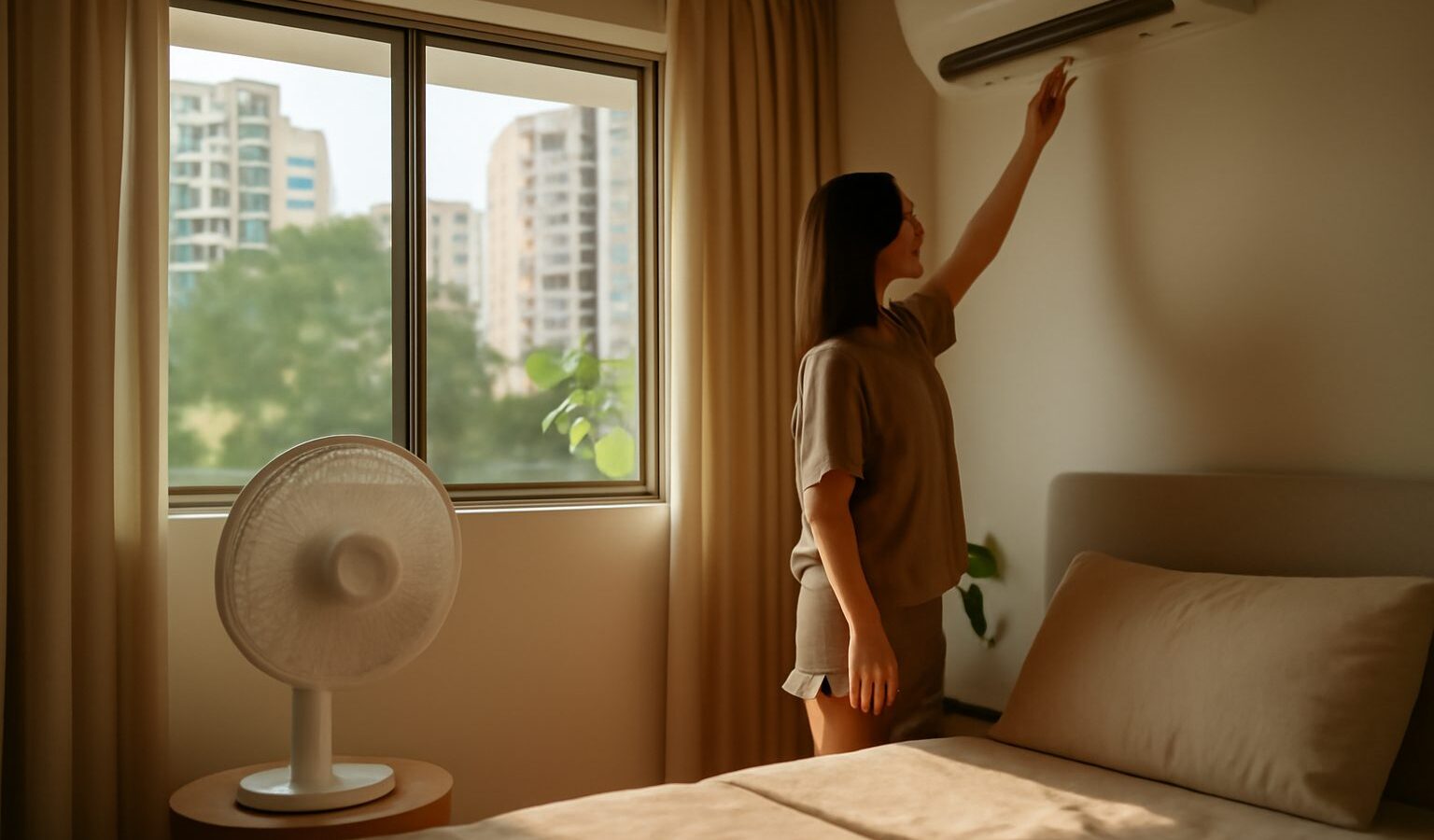
Air-conditioning feels less like a luxury and more like a survival tool in Singapore. The heat is relentless, the humidity clings, and after a sticky commute home the temptation to blast the aircon and never look back is very real. So let us be honest from the start: reducing aircon in Singapore is not about suffering through the heat or pretending we live in a cooler climate. It is about staying genuinely comfortable while leaning on the compressor a little less, which is kinder to both your electricity bill and the environment. The aircon is usually one of the biggest energy users in a home, so small, sustainable changes here add up. This guide walks through realistic ways to cool your body and your home, so that when you do switch on the aircon, it works less hard and for shorter stretches.
Working With The Tropical Heat, Not Against It
The first thing worth accepting is that Singapore is hot and humid all year round, and no amount of willpower changes that. The goal is not zero aircon; it is thoughtful aircon. Many of us reflexively set the unit very low and leave it running, when a gentler approach would keep us just as comfortable.
A big part of comfort in the tropics is not raw temperature but moisture and air movement. Still, humid air feels far more oppressive than the same temperature with a breeze passing over your skin. That single insight, cool the body rather than chill the whole room, is the thread running through almost every tip below. Once you start thinking in terms of “how do I feel cooler” rather than “how cold can I make this room,” a lot of options open up that do not involve running the compressor harder.
Setting A Higher Temperature And Pairing It With Fans
One of the easiest wins is nudging the aircon set temperature up by a degree or two and running a fan at the same time. A room a touch warmer, with air moving across your skin, often feels the same as a colder room with still air, because the moving air helps sweat evaporate and carries heat away from your body.
The aircon compressor also works harder the lower you set the temperature, so a higher setting generally means less energy used over the same period. Pairing the aircon with a ceiling or standing fan lets you raise that setting without feeling the difference. A few habits help here:
- Set the aircon a little warmer than your instinct and switch on a fan first, then adjust only if you are genuinely too warm.
- Use the fan to spread the cool air around instead of relying on the aircon alone to reach every corner.
- Point a standing fan towards where you actually sit or sleep, not at the whole room.
Because energy tariffs and appliance efficiency vary, it is worth checking the appliance energy labels and the tick ratings, and the Energy Market Authority (EMA) resources, for guidance on choosing and running efficient units rather than assuming a fixed saving.
Cooling The Home Naturally Before Reaching For The Switch
Plenty of cooling happens before the aircon ever comes on, if you let the building work for you. Cross-ventilation is the classic tropical trick: open windows on opposite sides of the flat so air flows through and pushes out trapped heat, especially in the cooler early morning and evening hours. Many HDB layouts are designed with exactly this airflow in mind.
Reducing heat gain matters just as much. Direct sun through a window turns a room into an oven, so blinds, curtains or reflective films on sun-facing windows keep a surprising amount of heat out during the day. Closing them before the afternoon sun hits, then opening the windows once the outside air cools, is a simple daily rhythm that lowers how hard the aircon has to work later.
A few low-effort moves make a real difference:
- Draw blinds or curtains on the sunny side during the hottest part of the day.
- Open opposite windows in the morning and evening to flush out heat.
- Switch off heat-producing appliances and lights you are not using, since they warm the room.
- Keep bedroom doors open when the flat is empty so heat does not pool in one space.
Cooling The Body, Especially At Night
Sleep is where many households run the aircon longest, so it is a high-value place to rethink habits. Cooling the body directly is often enough: a cool shower before bed, light and breathable cotton or linen bedding, and a fan positioned near the bed can carry you comfortably through the night without a cold room.
If you do use the aircon at night, the timer and sleep-mode functions are your friends. Many people fall asleep in a cool room and simply do not need the compressor running at full tilt until morning. Setting the aircon to switch off or ease back after you have drifted off, with a fan taking over, keeps you comfortable while cutting hours of unnecessary cooling. A slightly higher set temperature at night, combined with airflow, usually goes unnoticed once you are asleep.
Keeping The System Efficient
An aircon that is poorly maintained works harder to deliver the same cooling, which quietly wastes energy. Cleaning or replacing the filters regularly is the simplest habit, since clogged filters restrict airflow and make the unit strain. Beyond that, periodic servicing helps the system run as it was designed to.
When it is time to replace a unit, the energy labels and tick ratings are a genuinely useful guide to relative efficiency, and it is worth sizing the unit to the room rather than over-cooling a small space with an oversized system. For current advice on efficient appliances and energy use, the EMA and the appliance labelling scheme are the sources to check, rather than relying on rules of thumb that date quickly.
Comparing Your Cooling Options
No single method wins outright; the point is to layer them so the aircon becomes the last resort rather than the default. Here is a rough comparison to help you mix and match.
| Cooling method | Comfort in tropical heat | Energy use |
|---|---|---|
| Aircon set very low, no fan | Very cool, can feel cold | Highest |
| Aircon set higher, plus fan | Comfortable for most | Lower than aircon alone |
| Ceiling or standing fan only | Good on milder days and nights | Low |
| Natural cross-ventilation | Best in cooler morning and evening hours | Almost none |
| Blinds and reducing heat gain | Keeps rooms from overheating | None |
The realistic aim is balance, not sacrifice. On a blazing afternoon you might still want the aircon, and that is completely fine. On a breezy evening, though, an open window and a fan may be all you need, and stacking these habits means the aircon runs cooler, shorter, and less often across the whole week.
Explore More
If trimming your cooling bill has you thinking about energy more broadly, our guide to saving electricity at home in Singapore covers the other big users worth tackling. And for the wider picture of a greener flat, from ventilation to everyday habits, see green living in an HDB flat in Singapore.