
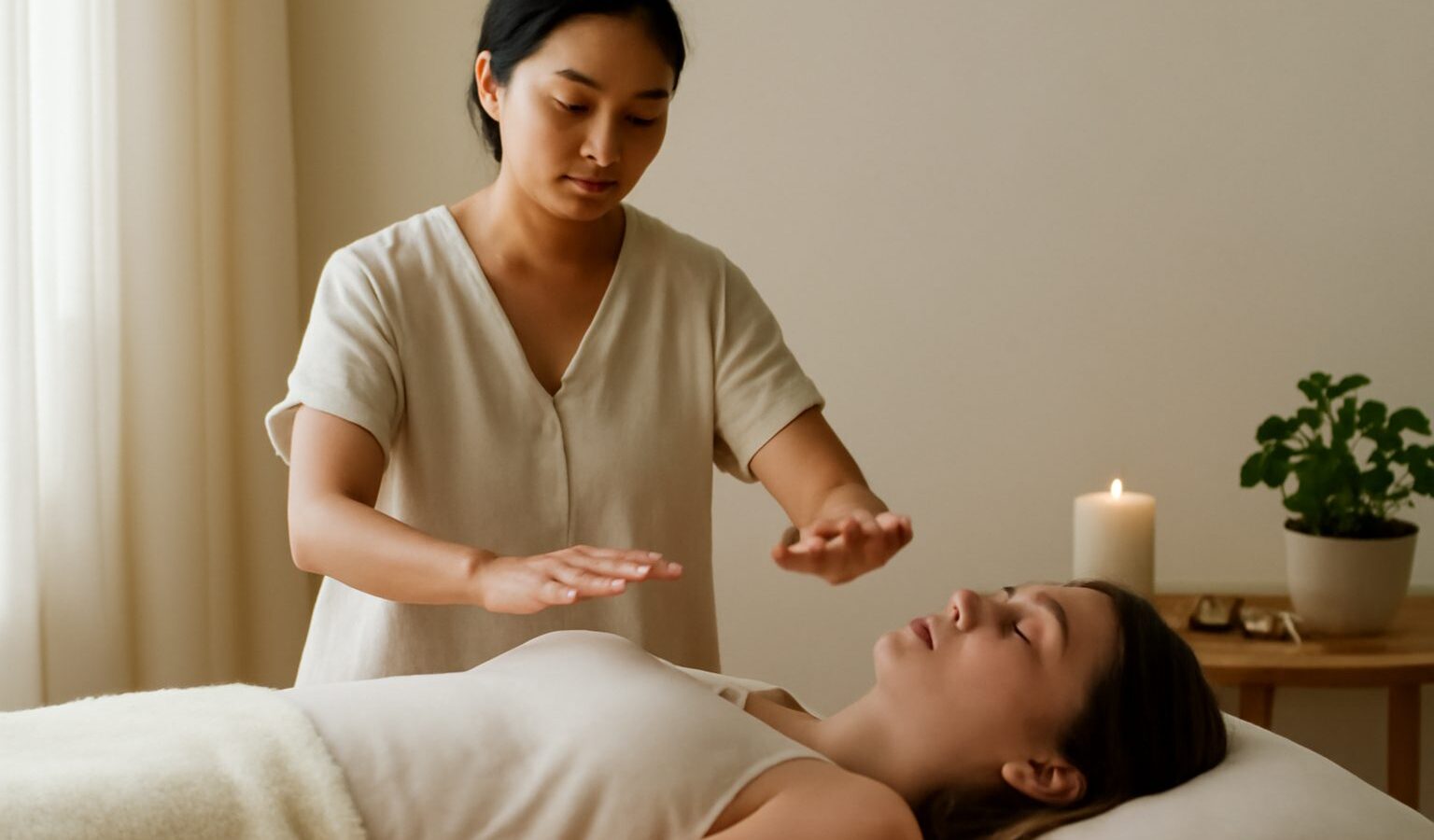
You may have seen reiki on a spa menu or heard a friend describe a deeply relaxing session, and wondered what it actually involves. If you are exploring reiki in Singapore with an open but sensible mind, this guide explains what it is, what a session feels like, and how to think about it honestly. The short version is that reiki and energy healing are gentle, calming, complementary wellness practices that many people find soothing, and they are best approached as relaxation rather than medicine.
Let us be clear from the start. Reiki and energy healing are not proven medical treatments, and they are not a substitute for medical care. They can help you feel calm and cared for, which has real value, but they do not diagnose, treat, or cure illness. If you have a health condition, please keep seeing your doctor and do not delay treatment.

What reiki is and where it comes from
Reiki is a Japanese practice developed in the early twentieth century. In a session, a trained practitioner rests their hands lightly on or just above your body while you lie down, fully clothed, in a quiet room. The tradition describes this as working with a subtle life energy, sometimes translated as universal energy. Energy healing is a broader umbrella term that covers reiki and various other hands-on or hands-near approaches that share a similar gentle, meditative style.
It is worth being honest about the evidence. There is no scientific consensus that any energy field is being transferred, and studies have not shown reiki to treat medical conditions. What many people do report is a strong sense of relaxation, a bit like a guided rest or a nap with intention. That relaxation response is genuine and worth something, especially if daily life feels relentless. Viewed this way, reiki sits comfortably alongside other calming rituals such as mindfulness and meditation.
What a session actually feels like
A typical session lasts somewhere between 30 minutes and an hour. You stay dressed and simply lie on a treatment table or mat. The room is usually dim, quiet, and cool, sometimes with soft music. The practitioner moves their hands slowly through a series of resting positions, often near the head, shoulders, torso, and feet, without deep pressure or manipulation.
People describe the experience in different ways. Some feel warmth or a gentle tingling, some drift close to sleep, and some feel very little beyond a pleasant stillness. All of these are normal. There is nothing you need to do except breathe and let yourself relax. Because it is so restful, reiki often appeals to the same people who enjoy sound baths and sound healing, where the aim is also to slow down and let go rather than to fix a specific problem.
Setting sensible expectations
The healthiest way to approach reiki is with curiosity and realistic hopes. Think of it as protected time to rest, not as a treatment for an illness. If you leave a session feeling calmer, lighter, or simply looked after, that is a fine outcome. Problems only arise when relaxation practices are marketed as cures, or when someone is encouraged to stop or delay proper medical care in favour of them.
So keep a few guardrails in mind. Never use reiki or any energy healing as a replacement for prescribed treatment. Be wary of any practitioner who promises to cure a specific disease, tells you to stop your medication, or discourages you from seeing a doctor. A responsible practitioner will be upfront that they offer relaxation and support, not medical intervention. If you have a diagnosed condition, are pregnant, or are managing your mental health, talk to your doctor and treat reiki as an optional extra alongside your care.
How to try it thoughtfully in Singapore
If you decide to give it a go, treat it like any other wellness service. Ask about the practitioner’s training and experience, and choose somewhere you feel comfortable and unrushed. A calm, clean, private space matters more than any elaborate claims. Wear loose, comfortable clothing, arrive with time to settle, and let the practitioner know if you prefer hands resting lightly on you or hovering just above.
You can also recreate much of the restful feeling at home for free. A quiet room, slow breathing, and a body scan meditation deliver a similar wind-down. Our guide to breathwork and relaxation techniques is a good starting point, and folding a session into a wider set of self-care routines helps it feel like part of looking after yourself rather than a one-off novelty.
Taken on its own terms, reiki can be a lovely hour of stillness in a fast-moving city. Enjoy it as relaxation, keep your expectations grounded, and keep your doctor firmly in the picture for anything to do with your health.
Frequently Asked Questions
Do I need to believe in reiki for a session to feel relaxing? Not really, because most of the calming effect comes from lying still in a quiet room, breathing slowly and being cared for. Many sceptics still find it restful. Treat it as relaxation, not as something that must work for you.
Can reiki be done remotely or online? Some practitioners offer distance sessions, but there is no scientific evidence that energy is transferred from afar. If you try one, treat it as a guided relaxation exercise. Be cautious about paying large sums or committing to packages for any online healing.
Is reiki suitable for children or pregnant women? The touch is very light, so many people see it as low risk, but it is not a medical treatment. If you are pregnant or arranging it for a child, speak to your doctor first. Tell the practitioner about your situation beforehand.
What is the difference between reiki and a massage? Massage uses pressure and manipulation of muscles, while reiki involves hands resting lightly on or just above the body with no kneading. Massage can ease physical tension directly. Reiki is mainly a quiet, meditative experience, so choose by what you want from the hour.
How many reiki sessions should I book to feel a difference? There is no set number, because the main benefit is relaxation and some people feel it after a single session. Start with one and see how you feel before committing. Be wary of anyone who pushes a long package or says you must keep returning.