
If you are stepping into video making, one question looms large: what camera should you buy? The market is crowded and the jargon is thick, which makes choosing a camera for video in Singapore feel harder than it needs to be. The truth is that the “best” camera depends entirely on what you film, how you like to work, and your budget. This guide explains the features that actually matter so you can decide with confidence, without us pretending any single model is right for everyone.
We will describe categories and capabilities to look for rather than naming products, prices, or specs, which change often. Always read current, independent reviews and, if you can, handle a camera before you buy.
Understand the Main Types of Camera
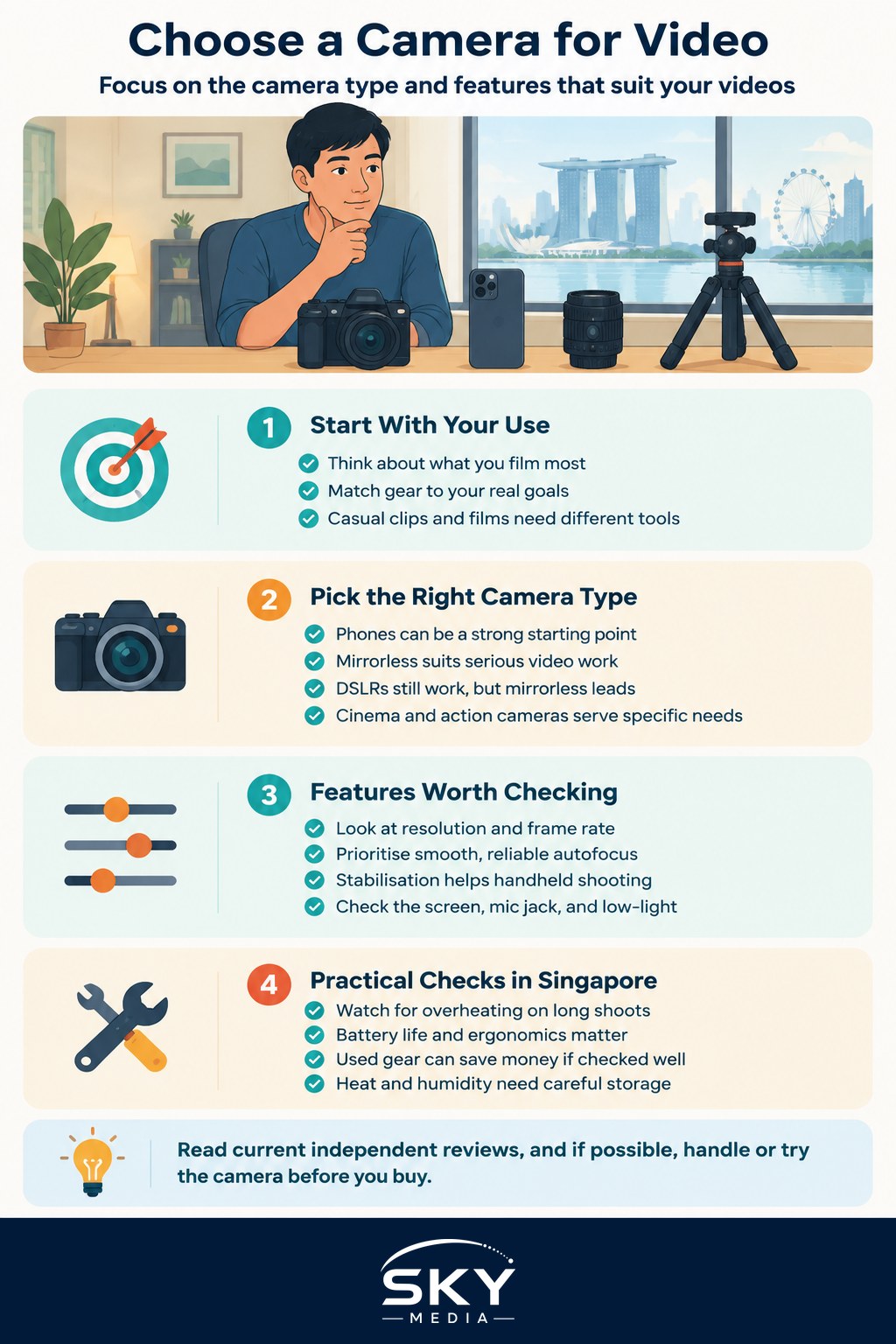
Video can be shot on several kinds of camera, and each suits a different creator. Modern smartphones are astonishingly capable and are the right starting point for many people, since the best camera is often the one already in your pocket. If you are curious how far a phone can go, our guide on how to shoot video on your phone is a great place to begin.
Mirrorless cameras have become the popular choice for serious hobbyist and semi-professional video, offering interchangeable lenses, larger sensors, and strong video features in a compact body. Traditional DSLRs can also shoot good video, though the market has largely shifted towards mirrorless. Dedicated cinema cameras and compact action cameras serve more specific needs. To weigh two common options, see mirrorless vs DSLR, which to buy.
The key is to be honest about your goals. Casual family clips, travel vlogs, YouTube tutorials, and short films all have different demands. Match the camera type to the kind of video you genuinely intend to make, not to an aspiration you might never pursue.
The Video Features That Actually Matter
Once you know your type, look closely at a handful of features that make daily filming easier.
Resolution and frame rate come first. Higher resolution capture gives you sharp footage and room to crop, while higher frame rates let you create smooth slow motion. Do not chase the biggest numbers for their own sake, though, since very high settings create large files and demand fast, high-capacity memory cards.
Autofocus is arguably the feature that separates a pleasant filming experience from a frustrating one. Reliable, smooth autofocus that tracks a subject’s face keeps your footage sharp while you concentrate on the scene. If you often film yourself or moving subjects, prioritise this. Our guide on understanding autofocus modes explains how these systems behave.
In-body image stabilisation helps steady handheld footage, which is a real benefit for run-and-gun filming and vlogging, though a separate gimbal can smooth things further. Also consider a fully articulating screen if you film yourself, a microphone socket for better audio, and how the camera performs in low light, since Singapore’s evenings, indoor venues, and dim hawker centres will test any camera. Clean footage in dim conditions depends partly on the camera you choose.
Practical Factors and Singapore Care
Beyond the spec sheet, some practical points shape how happy you will be with a camera. Overheating can affect long recording sessions on some compact bodies, so if you plan long takes, look for reviews that test this. Battery life matters on shoot days, and carrying spares is wise. Ergonomics count too, since a camera that feels good in your hands and has clear controls is one you will use more.
Think about the wider system, not just the body. Lenses, batteries, and accessories are part of the cost and the experience, and a system with the lenses you want may serve you better long term. If budget is tight, buying used can be a smart move, so long as you check the shutter count, test every function, and buy from a reputable seller.
Our climate deserves respect. Heat and humidity encourage fungus and condensation, so store your camera in a dry cabinet, let it acclimatise when moving between air-conditioning and the outdoors, and keep it dry during sudden downpours. Our guide on caring for your camera in Singapore’s humidity covers the habits that protect your investment.
Match the Camera to You, Then Verify With Reviews
The right camera is the one that fits your subjects, your working style, and your budget, not the one with the longest feature list. Decide what you will film most, pick the type that suits it, and focus on the features that serve that work, especially autofocus, stabilisation, and low-light ability if those match your needs.
Before you pay, read up-to-date, independent reviews and watch real sample footage. If you can, rent or borrow a camera and shoot with it in your own conditions. Judge it on how it feels to use and how the footage looks to you, rather than on marketing or headline numbers.
Choosing a camera for video is exciting, and it is easy to get lost comparing endless options. Keep coming back to one question: what do I actually want to create? Answer that honestly, match the gear to it, and you will end up with a camera you love using, which is what truly helps you grow as a video maker.
Frequently Asked Questions
Is a smartphone good enough for a beginner video maker? For many beginners, yes. Modern phones shoot impressive video and are always with you, so they are a sensible starting point. Move to a dedicated camera when you need interchangeable lenses, better low-light results or more manual control.
Mirrorless or DSLR for video, which should I pick? Mirrorless is generally the better pick today, as most development and video features have moved there. A DSLR can still shoot good video, especially if you find a good used one, but check how its autofocus behaves in movie mode.
What accessories should I budget for besides the camera? Think about a lens that suits your subject, spare batteries, memory cards, a tripod and an external microphone. These add to the true cost, so factor them in before you compare camera bodies.
Why does my camera stop recording or get hot on long takes? Some compact cameras overheat in warm conditions, which can end a recording early. Check reviews that test long recording times, shoot in shade or air-conditioned rooms and keep batteries charged.