

Turning a hobby or a pile of unused things into income has never been easier, and many newcomers and residents start out selling on online marketplaces in Singapore before they ever think of it as a business. Whether you are clearing out your flat or building something bigger, a few good habits will keep you on the right side of the rules and out of trouble. This is general information to help you get started, not financial or legal advice, so check current requirements with the official sources named below.
Getting started the right way
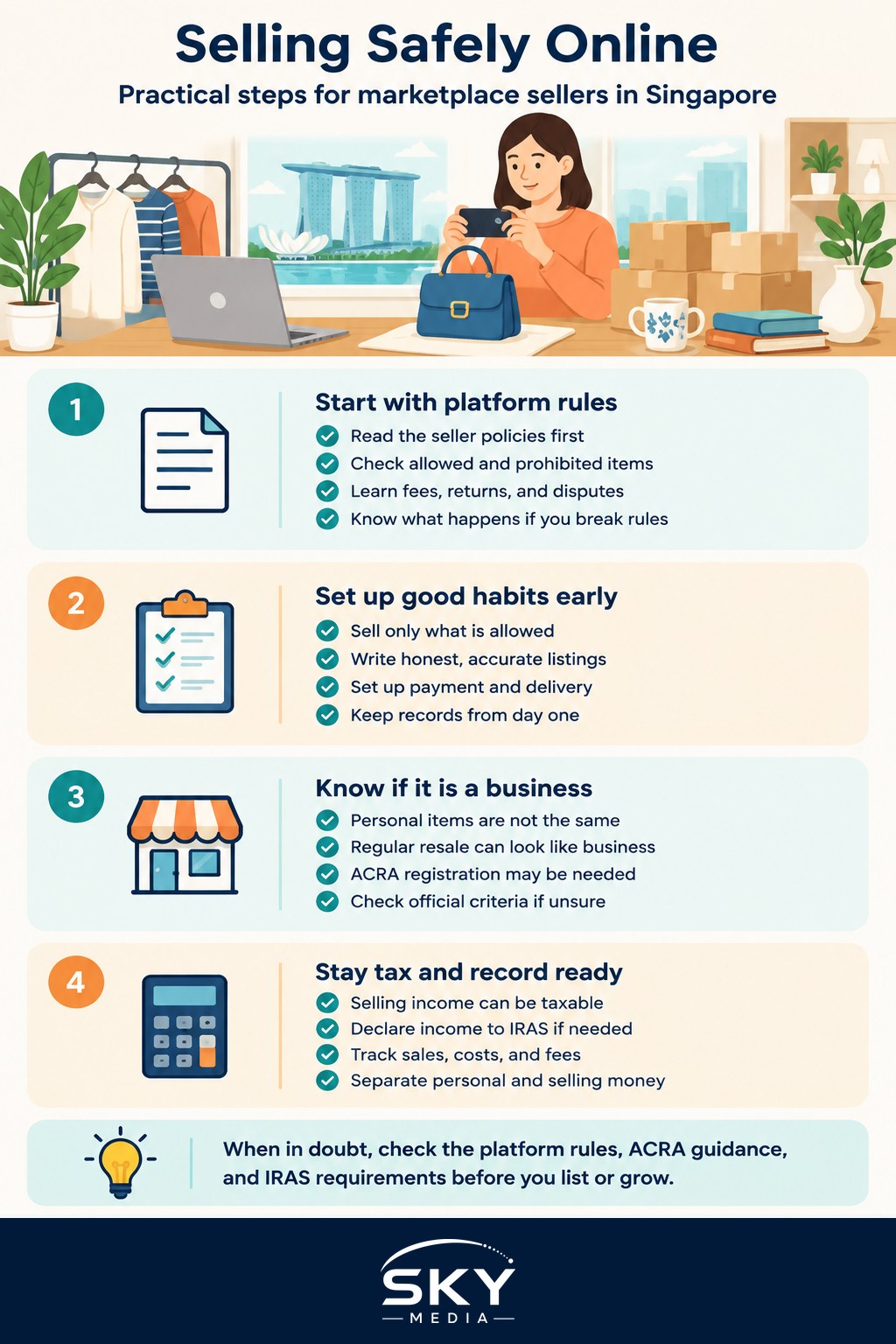
The barrier to entry is low, which is both the appeal and the trap. Before you list your first item, understand that each platform has its own rules, and following them is not optional. Read the seller policies of whichever marketplace you choose, covering what you may sell, prohibited items, how fees and commissions work, how disputes and returns are handled, and what happens if you break the rules. Accounts that ignore platform policy can be suspended, and you can lose access to your listings and any pending payouts.
A calm, methodical setup pays off. A few things to sort out early:
- Decide what you are selling and check it is allowed on that platform and legal to sell in Singapore.
- Write honest listings with clear photos and accurate descriptions, since misleading buyers leads to disputes and poor reviews.
- Understand the platform’s fees so you price correctly and are not surprised at payout.
- Set up a reliable way to receive payment and to post or deliver items.
- Keep records of what you sell, for how much, and your costs from day one.
That last point matters more than beginners expect, because good records make everything later, from pricing to tax, far simpler.
Hobby seller or a real business?
There is an important line between casually selling your own second-hand items and running a business, and it affects your obligations. Selling a few personal belongings you no longer need is generally different from regularly buying or making goods to sell for profit. As your activity grows more frequent and organised, it starts to look like a business.
If what you are doing becomes a business, you may need to register it with the Accounting and Corporate Regulatory Authority (ACRA). Registration is a formal step, and the requirements and any fees are set by ACRA, so check their official guidance for what applies to your situation rather than guessing. Do not assume you are exempt simply because you sell online or work from home.
Here is a simple way to think about where you might sit.
| Activity | Looks more like | Points to consider |
|---|---|---|
| Selling your own used clothes and furniture | Personal selling | Occasional, no profit motive |
| Reselling items you buy in bulk, regularly | A business | May need ACRA registration |
| Making and selling crafts consistently for profit | A business | Consider registration and record keeping |
| One-off sale of a personal gadget | Personal selling | Usually straightforward |
This table is a guide to help you reflect, not a legal test. If you are unsure which side of the line you are on, check ACRA’s criteria and seek proper advice.
Tax, records, and staying compliant
Income you earn from selling can be taxable, and it is your responsibility to get this right. If your selling generates income, you may need to declare it to the Inland Revenue Authority of Singapore (IRAS). The rules on what counts as taxable income and how to report it are set by IRAS, so refer to their official guidance and keep it in mind from the start rather than scrambling at tax time.
Good record keeping is the thread that ties this together. Track your sales, your costs, platform fees, and postage, and keep receipts and statements. Clean records make it easy to see whether you are actually making money, to price sensibly, and to report accurately if you need to. If you are new to the local tax system, our guide on income tax filing for newcomers in Singapore is a helpful companion, and understanding your broader finances through our overview of understanding your Singapore payslip and CPF puts your side income in context.
A few more habits protect you as you grow:
- Deliver what you promise, on time, and communicate clearly with buyers.
- Handle refunds and disputes according to the platform’s process.
- Never sell counterfeit, unsafe, or prohibited goods.
- Keep your personal and selling finances easy to tell apart.
Building something that lasts
Selling on online marketplaces in Singapore can start as a weekend clear-out and grow into a genuine side income or even a full business. The sellers who thrive are the ones who treat it seriously from the beginning: they follow each platform’s rules, keep honest records, register with ACRA if their activity becomes a business, and declare income to IRAS as required. Do those things, check the official sources when you are unsure, and you can grow at your own pace with confidence rather than anxiety.
Further reading: Selling on TikTok Shop · Selling on Amazon from Singapore · Selling on Carousell as a Business in Singapore