

Welcoming a kitten into your home is a joyful moment, and a little preparation makes the transition smoother for everyone. A calm, well-organised space helps a nervous newcomer settle, feel safe, and start to trust you. Getting your new kitten setup in Singapore right means gathering the essentials, kitten-proofing your flat, and thinking about safety in a high-rise home. This guide covers what to prepare before your kitten arrives and how to help those first days go well. Before bringing a kitten home, do consider adopting rather than buying, as our local shelters have many wonderful kittens and cats looking for families.
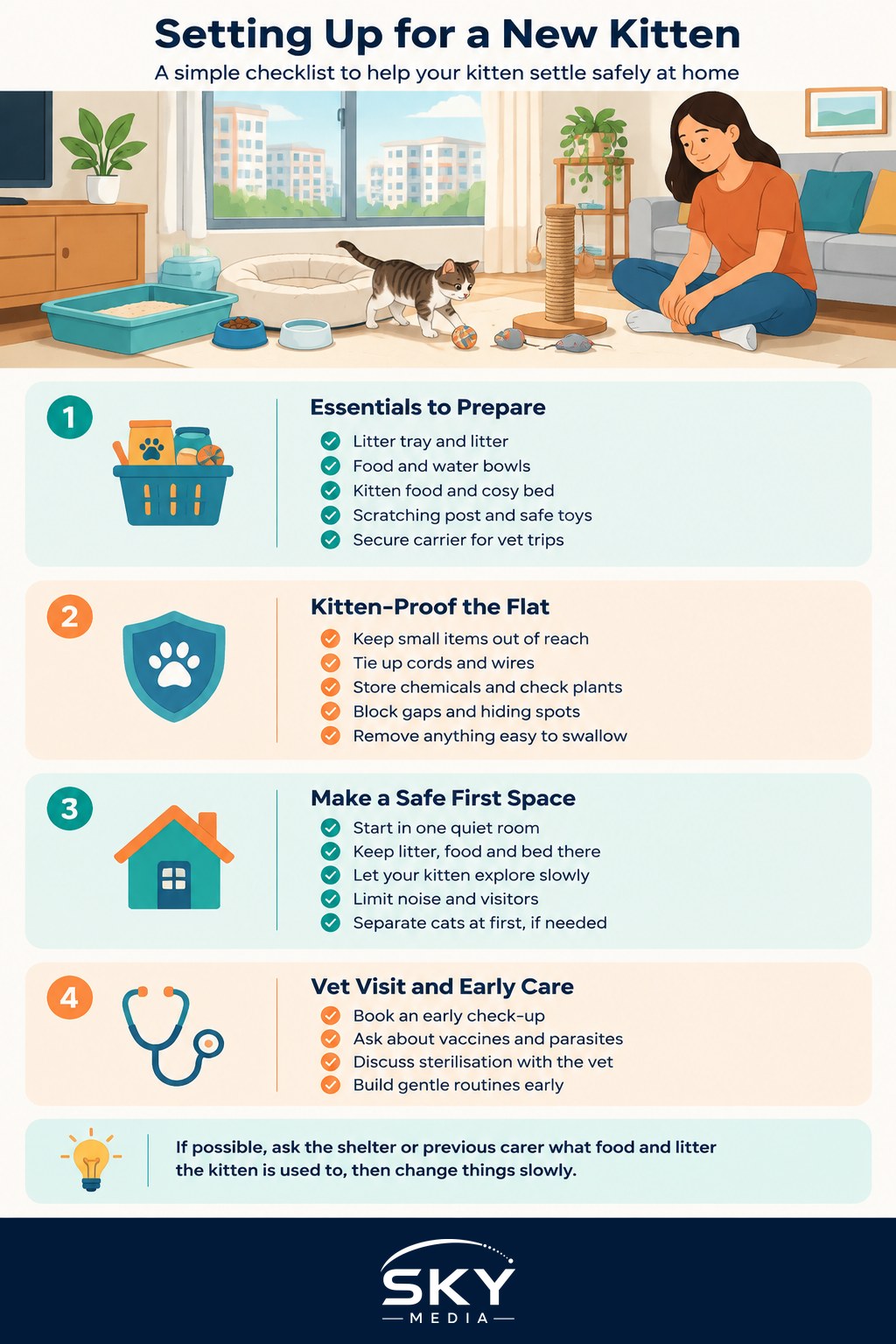
Essential Supplies to Prepare
Having the basics ready before your kitten arrives means you can focus on settling them in rather than rushing out to shop. The core items are:
- Litter tray and litter. Start with the same litter type the kitten is used to if you can, to avoid confusion. Place the tray somewhere quiet and easy to reach.
- Food and water bowls. Shallow, easy-to-clean bowls suit small kittens. Keep them separate from the litter tray.
- Kitten food. Feed a diet formulated for kittens, and try to continue whatever they were eating before to avoid an upset tummy, changing food gradually over several days.
- A cosy bed. A soft, washable bed in a quiet corner gives your kitten a secure place to rest.
- Scratching post. Kittens need to scratch, so offer a sturdy post early to protect your furniture and give them a healthy outlet.
- Safe toys and a carrier. Choose toys with no small parts that could be swallowed, and get a secure carrier for vet trips.
For guidance on feeding through those growing months, our kitten care basics guide is a helpful companion.
Kitten-Proofing Your Flat
Kittens are curious, agile, and astonishingly good at finding trouble. Before your kitten explores, go through your home and remove or secure hazards:
- Small swallowable objects. Hair ties, rubber bands, string, and small toys can be swallowed and cause a blockage, so keep them out of reach.
- Loose cords and wires. Tie up blind cords and electrical cables, which kittens love to chew and can become tangled in.
- Toxic plants and chemicals. Many common houseplants and cleaning products are poisonous to cats. Keep cleaning supplies locked away and check any plants before bringing a kitten home. Our guide to foods that are toxic to pets covers dangers in the kitchen too.
- Gaps and hiding spots. Block off spaces behind appliances and under heavy furniture where a tiny kitten could get stuck.
High-rise safety is essential
This point deserves special attention in Singapore. Cats and kittens can slip or leap from open windows and balconies, and falls from height cause terrible, often fatal injuries. Fit secure mesh or grilles on all windows and balconies before your kitten arrives, and never rely on a cat’s balance to keep them safe. Please read our full guide to window and high-rise safety for cats before letting your kitten roam.
Creating a Safe First Space
Rather than giving your kitten the run of the whole home on day one, start them in a single quiet room with everything they need, the litter tray, food, water, bed, and a toy or two. This smaller world feels far less overwhelming and helps them learn where the litter tray is. Let them explore at their own pace, and sit quietly nearby so they get used to your presence without pressure.
Once your kitten is confident and eating and toileting well, gradually open up the rest of the flat under supervision. If you already have another cat, introductions need to be slow and careful, so give the two of them separate spaces at first and let them get used to each other’s scent before any face-to-face meeting.
Keep early days calm. Limit loud noises and too many visitors, and let your kitten come to you. Gentle, positive handling now builds a trusting, affectionate companion for years to come.
The First Vet Visit and Ongoing Care
Booking an early check-up with a licensed vet is one of the most important things you can do. A vet will examine your kitten, discuss vaccinations, parasite prevention, and sterilisation, and answer your questions. This is general information rather than veterinary advice, so let your vet guide the specifics for your individual kitten, including any diet, medication, or health concerns.
Sterilising your cat has real benefits for their health and behaviour and helps reduce the number of unwanted animals, so do talk it through with your vet when the time is right. Setting up good habits early, from regular play to a settled routine, gives your kitten the best possible start.
A Caring Wrap-Up
A thoughtful new kitten setup is really about kindness and foresight. Gather the essentials, kitten-proof your flat with special care for windows and balconies, create a small safe space to start, and book that first vet visit. Take introductions and exploration slowly, and let your kitten build confidence in their own time. With patience and love, you will help your little one grow into a happy, secure member of the family, and the bond you build in these first weeks will last a lifetime.
Frequently Asked Questions
How long should a new kitten stay in one room? There is no fixed number of days. Keep your kitten in its starter room until it is eating, using the litter tray and moving about confidently. Then open up the rest of the flat gradually, with supervision, so the bigger space does not overwhelm it.
When can a kitten go for its first vet check-up? Book a check-up soon after your kitten arrives, rather than waiting for a problem. A licensed vet can examine it and explain vaccinations, parasite prevention and sterilisation timing. Bring any records you received from the seller or shelter so the vet has the full picture.
Is it better to adopt a kitten or buy one? Adopting is a good choice, since local shelters and rescue groups have many kittens and cats waiting for homes. Whichever route you take, make sure the kitten comes from a responsible source that can share its health history. Visit in person and ask questions before committing.
What window grilles or mesh do I need for a cat in a high-rise flat? You need secure mesh or grilles covering every window and balcony opening, with no gaps a kitten could squeeze through. Check how a product is fixed and that it is strong enough for a determined cat. Ask the installer about HDB or condo rules before fitting anything.
How do I introduce a new kitten to my resident cat? Go slowly. Keep the two apart at first, let them sniff each other’s bedding to get used to the scent, then allow short supervised meetings. Make sure each cat has its own food, water and litter tray. If there is ongoing fighting, ask your vet for advice.
Official sources: Animal & Veterinary Service
Further reading: Caring for Orphaned Kittens and Puppies