
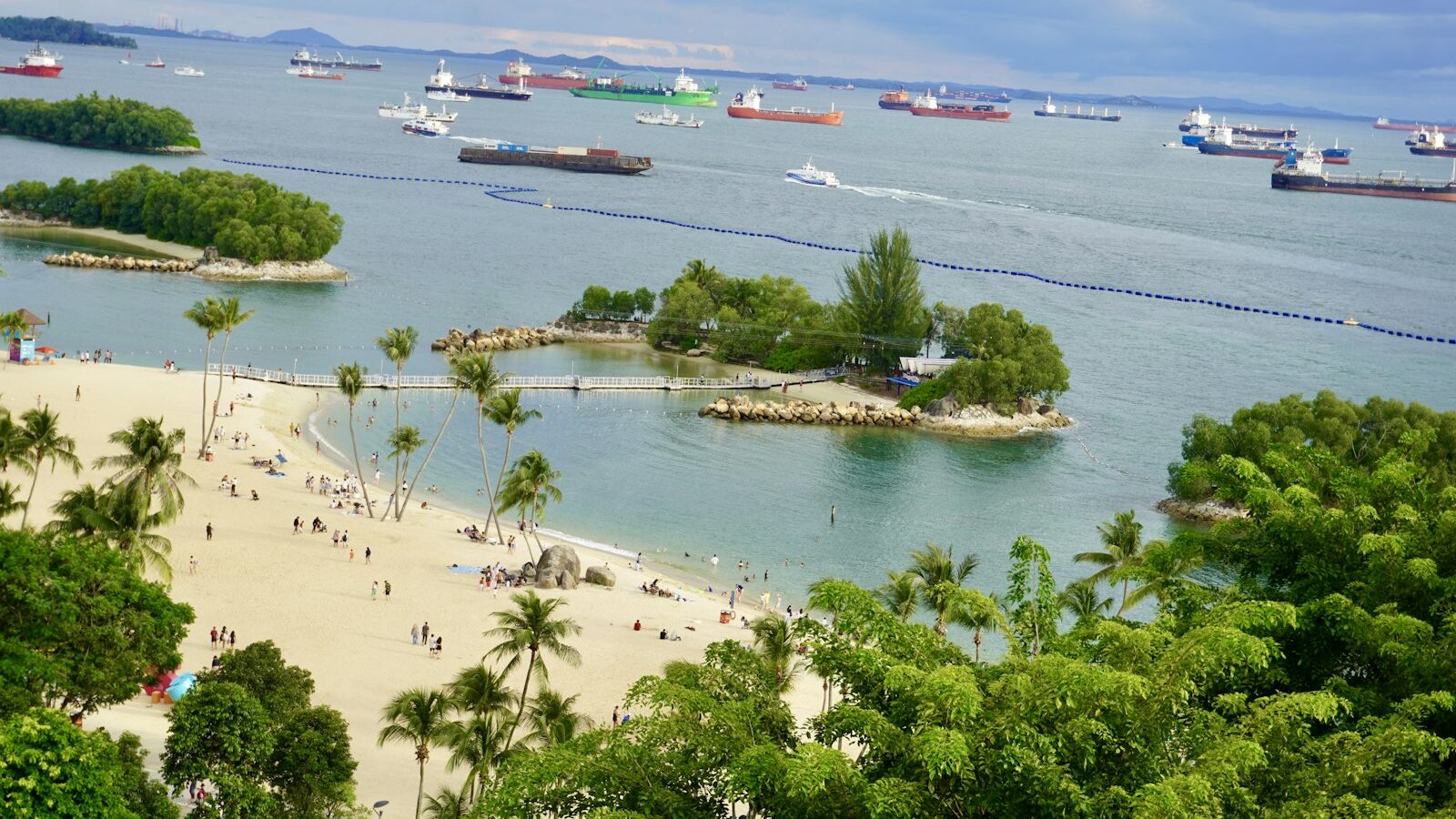
Most Singapore island trips are about a beach, a picnic and a ferry home. A visit to the Sisters’ Islands is different. The two small islands sit inside Singapore’s first marine park, and the reason to go is not the sand but what lives on the reef flats, seagrass and rocky shore around them. This Sisters Islands guide explains how visits work, what you might see at low tide, how to prepare and how to behave so the marine life stays healthy for the next group.
Arrangements, schedules and rules on the islands are set by the National Parks Board (NParks) and can change, so treat this as a planning overview and confirm the current details on the NParks website before you book anything.
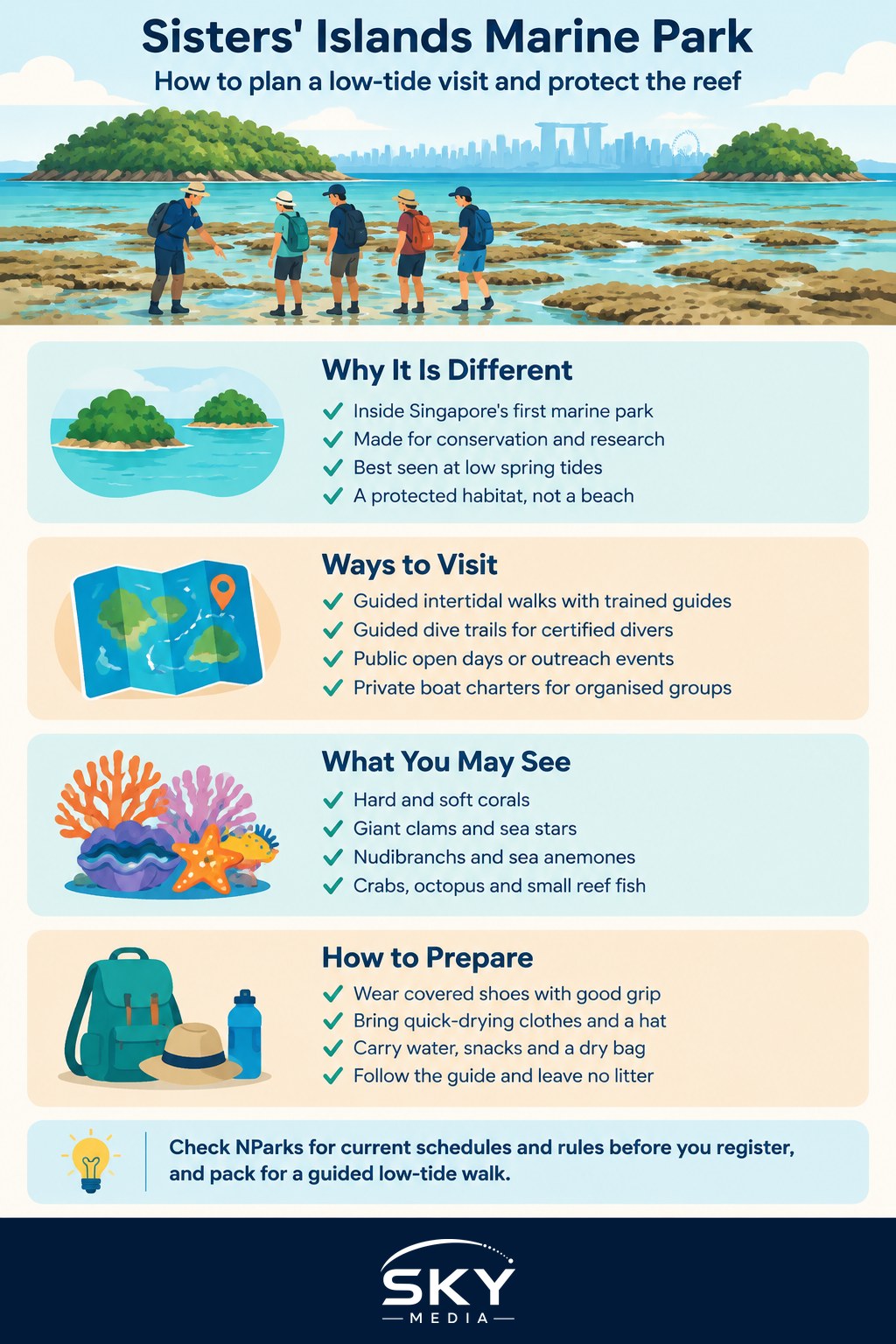
What Makes the Sisters’ Islands Different
The Sisters’ Islands are a pair of islands, usually called Big Sister’s Island and Small Sister’s Island, in the Southern Islands group south of the main island. Together with the waters around them and nearby reefs, they form the Sisters’ Islands Marine Park, managed by NParks.
The marine park exists to protect and study Singapore’s coastal biodiversity. Despite heavy shipping traffic nearby, local reefs host a surprising range of hard and soft corals, sponges, sea anemones, giant clams, sea stars, nudibranchs, crabs and fish. The park is also used for research, outreach and the restocking of species such as giant clams.
That focus shapes the visitor experience in a few ways:
- Access is managed. Parts of the park are reserved for conservation and research, and visitor activities are usually organised rather than free-roaming.
- The tide matters more than the weather. The best viewing happens during low spring tides, when reef flats and rock pools are exposed.
- It is a look-but-don’t-touch place. You are a guest in a protected habitat, not on a recreational beach.
If you are after swimming and sunbathing instead, the more developed Southern Islands are a better fit, and you can combine a trip there with other low-cost ideas from our guide on visiting Singapore on a budget.
How to Visit: Guided Walks, Dives and Boats
There is no regular public ferry service dedicated to the Sisters’ Islands the way there is for some neighbouring islands, so most people visit through an organised activity. The common routes are below. Check the NParks website for which ones are running, how to register and any age or fitness requirements.
| Way to visit | What it involves | Best for | What to check first |
|---|---|---|---|
| NParks guided intertidal walk | A small group led by trained guides along the shore at low tide, with transport arranged | First-timers, families with older children, curious adults | Registration dates, minimum age, fee, meeting point, cancellation for weather |
| Guided dive trail | Certified divers explore underwater trails with marked points of interest | Qualified scuba divers wanting to see the reef below the tide line | Certification level required, dive operator arrangements, visibility conditions |
| Public open days or outreach events | Occasional events opened to the public, sometimes with talks and exhibits | Anyone who missed walk registration | Whether the event is running this year and how to register |
| Private boat charter | Hiring a boat to the area for your own group | Groups with a specific plan who know the rules | What is permitted ashore, landing rules, safety equipment, licensed operator |
Guided walk slots tend to be limited because groups are kept small to reduce trampling. If you want to go, watch for registration openings on the NParks site and sign up early.
What You Might See at Low Tide
Every walk is different, and sightings depend on the season, tide height and luck. Typical finds on Singapore’s shores include:
- Corals, both hard and soft, many of them more colourful than people expect.
- Giant clams, some of which may be part of restocking efforts in the park.
- Sea stars and feather stars, including knobbly and cushion types on sandy and seagrass areas.
- Nudibranchs, tiny sea slugs with striking colours that reward patient looking.
- Sea anemones with resident anemonefish or shrimps.
- Crabs, octopus, sea cucumbers and small reef fish hiding in pools and crevices.
Your guide will point out animals and explain what they do, and many guides are happy to talk about how the reefs cope with sedimentation, warming water and shipping. Bring your questions. If marine life sparks a wider interest, our explainer on keeping a marine or saltwater tank covers what it takes to care for reef animals at home, and why responsible sourcing matters.
Planning Your Trip: Tides, Timing and What to Bring
Low spring tides that are good for intertidal walks often fall very early in the morning or in the evening, depending on the time of year. That means early starts or late returns, and organised walks are planned around the tide table rather than convenient hours. The NParks schedule and Singapore’s published tide tables will show the timings.
Weather also plays a role. Thunderstorms, lightning and rough seas can lead to cancellations, and the monsoon seasons bring their own patterns. Our guide to the best time to visit Singapore explains the general weather pattern across the year, which helps if you are deciding when to plan around a visit.
A practical packing list for an intertidal walk:
- Covered shoes with good grip that can get wet, such as booties or old sports shoes. Slippers and bare feet are a bad idea on sharp rock and coral.
- Long, quick-drying clothing to protect against sun, scrapes and stings.
- A hat and reef-friendly sun protection, applied well before you reach the water.
- Plenty of drinking water and a small snack for after the walk, as facilities on the islands are limited.
- A torch or headlamp if the walk is in the evening.
- A dry bag for your phone, wallet and spare clothes.
- Insect repellent, particularly for dawn and dusk walks.
Leave behind anything you would not want to lose in the sea, and pack light so you can keep your hands free for balance.
Rules and Safety on the Shore
A marine park only works if visitors leave it as they found it. Your guide will brief you, but these rules apply to almost every shore walk:
- Stay with your group and follow the guide’s route. Guides choose paths that avoid fragile corals and seagrass.
- Step only on sand or bare rock where you can. Corals, seagrass and living surfaces are easily crushed.
- Do not touch, lift, collect or feed anything. Some animals sting or have sharp spines, and handling stresses or kills many of them. Taking shells, corals or animals out of a marine park is not allowed.
- Watch the tide. Rising water can cut off a route quickly. Follow the guide’s timing without argument.
- Keep drones, nets and buckets at home unless the organiser has specifically allowed them.
- Take all rubbish home, including food wrappers and bottle caps.
Heat is a real risk on an exposed reef flat. Drink before you feel thirsty, rest in shade when you can, and tell your guide straight away if you feel dizzy, cramped or unwell. If you have a medical condition or are unsure whether a walk suits you, check with your doctor and the organiser before you register.
Getting the Most From Your Visit
A few habits make a big difference:
- Move slowly. Many animals are small and camouflaged. Crouch and watch a single pool for a minute.
- Photograph without flash where possible, and never move an animal for a better shot.
- Ask about citizen science. NParks and partner groups sometimes run volunteer surveys and outreach programmes for people who want to go deeper.
- Read up afterwards. Noting what you saw and looking it up later turns a single trip into lasting knowledge.
Done well, a Sisters’ Islands visit is one of the most memorable outdoor experiences in Singapore. Plan around the tide, book through official channels, and treat the shore as the protected home it is.