
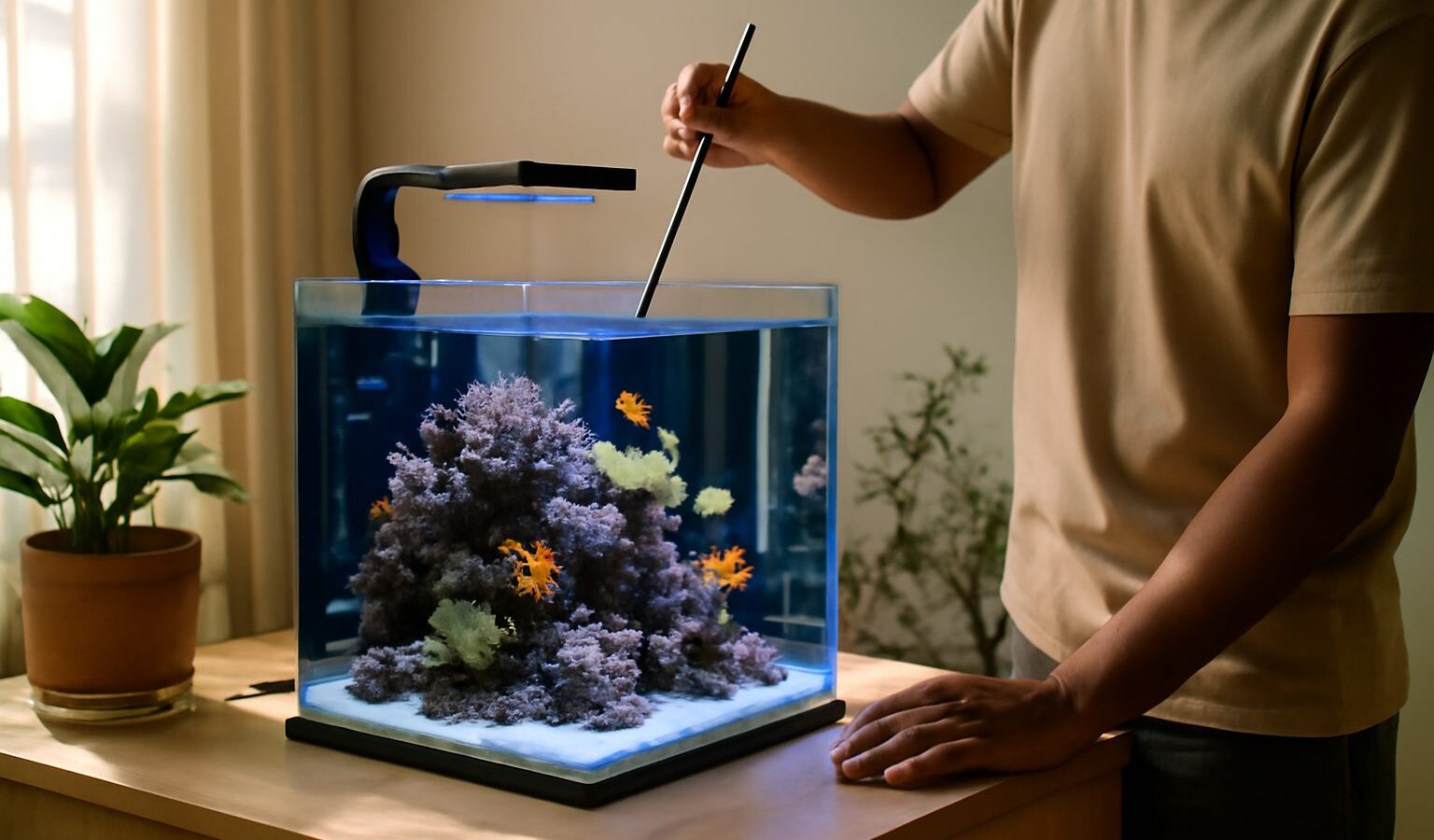
There is nothing quite like a thriving reef aquarium: vivid corals, darting clownfish and a slice of the ocean glowing in your living room. It is little wonder so many hobbyists dream of one. But keeping a saltwater tank in Singapore is a serious step up from a freshwater setup, and the kindest thing we can do is be honest about it. Marine aquariums are more demanding, more expensive and less forgiving of mistakes. Done well, they are deeply rewarding. Done on impulse, they lead to frustration and, worse, animals that suffer. This guide is here to help you decide with your eyes open.
This is general fishkeeping information, not veterinary or specialist advice. Marine livestock is delicate, so lean on experienced marine shops and, where needed, an aquatic vet.
Be Honest About the Cost and Commitment
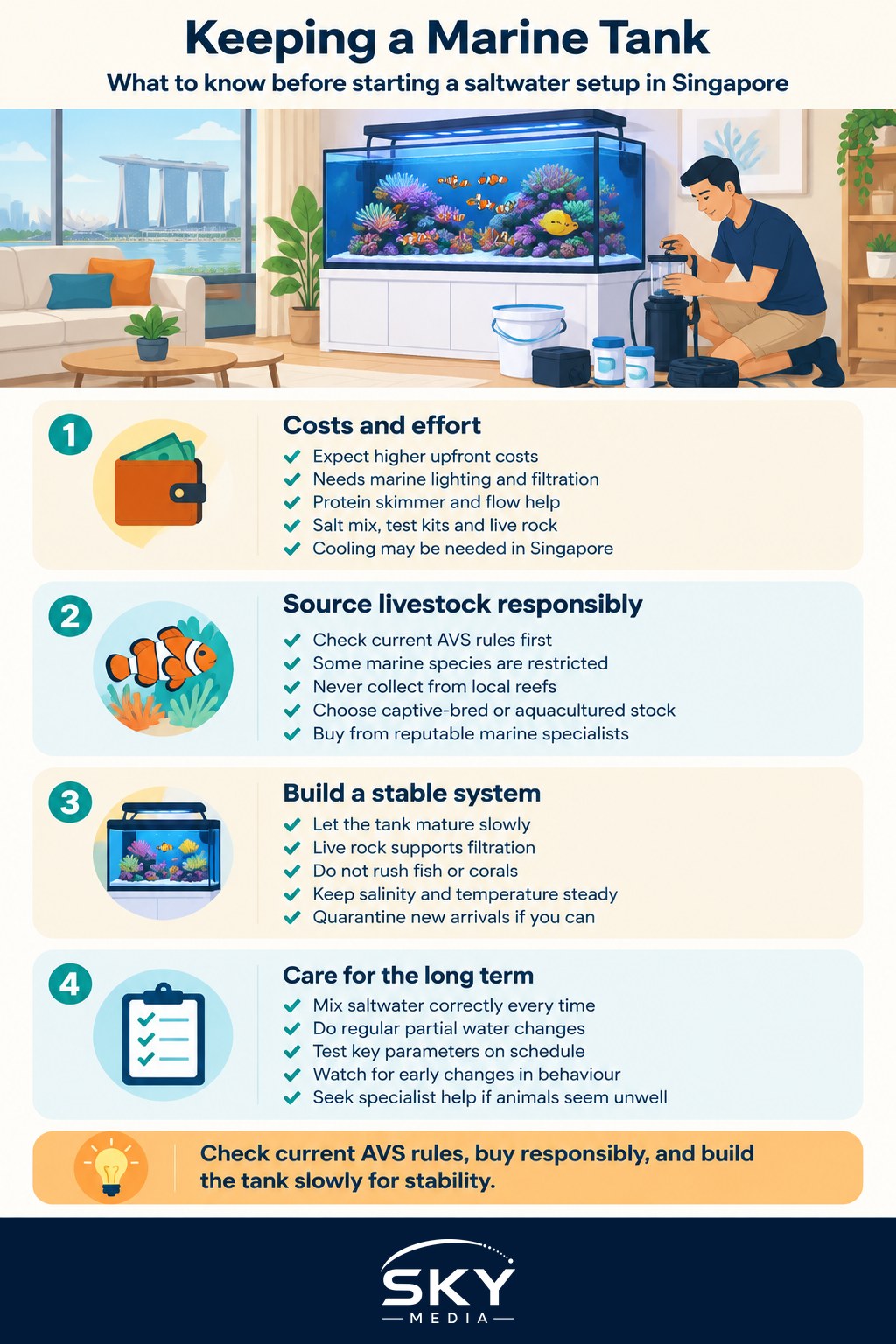
Let us start where too many guides gloss over: marine tanks ask a lot of you. The upfront cost is real. Beyond the tank itself, you are looking at proper lighting, a filtration approach suited to marine life, a protein skimmer for many setups, powerheads for flow, salt mix, live rock and reliable test kits. A reef tank with corals adds further to that. This is not a hobby to rush into to save money, and it is worth reading our overview of the cost of owning a pet in Singapore to set your expectations honestly.
The effort is just as real. Marine systems demand consistency: regular water changes with correctly mixed saltwater, careful monitoring of salinity, temperature and water chemistry, and topping up for evaporation, which matters more in a salt system because only fresh water evaporates and salt is left behind. In Singapore’s warm climate, keeping a reef tank cool enough can itself be a challenge, sometimes needing a chiller or good cooling, which adds cost and running electricity.
None of this is meant to scare you off, but to make sure you commit with full knowledge. If you are new to fishkeeping, it is genuinely wise to build your skills on a freshwater tank first. The habits you learn there, especially disciplined aquarium water testing and parameters, transfer directly and make the marine leap far safer.
Sourcing Livestock Responsibly and Legally
If you decide to go ahead, how you stock the tank matters enormously, both ethically and legally.
First, the law. In Singapore, only certain animals may be kept, and this applies to marine life too. Some species are protected or restricted, and it is your responsibility to check the current Animal and Veterinary Service (AVS, under NParks) rules and approved or restricted species lists before buying anything. Never keep a species you are unsure about, and never take animals from local reefs or the wild yourself.
Second, choose captive-bred and aquacultured livestock wherever possible. Many marine fish and corals are still wild-caught, and irresponsible collection damages fragile reef ecosystems. Captive-bred fish, such as tank-raised clownfish, and aquacultured or fragged corals are kinder to the ocean and often hardier and better adapted to aquarium life. Ask your supplier directly where their stock comes from, and favour shops that can answer clearly.
A few responsible-sourcing principles:
- Buy from reputable marine specialists who quarantine and care for their stock.
- Prefer captive-bred fish and aquacultured or fragged corals over wild-caught.
- Never buy a species you cannot legally keep or properly house.
- Research every animal’s adult size, temperament and needs before it comes home, not after.
Marine animals are wild creatures with exacting needs, so the principle of adopting or choosing responsibly, rather than buying on impulse, applies just as much here as it does across the rest of keeping fish and aquariums.
Building and Maintaining a Stable System
If freshwater fish need clean water, marine animals need stable water above all. Corals and many reef fish tolerate change poorly, so the whole art of marine keeping is patience and steadiness.
Set the system up and let it mature slowly. Live rock helps establish the biological filtration that processes waste, and cured rock and careful cycling matter even more than in freshwater. Do not rush to add fish, and never add corals to an immature, unstable tank. Introduce livestock gradually so the system can cope, and quarantine new arrivals where you can, as marine diseases spread fast in a closed reef.
Day to day, the routine centres on stability. Keep salinity steady using a reliable measure, top up evaporation with fresh water, hold the temperature stable and cool enough for the tropics, and test your key parameters on a regular schedule. Mix salt properly and do consistent partial water changes with good-quality water. Watch your animals closely, because in marine tanks small changes in behaviour or colour are early warnings worth heeding. If your livestock looks unwell and good husbandry does not resolve it, seek advice from an experienced marine specialist or an aquatic vet.
A Rewarding Hobby for the Committed
A marine or saltwater tank can be one of the most beautiful and absorbing pets you will ever keep, a living reef you tend for years. But it rewards preparation, patience and steady commitment, not impulse. Be honest with yourself about the cost, the effort and the ongoing care, source your livestock legally and responsibly, check current AVS rules before buying anything, and build your system slowly for stability. Come in with clear eyes and a genuine commitment, and you will give these remarkable animals the life they deserve.
Frequently Asked Questions
Can a beginner start with a saltwater tank? It is possible but harder, since marine animals tolerate mistakes poorly. Many experienced keepers suggest building skills on a freshwater tank first, especially water testing and patience. If you go marine, start with hardy species and lean on a reputable marine shop.
What is a protein skimmer and do I need one? A protein skimmer removes dissolved organic waste from the water before it breaks down. Many marine setups use one, especially reef tanks, but needs depend on the tank size and stocking. A reputable marine shop can advise what suits your system.
Why does evaporation matter more in a saltwater tank? Only fresh water evaporates, so salt stays behind and salinity rises. Top up with fresh water to keep salinity steady, and check it with a reliable measuring tool. Do not top up with saltwater, as that pushes salinity even higher.
How do I keep a reef tank cool in Singapore’s warm climate? Warm homes can push tank temperature above what corals and many fish tolerate. Good ventilation, fans and a chiller are common options, but each adds cost and electricity. Monitor temperature daily, and avoid sudden swings.
How can I tell if a coral or marine fish is captive-bred? Ask the seller directly and favour shops that answer clearly. Tank-raised clownfish and fragged or aquacultured corals are usually described as such. Never collect animals from local reefs, and check AVS rules before buying anything unusual.