
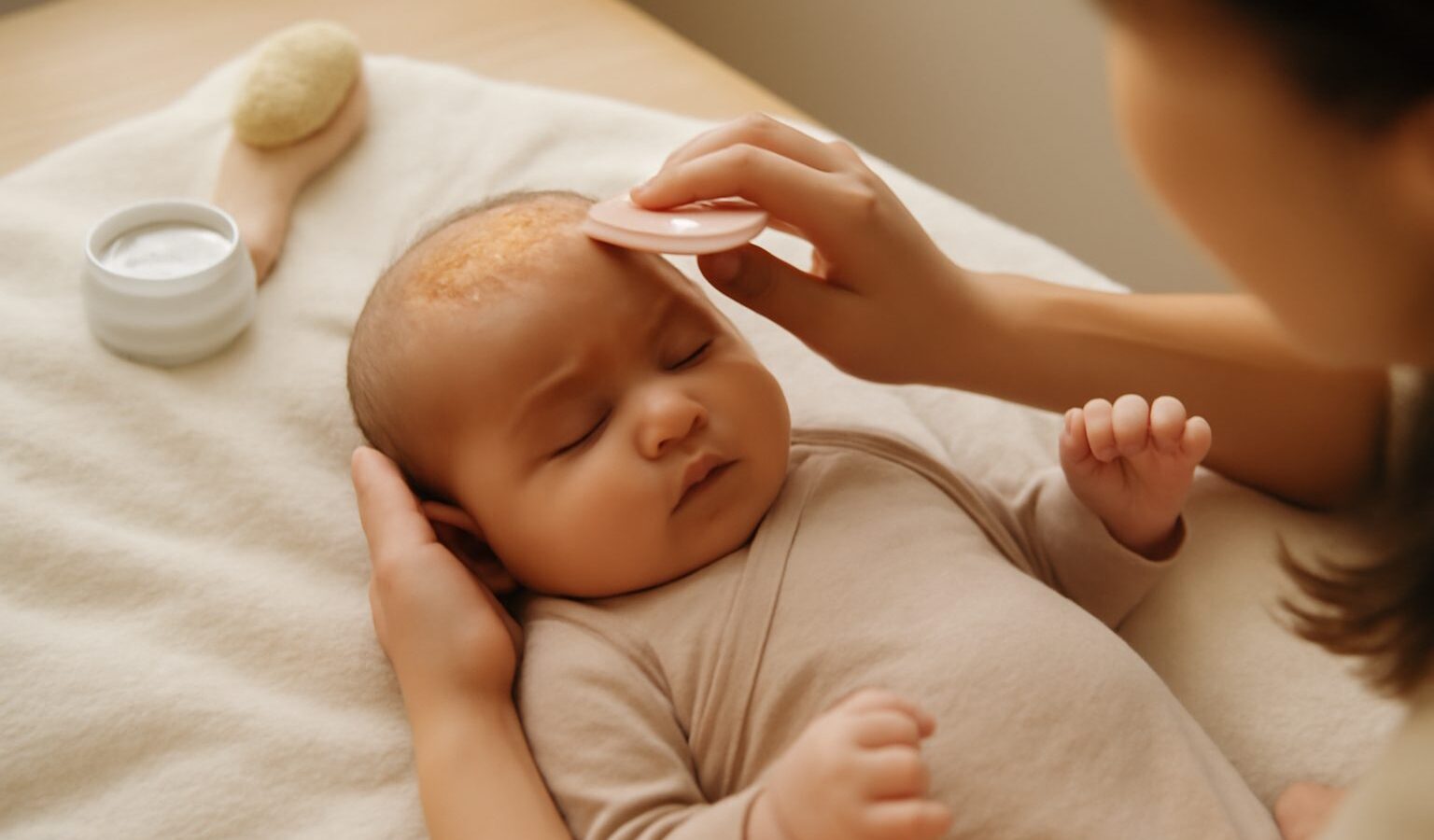
Those yellow, flaky patches on your newborn’s scalp can look alarming, but cradle cap is common, harmless, and usually clears on its own. Add Singapore’s heat, humidity, and the jump into cold air-conditioning, and delicate baby skin has a lot to cope with. This guide to cradle cap and baby skin explains what is going on, gentle ways to help, and the red flags that mean it is time to see a doctor.
This is general information, not medical advice. Baby skin conditions can look similar to one another, so for a rash that spreads, worsens, or worries you, or if your baby seems unwell, see your doctor, a paediatrician, or your polyclinic.
What Cradle Cap Actually Is
Cradle cap is the everyday name for greasy, yellow or brown, flaky or crusty patches, most often on the scalp, sometimes on the eyebrows, behind the ears, or in skin folds. It is very common in the first months and is thought to be linked to the oil glands in a baby’s skin. It is not caused by poor hygiene, it is not an allergy, and it is usually not itchy or sore for your baby.
The reassuring part: cradle cap is not dangerous and usually clears by itself over weeks to months, without any treatment at all. You do not have to do anything about it if your baby is otherwise well and comfortable.
Gentle Ways To Help Cradle Cap
If you would like to help it along, be gentle. The scalp underneath is delicate, so the golden rule is never to pick or scratch the crusts off, which can hurt the skin and invite infection.
- Soften first. Massaging in a small amount of a plain, baby-safe oil and leaving it on for a short while can loosen the flakes before a bath.
- Wash gently. Use a mild baby shampoo, then lightly loosen the softened flakes with a soft brush or cloth. Let them come away on their own.
- Do not overdo it. Once a day is plenty; too much washing can dry the skin out.
- Rinse oil out so it does not build up.
If it is stubborn, widespread, or you are tempted to use a medicated shampoo or cream, ask your doctor or pharmacist first rather than choosing a product yourself, since some are not suitable for babies. Do not use adult anti-dandruff treatments on a baby without medical advice.
Everyday Care For Delicate Baby Skin
Beyond cradle cap, a baby’s skin is thinner and loses moisture more easily than an adult’s, and Singapore’s climate adds its own challenges: heat and sweat outdoors, dry air-conditioning indoors, and plenty of sun.
- Keep baths short and not too hot. Warm, brief baths are kinder than long, hot ones, which can dry the skin.
- Use mild, fragrance-free products made for babies, and go easy on the amount. Less is usually more.
- Moisturise dry areas with a plain, baby-suitable moisturiser if the skin looks dry, patting rather than rubbing.
- Dress for the weather. Light, breathable cotton helps in the heat and reduces heat rash, which shows up as tiny bumps where a baby is warm and sweaty. Cooling down and loosening clothing usually helps heat rash settle.
- Mind the air-con. Very dry, cold air can dry skin, so avoid pointing vents straight at your baby.
- Protect from the sun. For young babies, shade, a hat, and light clothing come first. Ask your doctor before using sunscreen on very young infants, and follow current HealthHub advice on sun protection for children.
- Wash new clothes before first wear and rinse laundry well, since residues can irritate.
Gentle care beats a cupboard full of products. If a particular soap, lotion, or wipe seems to irritate, stop it and see whether the skin improves.
Cradle Cap Or Something Else? A Quick Comparison
Baby skin throws up several common conditions that can look similar. This table is a general guide, not a diagnosis, so when in doubt, get it checked.
| What you see | Often looks like | Where | General approach |
|---|---|---|---|
| Greasy yellow or brown crusts | Cradle cap | Scalp, brows, behind ears | Gentle care; usually clears alone |
| Dry, red, itchy patches | Eczema | Cheeks, folds, body | Moisturise; see a doctor for a plan |
| Tiny bumps in warm areas | Heat rash | Neck, back, folds | Cool down, loosen clothing |
| Red, sore skin in the nappy area | Nappy rash | Bottom, groin | Change often, barrier care |
| Spreading, blistering, weeping, or with fever | Possible infection | Anywhere | See a doctor promptly |
For the nappy area specifically, see our detailed guide to soothing nappy rash in babies.
Red Flags: When To See A Doctor
Most baby skin niggles are minor, but see your doctor or polyclinic if:
- A rash is spreading quickly, blistering, weeping, bleeding, or looks infected (redness, swelling, pus, or warmth).
- Cradle cap spreads widely, looks inflamed, or does not improve with gentle care.
- Your baby seems itchy, distressed, is not sleeping or feeding well, or the skin is clearly sore.
- There is dry, red, itchy, recurring skin that may be eczema, so you can get a proper care plan.
Seek urgent care, including A&E or calling 995, if your baby has a rash together with a high fever and looks very unwell, is floppy or hard to wake, is struggling to breathe, or has a rash that does not fade when you press a glass against it, as these can signal a serious illness. When it comes to a baby, it is always reasonable to get checked.
Keeping Perspective
It is easy to fret over every flake and blemish, especially with a first baby. Most of it is normal, temporary, and nothing you caused. Gentle, consistent care and a calm eye for the genuine warning signs will see you through the newborn months, and your baby’s skin will settle as they grow.
Explore More
Delicate skin needs gentle handling everywhere, so pair this with our guide to soothing nappy rash in babies and our gentle walkthrough of baby massage at home, which includes a note on choosing baby-safe oils. For feeding questions, see combination feeding with breast and bottle.