
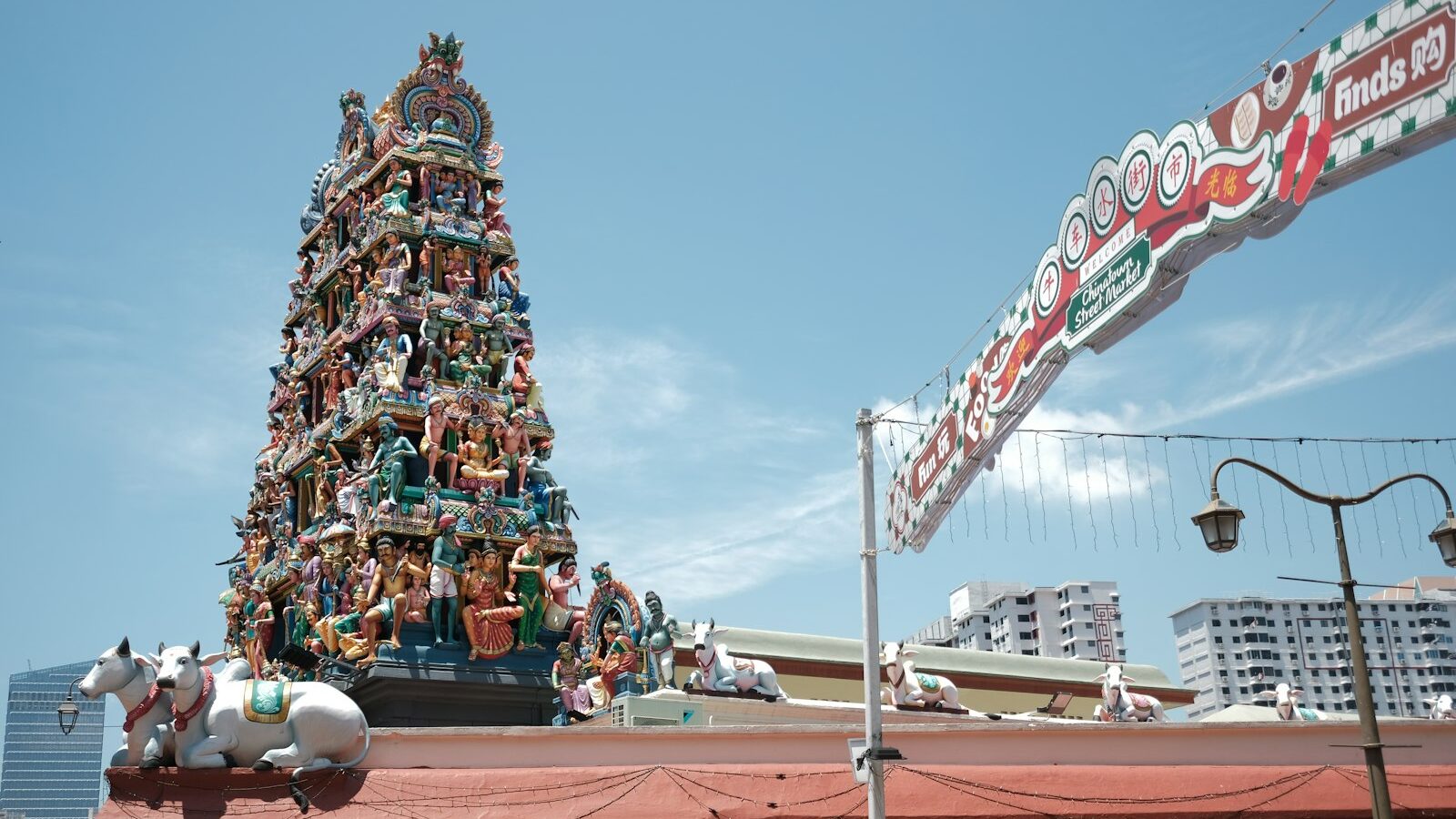
The Sri Veeramakaliamman Temple is one of Singapore’s most vivid and beloved Hindu temples, standing at the heart of Little India along Serangoon Road. Dedicated to the goddess Kali, it is a riot of colour, sculpture and devotion that draws worshippers and visitors in equal measure. This guide introduces its meaning and shares how to experience it with respect.
Significance and history
The temple is dedicated to Sri Veeramakaliamman, a form of the powerful goddess Kali, revered as a fierce yet protective mother figure who guards her devotees. For the Tamil Hindu community that grew up around Serangoon Road, the temple has long been a spiritual home and a source of strength, especially during the uncertain years of early settlement.
Its origins are tied to the labourers, traders and settlers who shaped Little India, and the temple grew alongside the community it served. Rather than fix exact dates from memory, treat the temple’s own records, signage and priests as the reliable source for its history. What is clear is that this is a place of deep and continuous devotion, cared for and renewed by generations of worshippers.
The temple’s prominence in Little India makes it both a religious anchor and a cultural landmark, a place where faith, art and community life meet.
What to see
The most immediate impression is one of colour. The gopuram, the ornate tower over the entrance, is covered in richly painted sculptures of deities and mythological figures, a feast for the eye and an invitation to look closer. Inside, the temple continues to dazzle with vivid ceilings, carved pillars and shrines.
At the heart of the temple is the shrine to the goddess Kali, often depicted in her powerful form. Around her you will find shrines to other deities associated with her, so that a visit offers a fuller picture of the divine family as Hindu tradition understands it. Devotees move between the shrines, making offerings and prayers.
Watch, from a respectful distance, the rituals of daily worship, the ringing of bells, the offering of flowers and light, and the quiet intensity of prayer. These living practices, more than any single carving, are what give the temple its soul.
The temple follows a daily rhythm of prayers and rituals, often marked by the sound of bells, the scent of incense and camphor, and the sight of priests conducting offerings before the deities. Devotees may walk clockwise around the inner shrine, a practice known as circumambulation, and receive blessed offerings such as sacred ash or a small portion of food. Fresh flowers, garlands and coconuts are common offerings, and the temple is regularly cleaned and adorned. Even a short visit lets you glimpse how devotion here is expressed through all the senses, colour, sound, scent and touch, woven together in a single act of worship.
Architecture
The temple is built in the South Indian Dravidian style, instantly recognisable from the towering, sculpture covered gopuram and the sense of abundant, exuberant decoration. Every surface seems to tell a story, with deities, guardians and mythological scenes rendered in bright, carefully maintained colour.
Because it is a working temple, the layout follows ritual use. Worshippers pass from the entrance towards the inner sanctum, moving deeper into the sacred space as they approach the main deity. Notice how the design guides devotion, drawing the eye and the feet inward, and how the temple is regularly repainted and renewed as an act of care.
Festivals and observances
The Hindu calendar is full of festivals, and the temple observes them with devotion and, at times, spectacular ceremony. Occasions honouring the goddess, along with major festivals such as Deepavali, the festival of lights, bring larger crowds, special rituals and a heightened atmosphere. Navaratri, a period devoted to the divine feminine, holds particular meaning at a temple dedicated to a goddess.
| Aspect | Sri Veeramakaliamman Temple | General visitor note |
|---|---|---|
| Tradition | Hindu temple | Active place of worship |
| Main deity | Goddess Kali, a fierce mother | Protective figure |
| Style | South Indian Dravidian | Sculpture covered gopuram |
| Location | Serangoon Road, Little India | Central and easy to reach |
| Footwear | Removed before entering | Racks provided |
| Notable festivals | Deepavali, Navaratri | Lunar dates, verify yearly |
Festival dates follow the traditional calendar and change each year, so check with the temple before planning around one.
Visiting etiquette
Hindu temples welcome respectful visitors, and simple courtesy makes all the difference. Dress modestly, covering shoulders and knees, and remove your shoes and any leather items where indicated before entering. You may be asked to wash your hands or feet, and it is polite to follow the lead of the devotees around you.
Move quietly and keep your voice low, especially near the shrines and during worship. Do not touch the statues, offerings or ritual items, and never step over or walk in front of someone who is praying. If a ceremony is under way, stand aside and observe rather than crossing the space, and wait for a suitable moment before moving on.
Photography is sometimes restricted, particularly around the inner sanctum, so look for signs and ask before taking pictures, especially of worshippers. Switch off your flash. If you would like to make an offering or receive a blessing, watch how others do it or ask a priest or volunteer for guidance. Approaching the temple as a place of living faith, rather than a colourful backdrop, is the heart of respectful visiting.
A vibrant home of devotion
The Sri Veeramakaliamman Temple is a place where art and worship are inseparable, where colour serves devotion and where the goddess watches over a community that has prayed here for generations. Come with an open and respectful heart, check the temple’s own guidance on hours and customs, and let its energy and beauty stay with you.
Explore more: Hindu temples in Singapore · Praying at a Hindu temple in Singapore · Little India heritage