
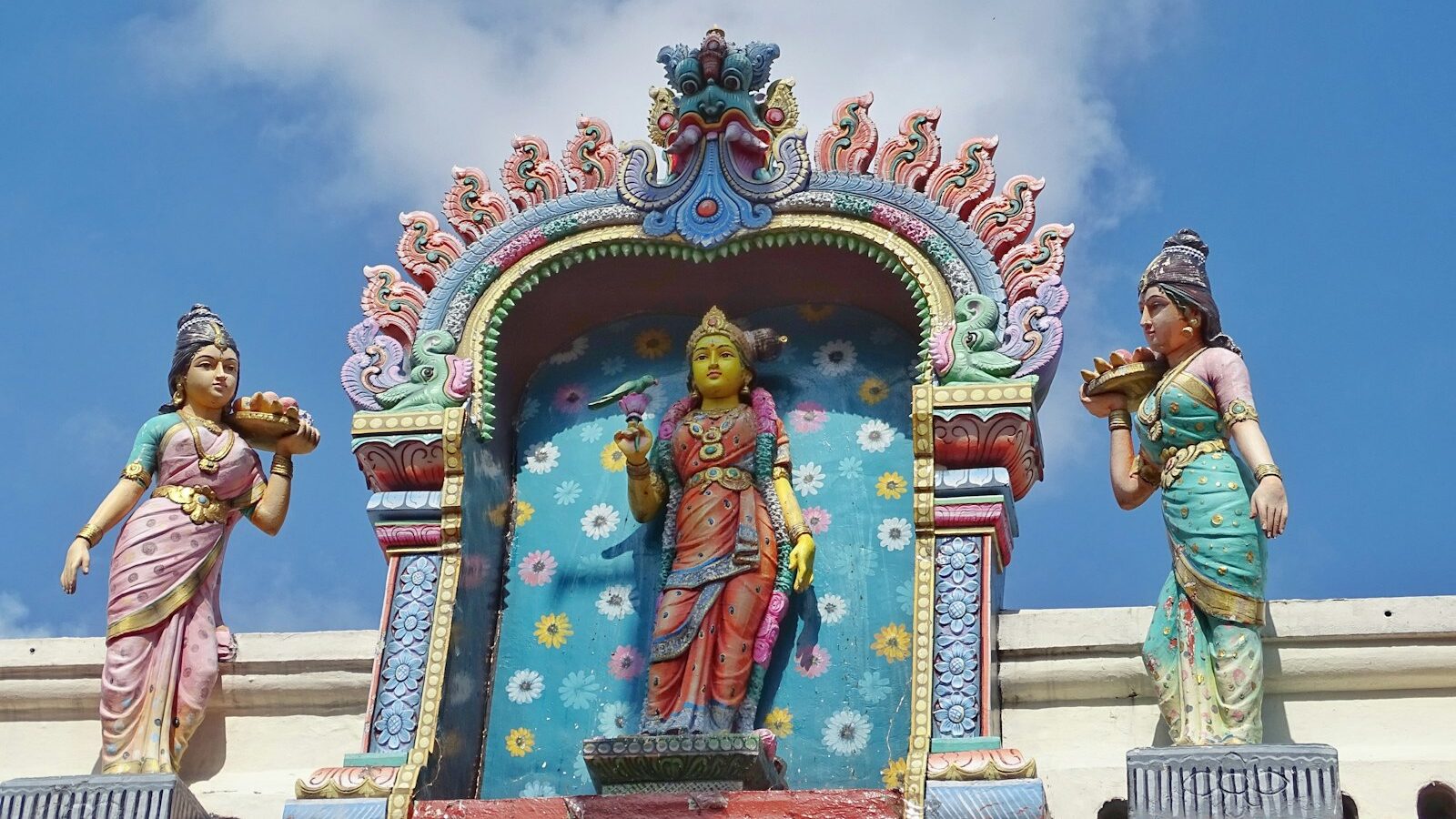
Walk down South Bridge Road in Chinatown and you cannot miss it: a towering gateway crowded with brightly painted figures of gods, goddesses and mythical creatures, rising above the shophouse rooftops. This is the gopuram of Sri Mariamman, the oldest Hindu temple in the country and one of its most photographed landmarks. Exploring Sri Mariamman Temple Singapore is a journey into the early Indian community’s story and into the living traditions of Hinduism on the island. This guide covers its history, its remarkable art and how to visit respectfully.

The oldest Hindu temple in Singapore
The temple traces its beginnings to the early years of the settlement, when Indian immigrants, many of them from southern India, arrived to work and trade in the growing port. It is closely associated with Naraina Pillai, a pioneering figure who came to Singapore in the settlement’s earliest days and helped establish the community. The first place of worship on this site was a simple structure of wood and attap, later rebuilt in more permanent brick and plaster as the community grew and gathered the means to do so.
The temple is dedicated to the goddess Mariamman, revered in the South Indian tradition as a protector against illness and a bringer of rain and prosperity. For newly arrived immigrants far from home, a temple to Mariamman offered comfort, healing and a sense of continuity. Like Thian Hock Keng for the Hokkiens and Sultan Mosque for the Malay-Muslim community, Sri Mariamman became far more than a religious site. It was a social anchor, a place that registered marriages and, in the early days, even served official community functions.
A masterpiece of Dravidian art
Sri Mariamman is built in the Dravidian style of southern India, and its most famous feature is the ornate gopuram, the tiered tower above the main entrance. Rebuilt and elaborated over the years, the gopuram is covered with sculptures of Hindu deities arranged in ascending rows, each figure vividly coloured and rich in detail. Crowning the boundary walls are rows of sacred cows, sculpted and painted, gazing out over the street.
Step through the gateway and the courtyard opens onto a complex of shrines. The main shrine honours Mariamman, while others around the compound are dedicated to a range of deities, each with its own significance and following. The ceilings and inner halls are decorated with painted scenes from Hindu mythology, and skilled artisans, often brought from India, have maintained and renewed this artwork over generations, so that the colours remain fresh and the traditions of temple craft continue.
The temple was gazetted as a national monument in the 1970s, and it stands under the care of its management and the wider Hindu community, conserved as one of the treasures of Singapore’s built heritage.
Festivals and living traditions
Sri Mariamman is a working temple whose calendar follows the rhythms of the Hindu year, and it is best known to many for Theemithi, the fire-walking festival held here each year in the period before Deepavali. During Theemithi, devotees who have made vows walk across a pit of glowing embers as an act of faith and thanksgiving, watched by large crowds. It is one of the most striking religious observances in Singapore and draws visitors and worshippers alike.
Throughout the year the temple marks the major Hindu festivals with prayers, processions and ceremonies, and Deepavali sees the surrounding streets of Little India and Chinatown come alive. That Singapore’s oldest Hindu temple sits in the heart of Chinatown is itself a telling detail. It reflects how the early communities lived and worshipped side by side, and how the historic districts we map by a single name were in fact home to many peoples.
What to see at Sri Mariamman Temple
Use this quick guide to the highlights so you know where to look on your visit.
| Feature | What to look for |
|---|---|
| Gopuram | The tiered entrance tower crowded with colourful deity sculptures |
| Boundary wall | Rows of sculpted sacred cows along the top |
| Main shrine | The central shrine dedicated to the goddess Mariamman |
| Inner ceilings | Painted scenes from Hindu mythology, renewed by temple artisans |
Visiting Sri Mariamman respectfully
Visitors are welcome at Sri Mariamman, and observing a few customs helps you enjoy the temple while respecting those who come to pray.
- Remove your shoes before entering the temple, as is required at Hindu temples, and leave them at the designated area.
- Dress modestly, with shoulders and knees covered.
- Move quietly and respectfully, especially during prayers and ceremonies, and do not touch the shrines or offerings.
- Photography may be restricted in certain areas or during rituals, and a small fee is sometimes charged for cameras, so look for notices and ask staff if unsure.
- Opening hours follow the daily prayer times and change during major festivals such as Theemithi and Deepavali. Check the temple’s official information before your visit for current timings and any festival arrangements.
Getting there could not be easier. The temple stands on South Bridge Road in Chinatown, and the nearest MRT stations are Chinatown and Maxwell, with Telok Ayer also close by. A visit combines naturally with the surrounding heritage streets, the food centres of Chinatown and the other places of worship a short walk away.
Bright, intricate and full of life, Sri Mariamman is a reminder that Singapore’s oldest traditions are also living ones. Its gopuram has watched over South Bridge Road for generations, and it continues to gather the community in faith and festival, one of the enduring landmarks of the island’s heritage.
Explore more
The lanes around Sri Mariamman are rich with heritage. Continue with Thian Hock Keng, the oldest Hokkien temple on nearby Telok Ayer Street, and Nagore Dargah, a landmark of the Indian-Muslim community, to see how faiths sat side by side in the old town. For another of Singapore’s grand houses of worship, read the story of Sultan Mosque in Kampong Glam.
Frequently Asked Questions
Can I take photos inside Sri Mariamman Temple? Photography may be restricted in certain areas or during rituals, and a small fee is sometimes charged for cameras. Look for notices and ask staff if unsure. Never photograph worshippers during prayers without consent. The gopuram outside is the most photographed feature.
What is Theemithi and can visitors watch it? Theemithi is the fire-walking festival held each year in the period before Deepavali, when devotees who have made vows walk across glowing embers as an act of faith and thanksgiving. Large crowds watch. Check the temple’s official information for current timings and arrangements.
Why do I need to take off my shoes at the temple? Removing shoes is required at Hindu temples as a sign of respect for the sacred space, and there is a designated area to leave them. Dress modestly with shoulders and knees covered, and move quietly during prayers. Do not touch the shrines or offerings.
Who was Naraina Pillai? He was a pioneering figure who came to Singapore in the settlement’s earliest days and helped establish the Indian community, and he is closely associated with the temple. The first place of worship here was a simple wood-and-attap structure, later rebuilt in brick and plaster.
Why is a Hindu temple in the middle of Chinatown? It reflects how early communities lived and worshipped side by side, since historic districts known by one name were home to many peoples. Sri Mariamman sits on South Bridge Road, close to Chinatown and Maxwell MRT stations, and ties neatly to nearby places of worship.
Further reading: Sri Krishnan Temple · Sri Sivan Temple: A Heritage Guide to Singapore’s Wandering Shiva Temple · Sri Senpaga Vinayagar Temple: A Heritage Guide