
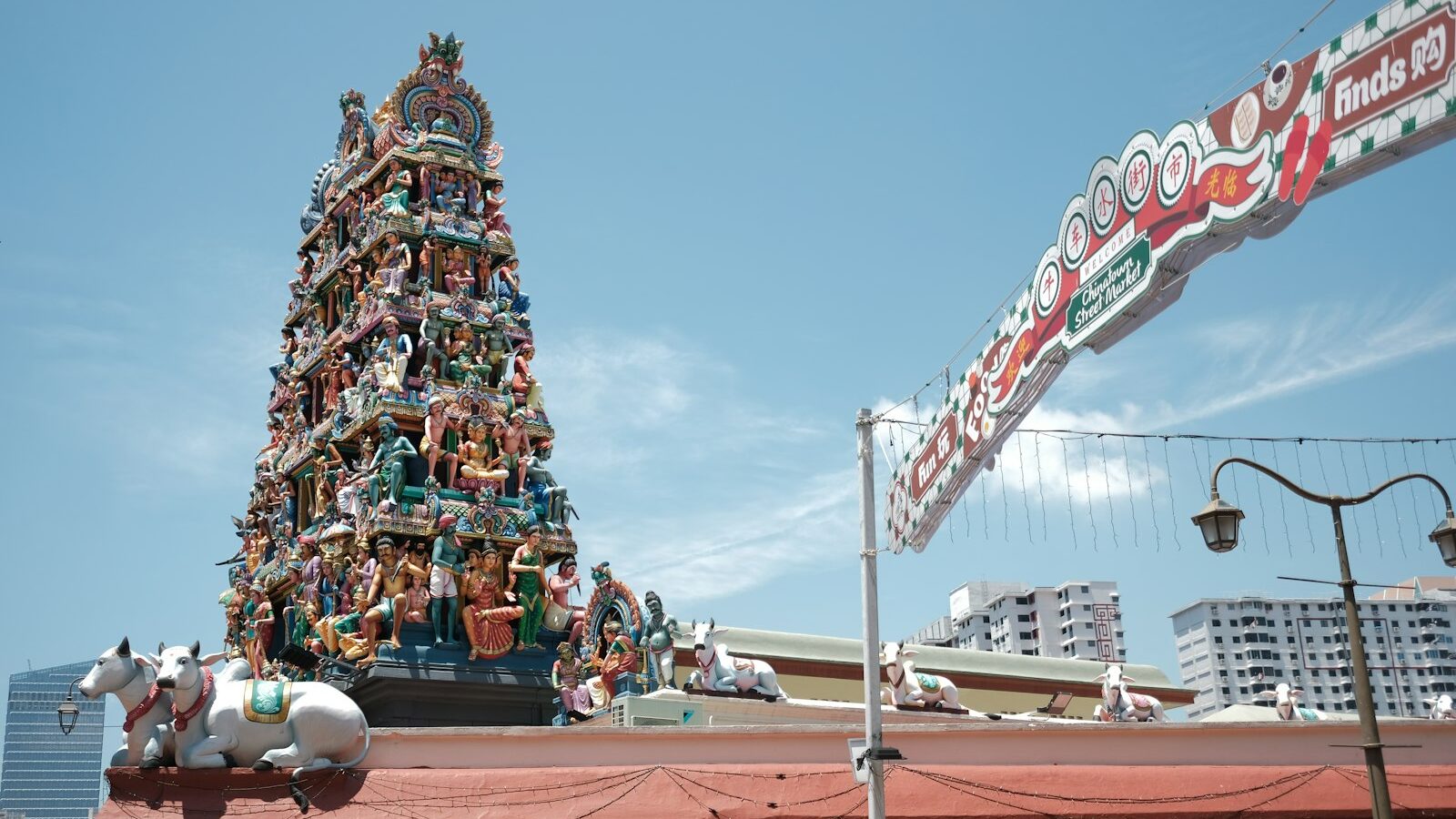
Standing along Serangoon Road in the heart of Little India, Sri Srinivasa Perumal Temple is one of Singapore’s most important Hindu places of worship. It is a Vaishnavite temple, which means it is dedicated to Vishnu, the preserver in the Hindu tradition. Here Vishnu is honoured in the form of Srinivasa Perumal, a name closely associated with the famous hill shrine of Tirupati in India. For the many Tamil and other Hindu families who have lived and worshipped in this district for generations, the temple is both a spiritual home and a living piece of heritage.
The temple serves the Hindu community, and in particular devotees of the Vaishnavite tradition. Yet its cultural importance reaches well beyond any single group. Its towering gopuram, or entrance tower, is one of the most recognised sights in Little India, and its annual role in Thaipusam draws attention from across Singapore and abroad. If you are new to Hindu worship, you may find it helpful to read our overview of Hindu temples in Singapore before you visit.

History and Significance
The origins of Sri Srinivasa Perumal Temple date back to the middle of the nineteenth century, when early Indian settlers established a place of worship near a freshwater source along Serangoon Road. Over the decades the modest shrine grew into a substantial temple as the surrounding community expanded and prospered. Successive generations of devotees contributed to its enlargement and beautification, and the striking tiered gopuram that greets visitors today reflects later phases of building and restoration.
The temple has long been recognised as a site of considerable historical value, and it is protected as part of Singapore’s national heritage. This status reflects not only the age of the temple but also its central place in the story of the Indian community here. Because opening hours, festival dates and any conservation works can change, it is best to check the temple’s official channels before you plan a visit, especially around major religious occasions.
The temple’s most widely known role is as the starting point of Thaipusam. This Hindu festival, observed by many Tamil devotees, involves a foot procession in which participants carry offerings, including the ornate frameworks known as kavadi, and pots of milk. The procession begins at Sri Srinivasa Perumal Temple and makes its way across the city to another temple. During Thaipusam the temple and its surroundings become intensely busy, and the atmosphere is deeply devotional. Visitors are welcome to observe, but should remember that this is a sacred act of faith and penance rather than a spectacle.
Architecture and Notable Features
The most eye catching feature of the temple is its five tiered gopuram, densely covered with sculpted figures of deities and celestial beings, finished in bright colours. This soaring tower is a classic element of South Indian temple design and functions as a spiritual gateway into the sacred space within. Beneath and behind it lie the prayer halls and shrines where daily rituals take place.
Inside, the main sanctum houses the presiding deity, with additional shrines dedicated to associated deities and consorts arranged around the complex. The interior is rich with carved pillars, painted ceilings and sculptural detail, all following the conventions of traditional temple craftsmanship. Priests conduct regular prayers and rituals, and the sound of bells, chanting and devotional music forms part of the everyday life of the temple. Fragrant offerings of flowers, fruit and camphor add to the sensory experience.
Every so often the temple undergoes a consecration ceremony, during which the structure is renewed and the gopuram is repainted. These events are significant milestones in the temple’s life and are marked by elaborate rituals.
Its Role Today
Sri Srinivasa Perumal Temple remains a fully active place of worship. Beyond daily prayers, it hosts a calendar of festivals and religious observances that punctuate the Hindu year, and it continues to serve as a gathering point for the community. For many, it is where important life events and seasonal celebrations are marked. It also stands as one of several major temples that give Little India its distinctive character, and it plays a part in Singapore’s broader story of religious harmony and festivals among many faiths living side by side.
How to Get There
The temple is located on Serangoon Road in the Little India district. The most convenient way to arrive is by MRT, alighting at Farrer Park station, from which the temple is a short walk. Little India station is also within reach. The area is well served by buses, and the surrounding streets are full of shops, eateries and other temples worth exploring on foot.
Respectful Visitor Etiquette
If you plan to visit, please approach the temple as an active house of prayer. Dress modestly, with shoulders and knees covered, and remove your shoes before entering the prayer areas, as is customary at Hindu temples. Move quietly, especially while rituals or prayers are in progress, and avoid walking directly in front of devotees who are praying. Photography may be restricted in certain areas, so always ask a temple attendant before taking pictures, and never photograph people at prayer without permission.
If you are unsure how to conduct yourself, our guide on praying at a Hindu temple in Singapore offers practical pointers, and newcomers may also appreciate our notes on temple worship etiquette for newcomers. Above all, defer to the temple’s own guidance and the instructions of its staff. Treated with respect, a visit to Sri Srinivasa Perumal Temple offers a meaningful window into a living tradition that has shaped Singapore for well over a century.
Frequently Asked Questions
What is a kavadi and why do devotees carry it? A kavadi is an ornate framework carried during the Thaipusam procession as an offering and act of faith and penance. Participants may also carry pots of milk. Visitors can observe respectfully, remembering it is a sacred act rather than a spectacle.
Is Sri Srinivasa Perumal Temple only for Hindus? It is a place of worship mainly serving the Hindu community, particularly Vaishnavite devotees, but respectful visitors are welcome to observe. Follow the dress and shoe rules, and check the temple’s official channels for visiting arrangements, especially during busy festivals.
Is it a good idea to visit during Thaipusam? It can be meaningful, but expect intense crowds and a deeply devotional atmosphere. Arrive early, stay out of the procession’s way and keep a respectful distance. If you prefer a quieter visit, choose a non-festival day.
Can I wear shorts or sleeveless tops to the temple? No, dress modestly with shoulders and knees covered, as expected at Hindu temples. Also remove your shoes before entering the prayer areas. If you are unsure, carry a light shawl or long trousers and follow the attendants’ guidance.
What else is worth seeing around the temple? The surrounding streets of Little India are full of shops, eateries and other temples worth exploring on foot. The temple’s five-tiered gopuram is a sight in itself. Combine your visit with a walk through the district.
Further reading: Sri Thendayuthapani (Chettiar) Temple · Sri Veeramakaliamman Temple