
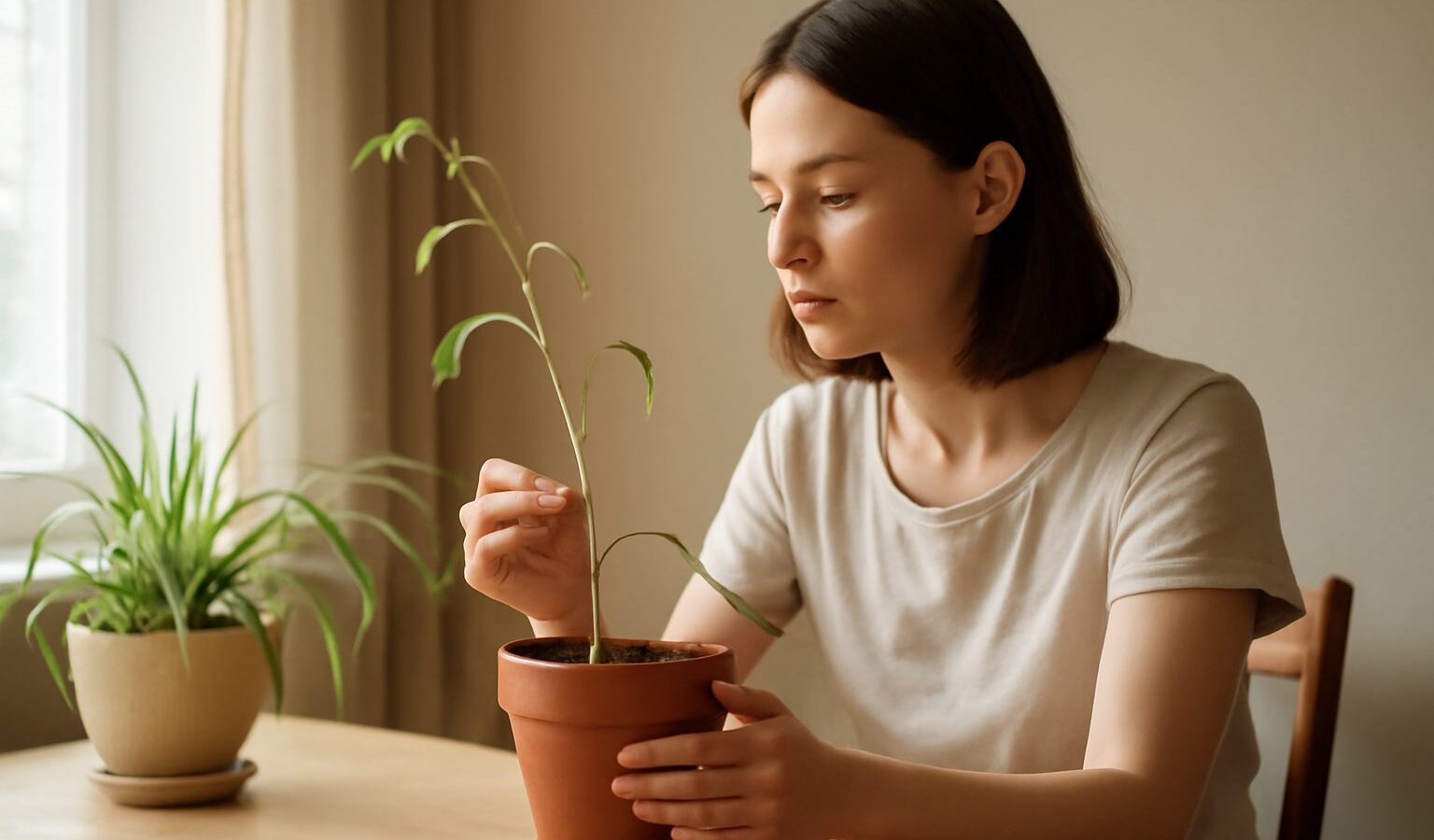
You bought a lush, bushy plant, and a few months later it looks like a different creature: long bare stems, wide gaps between leaves, and a top-heavy lean toward the window. This stretched, spindly look is what gardeners call leggy growth, and it is one of the most common complaints among indoor growers. If you are dealing with leggy plants Singapore homes produce all too easily, the cause is almost always the same, and the fix is very much within your control.
Legginess is not a disease. It is a plant doing exactly what it has evolved to do: hunting for light. When a plant does not get enough, it stops investing in compact, leafy growth and instead pours its energy into stretching its stems toward the nearest light source, hoping to reach brighter conditions. The result is elongated, weak stems with sparse foliage. Understanding this makes the solution obvious, and it starts with light.
Too Little Light Is the Real Cause
The technical term for this stretching is etiolation. In low light, the spaces between leaves, called internodes, grow long and leggy as the plant reaches upward. New leaves are often smaller and paler than they should be, the stems grow thin and floppy, and the whole plant leans hard toward the window. Variegated plants may lose their markings and revert to plain green, since they need bright light to sustain the pattern.
Singapore homes create these conditions surprisingly often, despite our sunny climate. Flats and condos can be deep, with living areas set well back from the windows. Neighbouring blocks, balconies and overhangs shade many units for much of the day. North-facing rooms get gentle light, and interior corners chosen for a plant’s good looks may get almost none. A plant that would stay compact on a bright sill slowly stretches and thins out when placed on a shelf across the room. The plant is not being difficult; it is simply telling you it wants more light.
Certain plants show legginess faster than others. Succulents and cacti are notorious for it, stretching into pale, elongated towers when starved of the strong light they crave. Herbs like basil and mint bolt upward and go sparse indoors. Coleus, pothos and many trailing plants develop long, bare runners with leaves only at the very ends. Once you learn to spot the pattern, you will see it everywhere.
How to Fix Leggy Plants
The core fix is more light, but you also need to reshape the plant so it grows back full rather than continuing as a bare stalk.
Move it into brighter light, gradually. Shift the plant closer to a window or to a brighter room where it gets more hours of bright, indirect light. Do this in stages over a week or two rather than all at once, because a plant used to dim conditions can scorch if you suddenly park it in strong direct sun. Turn the pot a quarter every few days so it grows evenly instead of leaning one way.
Add a grow light if your flat is dim. If your unit simply does not have a bright enough spot, a small LED grow light is a genuine solution rather than a gimmick. Run it for a good stretch of hours each day and position it above the plant so growth stays upright and compact. This is often the single best fix for deep interior flats.
Prune to force bushier growth. Light alone will not repair the bare stems you already have, so pruning is essential. Cutting a stem back just above a leaf node encourages the plant to branch out from that point, producing two or more new shoots and a fuller shape. Do not be timid; many leggy plants respond beautifully to a firm trim. Pinching out the growing tips of herbs and coleus regularly keeps them dense from the start.
Propagate the cuttings. The pieces you prune off are not waste. Many leggy stems, pothos, coleus, mint and countless others, root easily in water or moist mix, giving you free new plants to fill out the pot or share. It turns a fix into a bonus.
| Symptom | Cause | Fix |
|---|---|---|
| Long gaps between leaves | Too little light, stems stretching | Move to brighter light gradually |
| Stems leaning toward window | Light coming from one direction | Rotate the pot regularly |
| Pale, small new leaves | Insufficient light for healthy growth | Increase light or add a grow light |
| Bare stems with leaves only at tips | Legginess plus no pruning | Prune above a node to force branching |
| Succulent stretched and pale | Not enough strong light | Give brighter light; behead and replant the top |
Preventing Legginess for Good
Once your plant has recovered, keeping it compact is mostly about matching the plant to the spot. Put light-hungry plants like succulents, cacti and herbs in your brightest positions, ideally a sill with plenty of bright, filtered daylight, and reserve the dim interior corners for genuine low-light champions such as ZZ plants, snake plants and pothos that tolerate shade without stretching too badly.
Keep rotating your pots so growth stays balanced, prune and pinch regularly rather than waiting for a plant to sprawl, and watch new growth as your early warning system. The moment you notice fresh internodes lengthening or leaves shrinking, treat it as a signal to give more light before the plant goes fully leggy. Read that signal early and you will keep your plants looking full, upright and healthy, even in a shady flat.
It also helps to observe how light moves through your home across the day. A sill that looks bright at noon may sit in shade by mid-afternoon once a neighbouring block blocks the sun, and a spot that seems dim in the morning might catch strong light later. Spend a day noticing where the brightest patches fall and for how long, then place your light-hungry plants accordingly. This small bit of detective work tells you more than any general rule, because every flat is shaded differently. Once you know your home’s real light map, keeping plants compact becomes far easier, and you will reach for the pruning scissors far less often.
Explore more
Common Houseplant Problems and Fixes
A Beginner’s Guide to Houseplants
How to Revive a Dying Plant
Why Plant Leaves Turn Yellow