
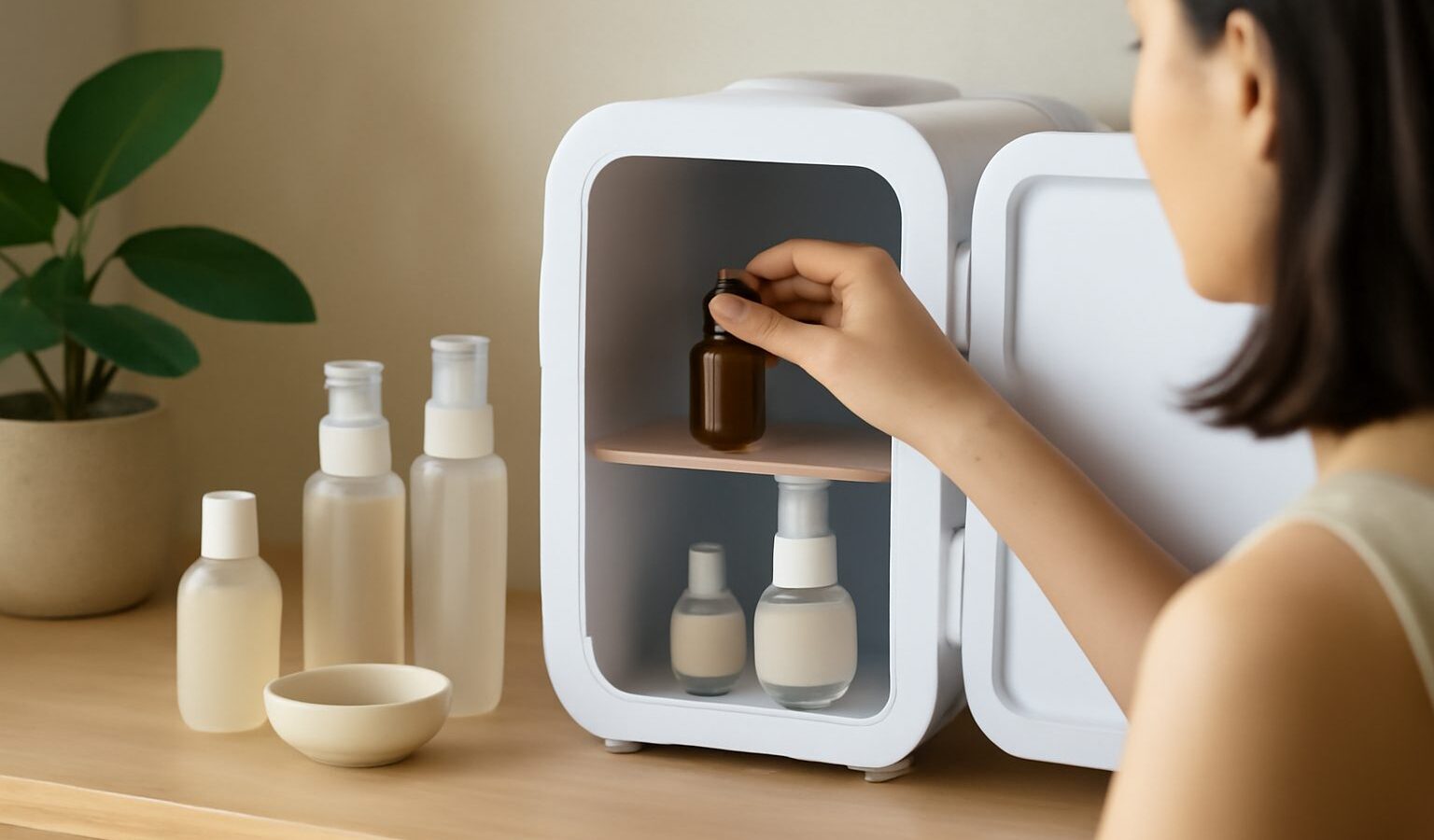
If your serums seem to go off faster than expected, the culprit may be where you keep them. Storing skincare in Singapore comes with a specific challenge: heat, humidity and strong year-round light can all shorten the life of a product and change how it feels on your skin. The good news is that a few simple habits protect most of your shelf, and a dedicated skincare fridge, while lovely to have, is a nice-to-have rather than a must.
This is general grooming information, not medical advice. If a product ever smells off, changes colour, separates oddly or irritates your skin, stop using it and patch test anything new before adding it to your routine.
Why Storage Matters More in a Tropical Climate
Cosmetic formulas are a balance of water, oils, actives and preservatives. Three things tend to upset that balance: heat, light and air. Singapore hands you plenty of the first two.
Warmth speeds up chemical reactions, so ingredients degrade faster. A bathroom that hits high temperatures during a hot afternoon, or a car glovebox left in the sun, is one of the worst places to keep anything. Direct light, especially sunlight, breaks down light-sensitive actives. And every time you open a jar and dip your fingers in, you introduce air and bacteria.
You do not need to be precious about it, but a general rule helps: keep products cool, dark and closed. A drawer or a cupboard shelf away from the window beats an open ledge by the shower. If you keep skincare in the bathroom, store it in a closed cabinet rather than on a sill that catches steam and light.
Which Products Are Fussy, and Which Are Not
Not everything needs the same care. Knowing the difference saves you effort and space.
More sensitive to heat and light:
- Vitamin C serums, particularly those with L-ascorbic acid, which oxidise over time. If yours has turned deep yellow or brown, it is past its best. Our guide to vitamin C serums explains what to look for.
- Retinoids and many other actives, which prefer cool, dark storage. See how to use retinol for more on handling these gently.
- Products in clear jars or bottles, which let light in.
- Anything with live cultures, ferments or delicate plant extracts.
Generally hardy:
- Cleansers, most facial oils in dark bottles, and simple humectant toners.
- Thick balms and petrolatum-based occlusives.
- Sunscreen, which should be kept cool and out of hot cars, but does not belong in the fridge for daily use because temperature swings can affect the formula.
Whatever the product, watch for the period-after-opening symbol, the little open-jar icon with a number and an M (for months). Once opened, that is your rough window. In humid conditions, err on the shorter side.
Do You Need a Skincare Fridge?
A skincare fridge is a small cooler that holds a steady, mild chill. It will not transform your results, and it is not required for good storage. What it does offer is consistency and a pleasant cooling sensation.
A fridge can be genuinely useful for:
- Sheet masks and eye products, which feel soothing when cool and can help temporarily de-puff.
- Vitamin C and other actives you want to keep stable in a warm flat.
- Aloe gels, mists and post-sun products on a hot day.
It is unnecessary or unhelpful for:
- Oil-based balms and some emulsions, which can thicken, cloud or separate when cold.
- Clay masks, which may dry out or change texture.
- Anything the label says to store at room temperature.
If you do not want a dedicated appliance, the vegetable drawer of your kitchen fridge works for a couple of items, sealed in a bag or box so they do not pick up food odours. Keep them away from the very back, where things can freeze.
Simple Habits That Do the Heavy Lifting
You will protect most of your shelf just by tightening a few routines.
- Close lids fully and screw droppers back on tight. Air is the enemy.
- Prefer pump and tube packaging over open jars for actives, or use a clean spatula.
- Keep products out of the shower stream and off sunny windowsills.
- Do not decant into random containers unless they are clean and airtight, since transferring can introduce bacteria and lose the original packaging protection.
- Write the opening date on the box with a marker if you tend to forget.
Travel deserves its own thought. Cabin bags get warm, checked luggage gets hot and cold, and pressure changes can push product out of loose lids. Our notes on skincare for travel and flights cover decanting and leak prevention. And because so much of local storage trouble comes down to the weather, it is worth reading our broader guide to skincare for a humid climate alongside this one.
When to Simply Let Something Go
Preservatives do a lot of quiet work, but they do not last forever. Toss a product if it smells rancid or sour, changes colour noticeably, separates and will not remix, grows anything, or stings when it never used to. Sunscreen that has been through repeated heat is not worth the gamble, since you rely on it to actually protect you.
Storing skincare well in Singapore is really about respecting heat, light and air, then giving your fussier actives a cool, dark home. A skincare fridge is a pleasant extra, not a rule. Keep lids shut, keep your shelf out of the sun, and when in doubt about a reaction, patch test first and speak to a doctor or pharmacist if irritation persists.