

Money gets tight, priorities change, or you realise a policy bought years ago no longer fits. At that point many people ask whether they should surrender whole life policy cover and take the cash. Surrendering is permanent, and in the early years it often means getting back far less than you paid. This guide explains how surrender values work, where the losses come from, and the alternatives worth asking your insurer about first. It is general information, not financial advice, and the exact terms always depend on your own policy documents.
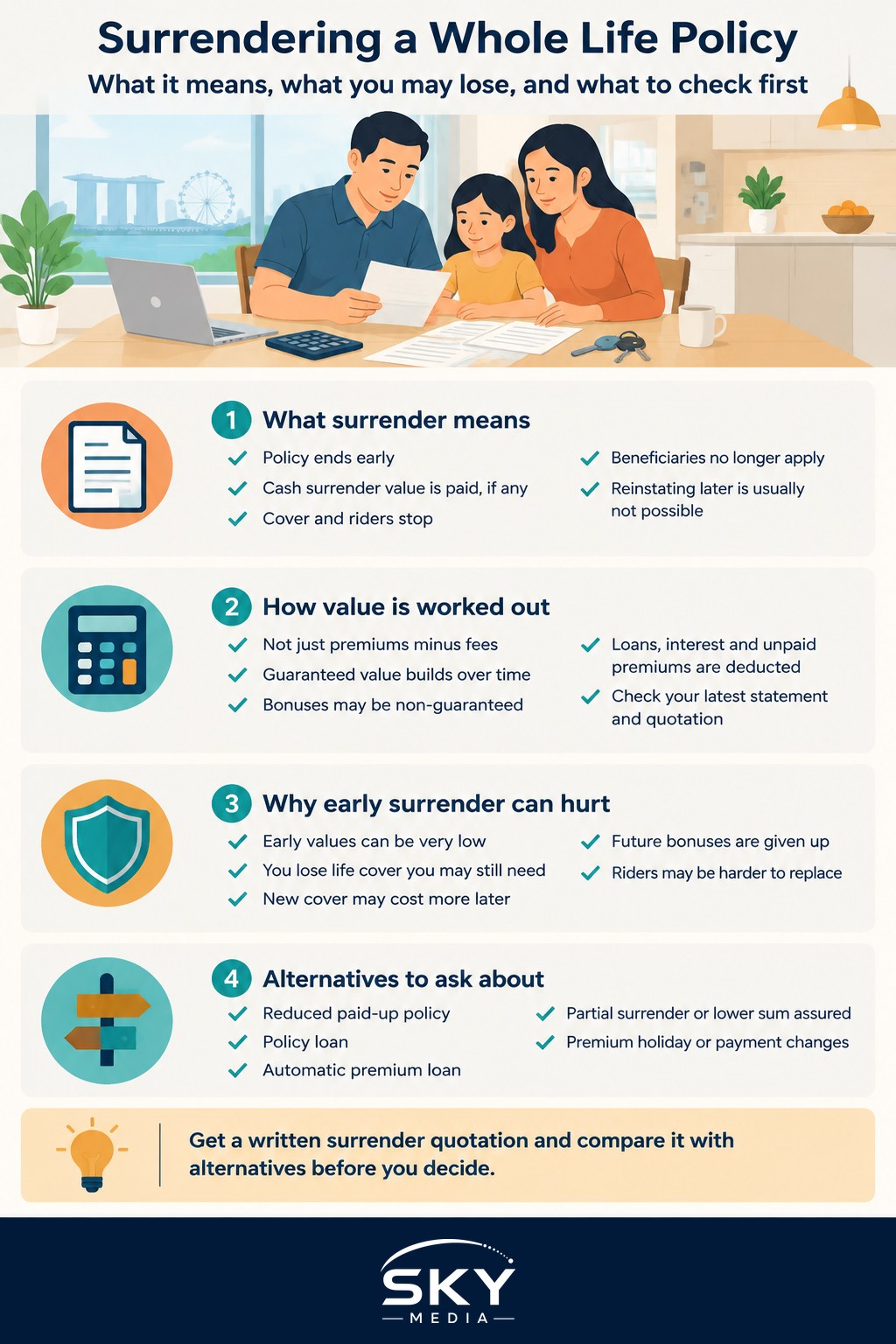
What Surrendering Actually Means
A whole life policy is a long-term contract. You pay premiums, often for a fixed number of years or until a certain age, and the insurer covers you for life, usually paying out on death, and on terminal illness or total and permanent disability if those are included. Participating whole life plans also build up a cash value over time.
When you surrender, you end the contract early. In return, the insurer pays you the cash surrender value, if there is any. Once surrendered:
- Your life cover, and any riders attached to the policy such as critical illness add-ons, stop.
- Any nomination of beneficiaries attached to the policy falls away, because there is no policy left to pay out.
- You generally cannot reinstate the same policy later. If you want cover again, you will have to apply for new insurance at your current age and health, which may cost more or come with exclusions.
How the Surrender Value Is Worked Out
The cash surrender value is not simply “premiums paid minus a fee”. For a participating whole life plan, it is usually made up of:
- Guaranteed surrender value: a fixed amount set out in the policy, which builds slowly, often starting at zero in the first few years.
- Non-guaranteed bonuses: reversionary bonuses added over the years and, in some plans, a terminal or special bonus. These depend on how the insurer’s participating fund performs, so the amounts can change.
- Deductions: any outstanding policy loans, interest owed, or unpaid premiums are taken off before you are paid.
Your Benefit Illustration and Product Summary, given when you bought the plan, show projected surrender values at different policy years. Your insurer’s annual policy statement shows the current position. Ask the insurer for an up-to-date written surrender quotation before you decide, since the figure on your old illustration may not match today’s value.
Why Early Surrender Usually Loses Money
In the early years of a whole life policy, a large part of your premiums goes to distribution costs (including adviser commission), administration, and the cost of providing life cover. Only a portion builds cash value. That is why the surrender value in the first several years is often much lower than the total premiums paid, and sometimes zero.
Other losses are easy to overlook:
- Lost protection: you give up cover you may still need, especially if you have dependants or a home loan.
- Lost insurability: if your health has changed since you bought the policy, new cover may be harder or more expensive to get.
- Lost future bonuses: many participating plans pay a meaningful share of their value later in the policy’s life, so leaving early forfeits that growth.
- Riders end too: a critical illness rider bundled in may be hard to replace at the same cost.
Surrender can still be the right choice. Examples include a policy that is clearly unsuitable, cover you genuinely no longer need, or a serious cash need with no better option. The point is to decide with full information, not in a rush.
Alternatives to Surrendering
Before ending the policy, ask your insurer which of these options your contract allows. Availability and terms differ between plans.
| Option | What happens | Main trade-off |
|---|---|---|
| Full surrender | Policy ends; you receive the cash surrender value, if any | All cover and future bonuses are lost permanently |
| Reduced paid-up policy | You stop paying premiums; the policy continues with a smaller sum assured | Cover is lower, but some protection and value remain |
| Policy loan | You borrow against the cash value and keep the policy | Interest accrues; an unpaid loan reduces payouts and can cause the policy to lapse |
| Automatic premium loan | Premiums are paid from the cash value for a period if you miss payments | Uses up cash value and adds interest; meant as a short-term buffer |
| Partial surrender or lower sum assured | You reduce the cover or withdraw part of the value, where allowed | Smaller benefit going forward |
Other things worth asking:
- Premium holiday or change of payment frequency: some insurers allow temporary relief or switching from annual to monthly payments, which may help with cash flow.
- Hardship arrangements: if you are facing job loss or illness, ask whether there is any temporary support available.
- Reviewing the whole portfolio: sometimes it makes more sense to trim a different policy or rider than the one you first thought of.
If your policy has been assigned to a bank, for example as security for a loan, you will likely need the assignee’s consent before surrendering or changing it.
Questions to Ask Before You Decide
Write down answers to these before signing anything:
- What is my current cash surrender value, in writing, and how much of it is guaranteed?
- How does that compare with total premiums paid, and with the projected value in a few more years?
- Would a reduced paid-up policy keep enough cover for my needs?
- Do I still need life, disability or critical illness protection, and could I get it elsewhere at my current age and health?
- What happens to my riders and nominations if I surrender?
- If I need cash, is a policy loan cheaper than other borrowing, and can I repay it?
If you are replacing the policy with something else, such as a term plan, get the new cover approved and in force before you surrender the old one, so you are never uninsured. Our guide to term vs whole life insurance explains how the two types compare.
Where to Get Help in Singapore
- Your insurer or adviser: request a surrender quotation, and an illustration of each alternative. A good adviser should show you the costs of surrendering, not just the cash you will receive.
- MoneySense: the national financial education programme publishes plain-language guides on life insurance and on switching policies.
- Life Insurance Association Singapore (LIA): industry body with consumer information on how policies work.
- Monetary Authority of Singapore (MAS): regulates insurers and sets rules on disclosure and advice.
- Financial Industry Disputes Resolution Centre (FIDReC): if you believe a policy was mis-sold or a dispute with your insurer cannot be resolved directly, FIDReC handles eligible complaints.
If you recently bought the policy, check whether you are still within the free-look period stated in your policy documents. Cancelling within that window is treated differently from a surrender, so ask your insurer how it applies to you.
Making a Calm, Informed Choice
Surrendering a whole life policy is a one-way decision. Take time to get current figures, compare the alternatives, and think about who depends on your cover. It helps to look at your wider finances too: if retirement income is part of the picture, our explainer on CPF LIFE payouts after death shows how a different piece of your safety net works. Policy terms, values and options vary, so always confirm details with your insurer and read your policy wording before acting.
Frequently Asked Questions
What happens if I simply stop paying my whole life premiums? The policy may lapse, or an automatic premium loan may pay premiums from the cash value for a period, which uses up value and adds interest. Stopping is not the same as a reduced paid-up policy, which you must arrange. Ask the insurer which options your contract allows before you stop.
How long before the surrender value catches up with premiums paid? There is no standard answer, because it differs by plan. In the early years the value is often much lower than premiums paid, and sometimes zero. Your Benefit Illustration shows projected surrender values by policy year, and the insurer can give a current written figure.
How long does an insurer take to pay out a surrender? Timing depends on the insurer and on whether paperwork, outstanding loans or assignments need sorting first. Ask for the expected processing time when you request the surrender quotation, and confirm in writing. Allow for the delay if you need the cash for a fixed date.
Can I surrender a policy I bought for my child or parent? Usually the policy owner decides, which may not be the person insured. If the policy has been assigned to a bank or placed in a trust, consent from that party may be needed. Check the policy documents and ask the insurer who has the right to surrender.
What if I surrender and my health has changed before I buy new cover? New insurance would be assessed at your current age and health, which may mean higher premiums, exclusions or being declined. That is why any replacement cover should be approved and in force before you surrender. Also ask whether a reduced paid-up policy would keep enough protection.
Official sources: MoneySense
Further reading: Borrowing Against Your Life Insurance: Policy Loans Explained · Investment Linked Policy in Singapore: ILPs Explained