

Tau sar piah is the small, round, golden pastry that leaves a trail of flakes down your shirt and a faint smell of shallots on your fingers. It is one of Singapore’s most loved heritage bakes, bought warm from the oven for a family snack, packed in boxes as a gift for relatives overseas, or picked up as a souvenir by visitors. If you have only ever had one version, you might not realise there are two quite different fillings, a sweet one and a savoury one, and that people tend to have strong opinions about which is better.
This guide explains what tau sar piah is, where the name and recipe come from, how the sweet and savoury fillings differ, how bakers get that flaky crust, and how to buy, reheat and store it well.
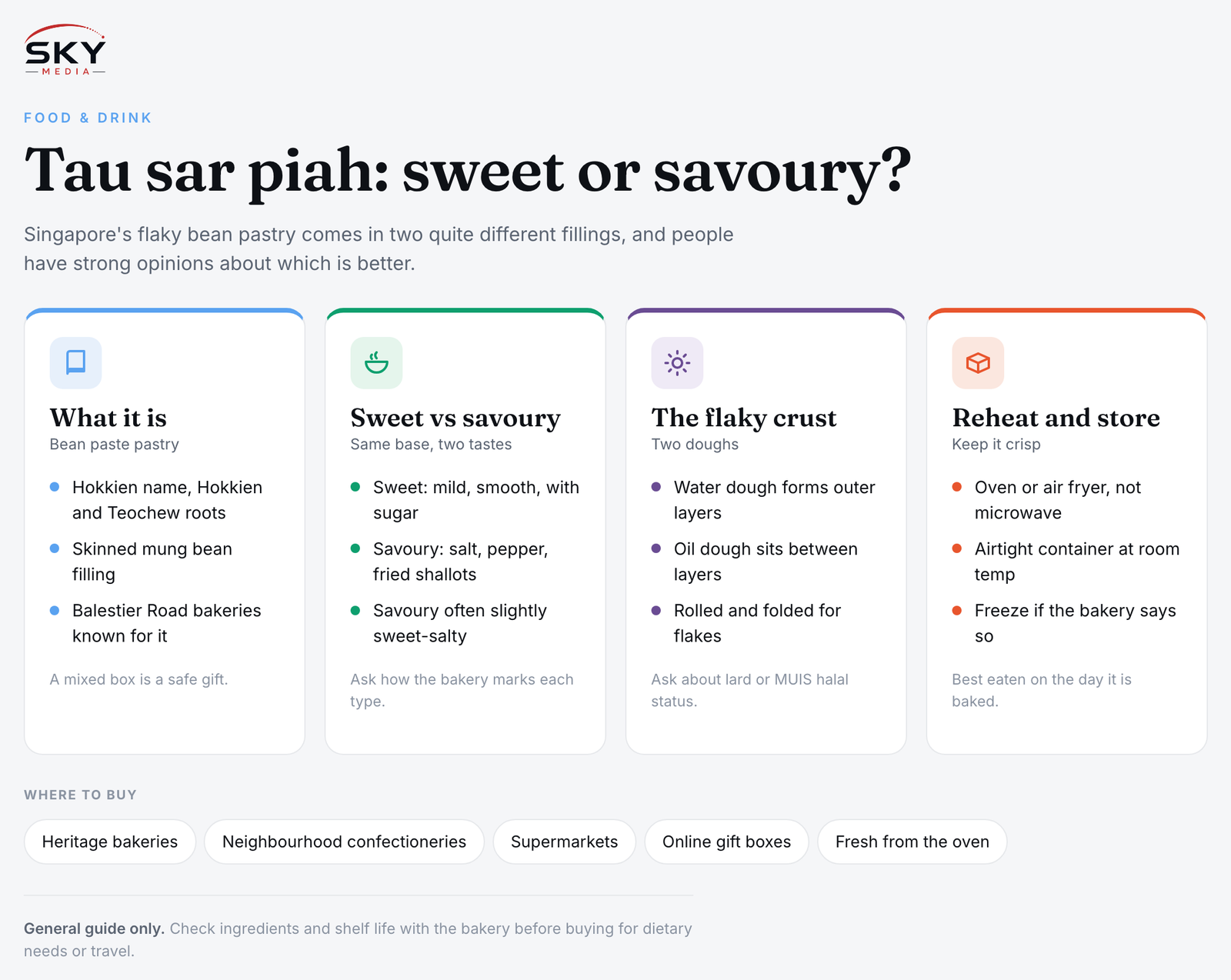
What Tau Sar Piah Actually Is
The name comes from Hokkien. “Tau sar” means bean paste and “piah” means biscuit or pastry, so the literal meaning is simply “bean paste pastry”. In Mandarin you may see it written as 豆沙饼 (dòu shā bǐng). Despite the name, the filling is usually made from split, skinned mung beans (green beans with the green husk removed), not the red adzuki beans used in many other Chinese pastries. Skinned mung beans cook down to a pale yellow, very smooth paste with a gentle, nutty flavour.
The pastry is a Chinese-style flaky crust: thin layers that shatter when you bite, rather than the buttery, puffy layers of a French croissant. It is usually baked until the top is lightly golden, and some bakers brush the tops with egg wash for extra shine.
A Short History: Hokkien and Teochew Roots
Like many local pastries, tau sar piah arrived with immigrants from southern China, particularly the Hokkien and Teochew communities of Fujian and Guangdong provinces. Similar bean-filled pastries are made in those regions, and early bakers in Singapore adapted the recipes to local tastes and ingredients.
Over the decades, tau sar piah moved from small family bakeries into a recognised Singapore snack. The Balestier Road area in particular became well known for a cluster of traditional bakeries specialising in it, and the street is still closely associated with the pastry today. A box of tau sar piah also became a standard gift for relatives, and a mixed box of sweet and savoury is still a safe choice when you do not know someone’s preference.
Today you will also find tau sar piah in neighbourhood confectioneries, heritage bakeries in older estates, some supermarket bakery sections, and online shops that ship nationwide. Some newer bakers experiment with flavours, but the sweet and savoury mung bean classics remain the core.
Sweet vs Savoury Fillings: The Big Debate
This is the question most first-timers ask: which one should I get? The two fillings share the same mung bean base but taste very different.
Sweet tau sar piah has a filling of mung bean paste cooked with sugar and oil until thick and smooth. It tastes mildly sweet, soft and comforting, a little like the filling of a lotus or bean mooncake but lighter. It pairs well with plain Chinese tea or kopi-o (black coffee with sugar).
Savoury (salty) tau sar piah uses the same paste but seasoned with salt and white pepper, and mixed with fried shallots and often a little shallot oil. The result is fragrant, slightly peppery and rich. Many people say the savoury version is the more “Singaporean” of the two because of that strong shallot aroma. Some savoury recipes still contain a little sugar to balance the salt, so the taste is more sweet-salty than purely salty.
Here is a quick comparison to help you choose.
| Feature | Sweet tau sar piah | Savoury tau sar piah |
|---|---|---|
| Main flavour | Gentle sweetness, nutty bean taste | Salty, peppery, strong fried shallot aroma |
| Typical add-ins | Sugar, oil | Salt, white pepper, fried shallots, shallot oil |
| Texture of filling | Smooth, soft, sometimes slightly sticky | Smooth but drier and more crumbly |
| Good for | Children, those who prefer mild snacks, tea time | Adults who like savoury snacks, pairing with kopi |
| Common verdict | Comforting and familiar | More distinctive and “heritage” in flavour |
If you cannot decide, most bakeries sell both and many people buy a mixed box. Bakeries often mark the two types differently, for example with a coloured dot or stamp on top, so ask the staff how to tell them apart once you get home.
How the Flaky Crust Is Made
The texture of the crust is what separates a great tau sar piah from an average one. Chinese flaky pastry is made from two separate doughs:
- Water dough, made from flour, fat and water. This dough is stretchy and forms the outer layers.
- Oil dough, made from flour and fat only. This dough is short and crumbly and forms the layers between.
The baker wraps a ball of oil dough inside a ball of water dough, then rolls it out, folds or rolls it up, and repeats. Each roll and fold creates thin alternating layers. When baked, the fat separates the layers and they puff slightly and crisp up, giving those signature flakes.
Traditionally, lard was the fat of choice because it gives a very short, crisp texture and a subtle richness. Many bakeries now use vegetable shortening or a mix of fats instead, which also makes some products suitable for customers who avoid pork. If this matters to you for dietary or religious reasons, ask the bakery directly about the ingredients, and look for halal certification from MUIS (Majlis Ugama Islam Singapura, the Islamic Religious Council of Singapore) if you need it. Do not assume a product is halal or lard-free without checking.
If you enjoy laminated doughs and want to try it at home, our guide to home croissant and pastry making covers the basic techniques of working with layered dough in a humid kitchen, which also apply here.
Where Tau Sar Piah Is Baked and Sold
You have several options, each with its own appeal:
- Traditional heritage bakeries. Usually family-run, often in older neighbourhoods such as the Balestier area. This is where you are most likely to find tau sar piah fresh from the oven. Popular bakeries can sell out or have queues, especially before festive periods.
- Neighbourhood confectioneries. Many HDB estate bakeries and confectionery shops carry tau sar piah alongside other traditional biscuits and buns.
- Supermarkets and convenience outlets. Pre-packed tau sar piah is convenient, but it is usually not as flaky as freshly baked ones because packaging traps moisture.
- Online orders and gift boxes. Useful for corporate gifts, festive hampers or sending to family. Check delivery areas, lead times and how the pastries are packed.
When buying, look for a crust that is light and flaky rather than hard or greasy, and a filling that fills the pastry well without large air gaps. If you are buying as a gift for someone travelling, ask the bakery how long the pastries keep and whether they are suitable for carrying on a flight.
How to Eat, Reheat and Store Tau Sar Piah
Tau sar piah tastes best on the day it is baked, while the crust is still crisp. A few tips:
- Reheat in an oven or air fryer. A short time at moderate heat brings back crispness. Avoid the microwave, which makes the crust soft and chewy.
- Store in an airtight container. Singapore’s humidity softens the crust quickly. Keep them sealed at room temperature for short periods, and follow the bakery’s guidance on shelf life, which is often printed on the box.
- Freeze for longer storage. If the bakery says it is suitable, wrap them well and freeze, then reheat straight from frozen in the oven.
- Eat over a plate. The flakes go everywhere. This is part of the charm.
Tau sar piah goes nicely with other traditional sweets, too. If you enjoy mung bean flavours, try tau suan, the split mung bean dessert served with you tiao, or explore soybean-based treats in our guide to tau huay and soya desserts.
Frequently Asked Questions
Is tau sar piah halal or lard-free? Do not assume so. Traditionally lard was used for the crust, while many bakeries now use vegetable shortening or a mix of fats. Ask the bakery directly about ingredients, and look for halal certification from MUIS if you need it.
Can I bring tau sar piah on a flight as a gift? Ask the bakery how long the pastries keep and whether they are suitable for carrying on a flight. Pack them in a sturdy box so the flaky crust does not crumble, and follow the shelf life printed on the box.
How can I tell sweet and savoury tau sar piah apart? Bakeries often mark the two types differently, such as with a coloured dot or stamp on top, so ask the staff how to tell them apart before leaving. If you are buying for someone else, a mixed box of both is a safe choice.
Why does my tau sar piah go soft, and how do I fix it? Singapore’s humidity softens the crust quickly. Store the pastries in an airtight container, and reheat in an oven or air fryer for a short time at moderate heat to bring back crispness. Avoid the microwave, which makes the crust chewy.
Is tau sar piah made from red bean or mung bean? The filling is usually made from split, skinned mung beans rather than the red adzuki beans used in many other Chinese pastries. Skinned mung beans cook down to a pale yellow, smooth paste with a gentle, nutty flavour.