
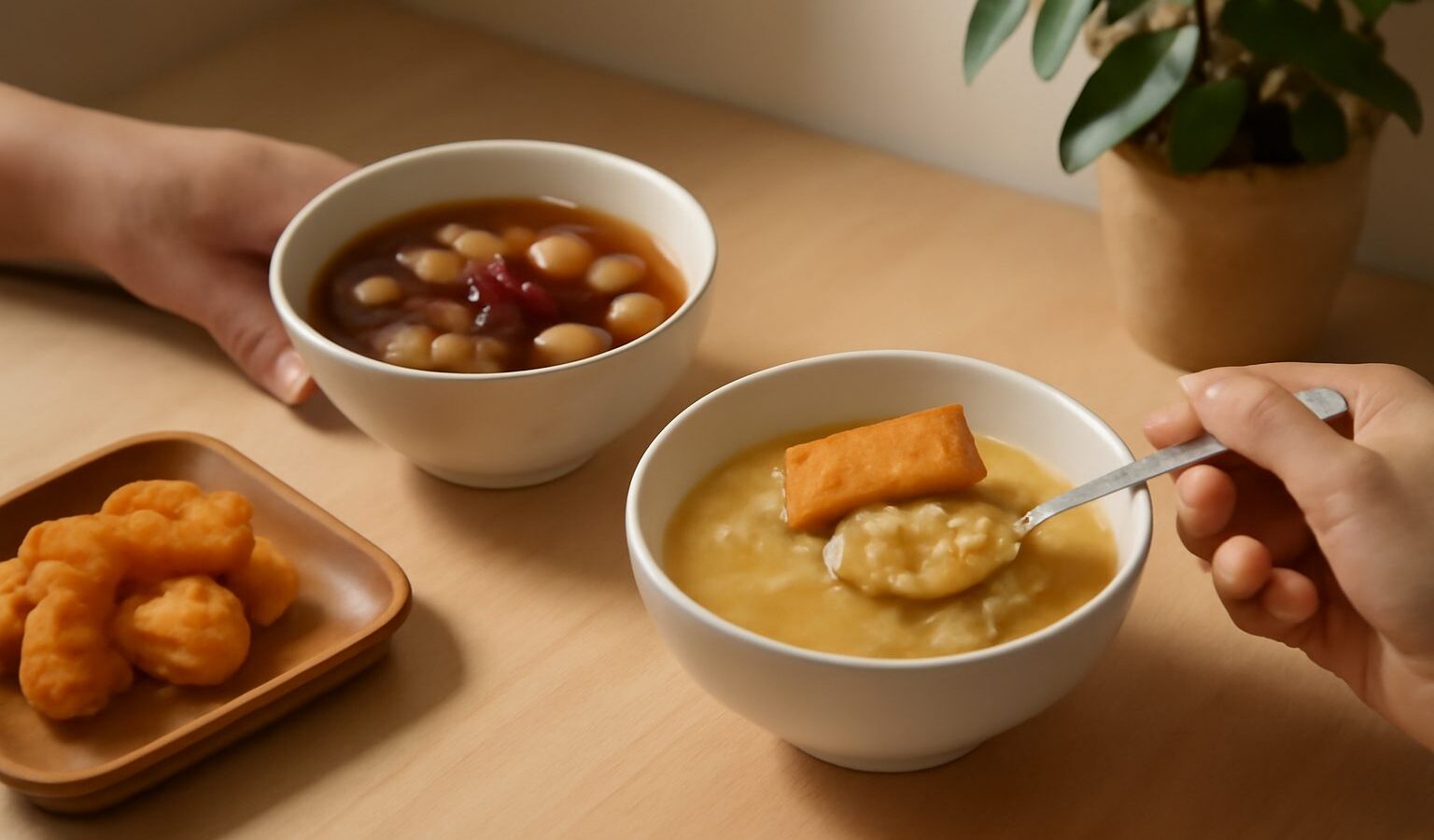
Anyone who has grown up eating at hawker centres knows the quiet pleasure of cheng tng singapore stalls serving up a clear, cooling bowl of sweet soup, brimming with chewy fruits, jellies and seeds. Its close cousin tau suan is thicker and golden, a comforting split mung bean dessert crowned with crisp fried dough. These two Teochew sweets are among the most soothing things you can order after a meal, gentle on the palate and rich in nostalgic charm. This guide explains what goes into each, how they differ, and how to enjoy them at their best.
Both desserts trace back to the Teochew community and the wider Chinese sweet-soup, or tng shui, tradition. They are built on simple, wholesome ingredients rather than heavy cream or chocolate, which is part of their appeal. Light, warming and endlessly comforting, they are the sort of desserts people return to again and again, often at the very same stall their families have visited for years. You will find them at dessert stalls in hawker centres and coffee shops across the island.
What Is Cheng Tng
Cheng tng, whose name suggests a clear, cooling soup, is a light sweet broth served warm or over ice. The liquid itself is gently sweetened, often with rock sugar, and lightly perfumed, sometimes with a hint of pandan or dried longan for fragrance. What makes cheng tng special is the generous mix of ingredients suspended within it, each adding its own texture and flavour.
A typical bowl might hold dried longan, lotus seeds, barley, white fungus, gingko nuts, strips of agar jelly, sweet potato, chewy pearl sago and pieces of dried persimmon. Some stalls add a scoop of shaved ice on hot days, turning it into a thoroughly refreshing dessert. The beauty of cheng tng lies in variety, the way a single spoonful can bring a soft lotus seed, a slippery strand of jelly and a chewy longan all at once.
Because the soup is clear and mildly sweet, cheng tng feels clean and restorative rather than rich. Many consider it a cooling dessert, ideal after a spicy or heavy meal. It can be enjoyed warm for comfort or iced for refreshment, and both versions have their devoted fans.
What Is Tau Suan
Tau suan is a warm, golden dessert made from split mung beans, the yellow halves of the green bean with their skins removed. The beans are steamed until just tender so they hold their shape, then served in a lightly sweetened, thickened soup. The liquid is typically thickened with sweet potato starch, giving it a smooth, glossy body that coats the spoon.
The defining touch is the crown of youtiao, crisp fried dough fritters, cut into bite-sized pieces and scattered on top just before serving. The contrast is everything. Warm, silky bean soup meets crunchy, savoury dough, and the fritters slowly soften as they soak up the sweetness. Pandan often scents the soup, lending its familiar green fragrance.
Tau suan is almost always eaten warm, which suits its cosy, comforting nature. It is the kind of dessert that feels like a small act of self-care, soothing and satisfying without being heavy. The youtiao is best eaten fairly quickly, while it still has some crunch, before it fully melts into the soup.
Origins and Cultural Notes
Both cheng tng and tau suan grew out of the Teochew culinary heritage that has shaped so much of Singapore’s dessert scene, part of a broader Chinese tradition of nourishing sweet soups believed to balance the body. These are unpretentious, home-style sweets, the kind passed down through families and hawker apprenticeships. Their staying power says a great deal about how deeply they are woven into everyday life here.
Respecting these desserts means recognising the craft behind them. A good cheng tng takes many ingredients, each prepared just so, while a good tau suan depends on cooking the beans to the exact point where they are tender but still whole. Behind every simple bowl is a hawker’s patient, practised hand.
Ingredients and Allergen Notes
Cheng tng is largely plant-based and often suitable for vegetarians, built as it is on seeds, fruits, jellies and sugar, though it is always worth checking with the stall as recipes vary. Tau suan is likewise plant-based in its soup, but the youtiao topping contains wheat flour and is fried, so it introduces gluten. Anyone avoiding gluten can ask for the soup without the fritters, though it does lose its signature contrast.
Those with nut allergies should note that cheng tng may contain gingko nuts and lotus seeds, and stalls often prepare other nut-based desserts nearby. Neither dessert relies heavily on coconut, which sets them apart from many local sweets. As always, check current information at any specific stall, since ingredients and preparation differ from kitchen to kitchen.
Here is a quick comparison of the two.
| Feature | Cheng Tng | Tau Suan |
|---|---|---|
| Base | Clear, light sweet soup | Thickened split mung bean soup |
| Texture | Varied, chewy and slippery | Smooth, silky, with crunchy topping |
| Signature element | Mix of seeds, jellies, dried fruit | Youtiao fritters on top |
| Colour | Clear, pale | Golden yellow |
| Served | Warm or iced | Almost always warm |
| Contains gluten | Generally no | Yes, from the youtiao |
How To Enjoy Them
With cheng tng, part of the fun is the mixture, so give the bowl a gentle stir and let each spoonful surprise you with a different combination of textures. On a hot day, ask for it iced and enjoy how cooling and light it feels. On a cooler evening or after a rich meal, the warm version is quietly restorative.
Tau suan is best tackled while the youtiao is still crisp, so eat with a little urgency and enjoy the play of crunch against silk. Stir just enough to bring the beans up from the bottom, and savour the gentle pandan sweetness. Both desserts are wonderfully undemanding, the kind you can enjoy on their own or as a soft landing at the end of a meal.
For newcomers, these two soups are a lovely introduction to local sweet-soup culture. They show that dessert here need not be rich or elaborate to be deeply satisfying. A clear, cooling cheng tng or a warm, golden tau suan offers comfort in its purest form, one gentle spoonful at a time.