
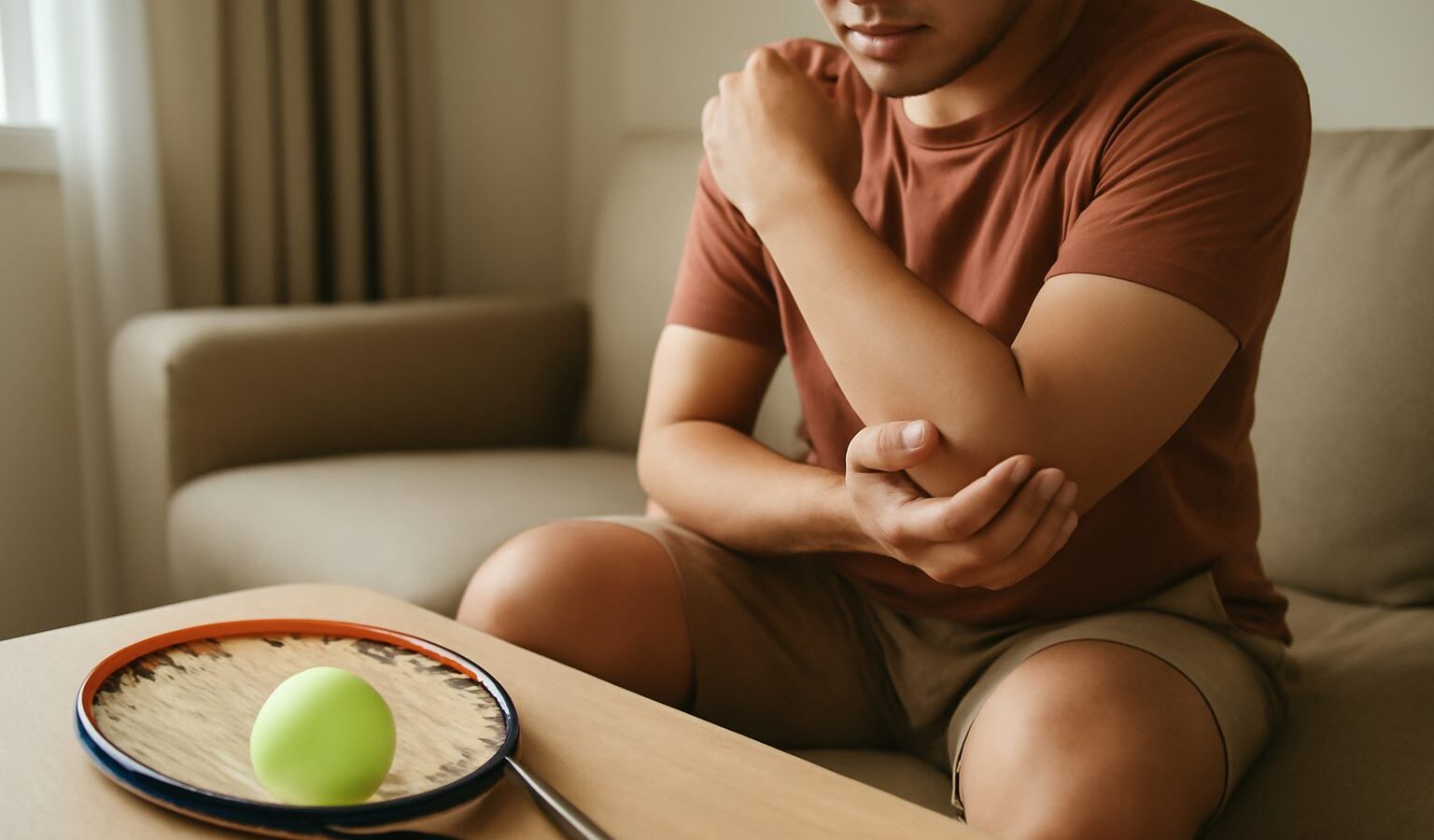
You do not have to play tennis to get tennis elbow. In fact, most people who develop it in Singapore have never picked up a racquet. The name is misleading: it simply describes pain on the outer side of the elbow caused by overusing the tendons that attach there. If you have a nagging ache when you grip a kettle, shake hands, or lift a bag, you may be dealing with it. This article is general information about tennis elbow in Singapore to help you understand what is going on and look after yourself sensibly. It is not medical advice, and it does not replace a proper assessment by a doctor or physiotherapist.
What Tennis Elbow Is
Tennis elbow, known medically as lateral epicondylitis, is an overuse condition affecting the tendons that connect your forearm muscles to the bony bump on the outer side of your elbow. These muscles help you straighten your wrist and fingers and grip things. When they are loaded repeatedly, often through the same movement done again and again, tiny areas of the tendon can become irritated and painful. It tends to build up gradually rather than appear from a single injury.
The typical picture is pain and tenderness on the outer elbow that may spread down the forearm. It often flares with gripping, lifting, twisting a key or door handle, or carrying shopping. The area can feel weak, and a firm handshake might make you wince. Despite the sporty name, the usual culprits are everyday and work activities: repetitive computer and mouse use, carrying young children, gardening, DIY, cooking that involves a lot of chopping and stirring, and manual jobs that load the wrist and forearm. Racquet sports and the gym can contribute too, especially with heavy gripping or poor technique.
A related condition, golfer’s elbow, causes similar pain on the inner side of the elbow rather than the outer side. The self-care principles overlap, but because elbow pain has several possible causes, it is worth having it looked at rather than assuming you know which one you have.
Gentle Self-Care That Helps
Tennis elbow often settles with time and sensible management, though it can be stubborn and slow, sometimes taking weeks to months. Patience is part of the treatment. The general approach below is for typical, mild aches and is not a substitute for professional advice, especially if your pain is severe or not improving.
Ease the load, do not stop moving. Complete rest is rarely the answer. Instead, cut back on the specific movements that aggravate it and modify how you do daily tasks. Lift with your palm facing up rather than down, carry bags closer to your body, and take breaks from repetitive gripping. At a desk, check that your mouse, keyboard, and chair are set up so your wrist is not constantly bent or straining.
Manage flare-ups calmly. Many people find that reducing the aggravating activity and giving the area relative rest helps a flare settle. Keep the arm moving gently within comfort rather than immobilising it completely. We are not naming any medicines here; if you are considering pain relief, ask a pharmacist or doctor what is appropriate for you.
Rebuild strength gradually. As pain allows, gentle strengthening and stretching of the forearm muscles is often part of recovery, and this is exactly where a physiotherapist earns their keep. They can guide the right exercises, at the right intensity, in the right order, and check that you are not simply reloading the tendon too soon. If you train, our guides to warming up and cooling down properly and building grip strength are useful background once your pain is under control, but let a professional confirm your starting point first.
Mind your technique and your setup. If a hobby or sport triggered it, poor technique or an ill-fitting grip is often involved. A coach can help with form, and small equipment changes can reduce the strain. General joint-friendly habits, covered in caring for your knees and joints, apply to elbows too: warm up, progress gradually, and respect actual pain as a signal rather than pushing through it.
When to See a Doctor or Physio
See a doctor if your elbow pain is persistent, is not improving after a few weeks of sensible self-care, is severe, or keeps coming back. You should also seek assessment if you have swelling, the joint looks deformed, you cannot straighten or bend the arm, there is numbness or pins and needles, or the pain followed a fall or a direct blow. In a genuine emergency, go to A&E or call 995.
A physiotherapist is often the ideal professional for tennis elbow, because they can confirm the diagnosis, rule out other causes, and design a progressive plan tailored to you. A doctor can help if the diagnosis is unclear or if other treatment is being considered. The key point is that lingering elbow pain deserves a proper look rather than months of guessing.
A Simple Wrap-Up
Tennis elbow is common, usually not serious, and often improves with patience and smart load management: ease the aggravating movements, adjust how you work and lift, and rebuild strength gradually once pain allows. Because elbow pain has more than one cause and can be persistent, get a doctor or physiotherapist involved if it does not settle, is severe, or comes with any warning signs. Treated sensibly, most people get back to gripping, lifting, and carrying without the ache tagging along.