
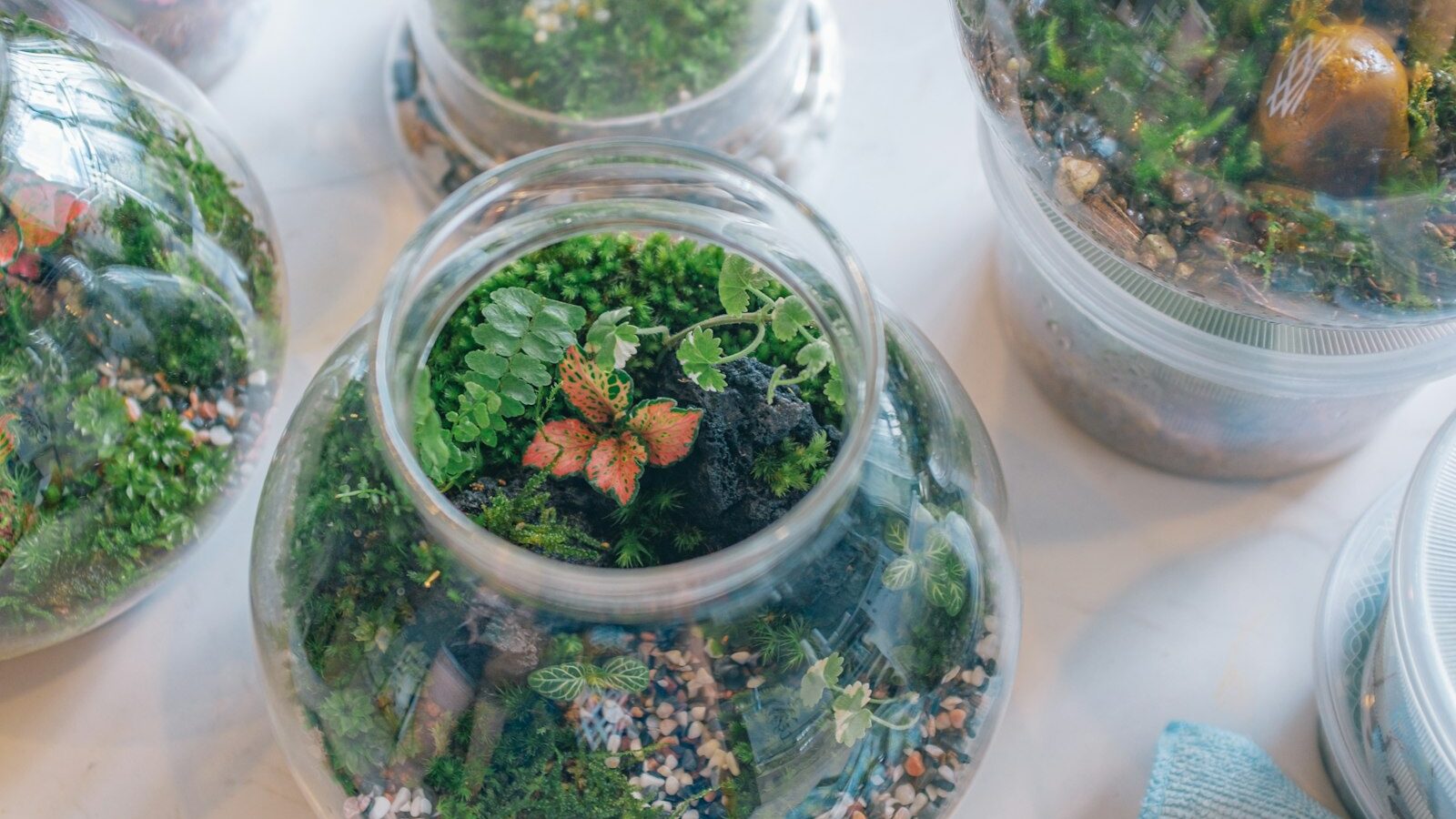
There is something quietly magical about a little garden sealed inside a glass jar, thriving on your desk with almost no fuss. A terrarium is a miniature living world, and it is one of the friendliest ways to bring greenery into a flat that has no balcony or garden. If you have been curious about terrariums in Singapore, this beginner guide walks you through the two main types, the plants that cope best with our climate, and how to build your first one this weekend.
The best part is how forgiving the hobby is. You need a clear container, a few handfuls of the right materials, and a plant or two. No green thumb required, and no big spend to begin.
Why Terrariums Suit Life in Singapore
Terrariums are made for small-space living. A single jar sits happily on a windowsill, a bookshelf or an office desk, so you do not need a yard to enjoy plants. For HDB dwellers and renters, that is a real gift.
They also play to our strengths. Singapore’s warmth and bright, indirect light suit many terrarium plants beautifully, and a closed jar recycles its own moisture, so you can go a week or more without watering. That makes a terrarium ideal for busy people, frequent travellers, or anyone who has quietly killed a few pot plants before.
It is a calming, tactile hobby too. Layering pebbles, sculpting the soil and tucking in tiny plants is genuinely relaxing, and the finished piece doubles as living decor or a thoughtful handmade gift.
Open Versus Closed: Picking Your Style
The first decision is whether to build an open or a closed terrarium, because it changes which plants you choose and how you care for them.
A closed terrarium has a lid or a narrow sealed opening. It traps humidity and creates its own tiny water cycle, which suits moisture-loving plants like ferns, fittonia, moss and baby’s tears. Once balanced, it needs very little watering.
An open terrarium has no lid and lets air flow freely. It suits plants that hate sitting in damp air, especially succulents and cacti, which would rot in a sealed jar. Open styles are more forgiving of beginner watering mistakes because excess moisture can evaporate.
| Type | Best plants | Watering | Best for |
|---|---|---|---|
| Closed terrarium | Ferns, moss, fittonia, baby’s tears | Rarely, once balanced | Hands-off growers, humidity lovers |
| Open terrarium | Succulents, cacti, air plants | Small sips now and then | Bright spots, easy airflow |
| Open bowl or dish garden | Mixed succulents, small foliage | Light, regular | Table centrepieces and gifts |
There is no wrong choice. Many people start with a closed jar of ferns and moss for the low-maintenance appeal, then try an open succulent bowl once they are hooked.
What You Need to Start
Your shopping list is short and cheap. Here is what a beginner actually needs.
- A clear glass container. A recycled jam jar, a fishbowl, or a proper terrarium vessel. Closed types need a lid or narrow neck; open types can be any wide bowl.
- Drainage layer. A layer of small pebbles, leca or gravel at the bottom, since terrariums have no drainage hole and roots must not sit in water.
- Activated charcoal. A thin layer helps keep the closed environment fresh and reduces odours. Optional but helpful for sealed jars.
- A barrier layer. A little sphagnum moss or mesh stops soil washing down into the pebbles.
- The right soil. Standard potting mix for ferns and foliage, or a free-draining cactus and succulent mix for open jars.
- Plants. Two or three small ones is plenty for a first jar. Do not overcrowd.
- Little tools. Long tweezers or chopsticks, a spoon, and a spray bottle. A funnel of rolled paper helps pour soil into narrow jars.
- Decor. Pebbles, driftwood, figurines or shells to style the surface, entirely up to you.
You can absolutely start with a container you already own and a single plant. Many first terrariums cost next to nothing beyond the plant itself.
Building and Caring for Your First Terrarium
Assembly is straightforward. Add your drainage pebbles first, then a thin charcoal layer, then the moss barrier, then a few centimetres of soil. Make a small hole, settle each plant in gently with your tweezers, firm the soil, and add your decor. Give closed jars a light mist; give open succulents only a small amount of water.
Placement matters more than anything. Most terrarium plants want bright, indirect light, so a spot near a window that does not get harsh afternoon sun is perfect. Direct sun through glass acts like a greenhouse and can cook your plants, so keep sealed jars out of hot windows.
Watering is where beginners tend to overdo it. A closed terrarium often needs watering only every few weeks; if you see heavy fog that never clears and droplets running down the glass, open the lid to let it breathe. Open terrariums and succulents prefer to dry out between drinks. When in doubt, water less.
A few simple habits keep things healthy in our climate:
- Watch for mould. Our humidity means the odd white fuzz can appear. Remove affected material promptly, cut back on water, and give closed jars a little air.
- Trim as it grows. Snip back anything that outgrows the jar or presses on the glass to keep the scene tidy.
- Rotate the jar. A quarter turn every week or two keeps growth even as plants lean toward the light.
- Remove fallen leaves. Clearing dead bits stops rot taking hold in a sealed space.
Where to Learn and Buy in Singapore
Supplies are easy to find here. Craft and lifestyle shops such as Daiso are handy for cheap glass jars, pebbles, spray bottles and tools, while Spotlight and Art Friend carry decorative stones, moss and craft bits. For plants, soil, charcoal, leca and proper terrarium vessels, head to the nurseries around Thomson, Sungei Tengah and the many neighbourhood plant shops, or order from local online plant sellers with delivery. Small ferns, succulents and fittonia are widely available and inexpensive.
If you would rather learn hands-on, plenty of studios, cafes and community spaces across Singapore run beginner terrarium workshops, often as a relaxed weekend activity or a group outing where you build a jar to take home. Community centres sometimes offer affordable gardening and craft sessions too, so it is worth checking your neighbourhood listings. Prices for kits, plants and classes vary, so check the retailer, nursery or studio for current rates.
For the tropical climate, the biggest thing to manage is damp. Choose airflow-friendly setups if your home runs humid, avoid overwatering, and keep jars out of stagnant, sunless corners where mould thrives. A brighter, well-ventilated spot keeps a terrarium looking its best.
Small Jars, Big Joy
The charm of terrariums is in the small wins: a perfectly layered base, moss that greens up, a fern unfurling a new frond behind the glass. Do not fret if a first plant sulks or a leaf yellows, as these are normal and easy to fix. Start with one simple jar this weekend, go easy on the water, and you may find yourself planning a whole windowsill of little glass worlds.
Explore more
If building a tiny living world has you hooked on green, water-side hobbies, keep exploring. Try aquascaping and fishkeeping for underwater planted scenes, or slow down with tea appreciation as a hobby. For an outdoor complement to your indoor garden, look at birdwatching as a hobby in Singapore.