
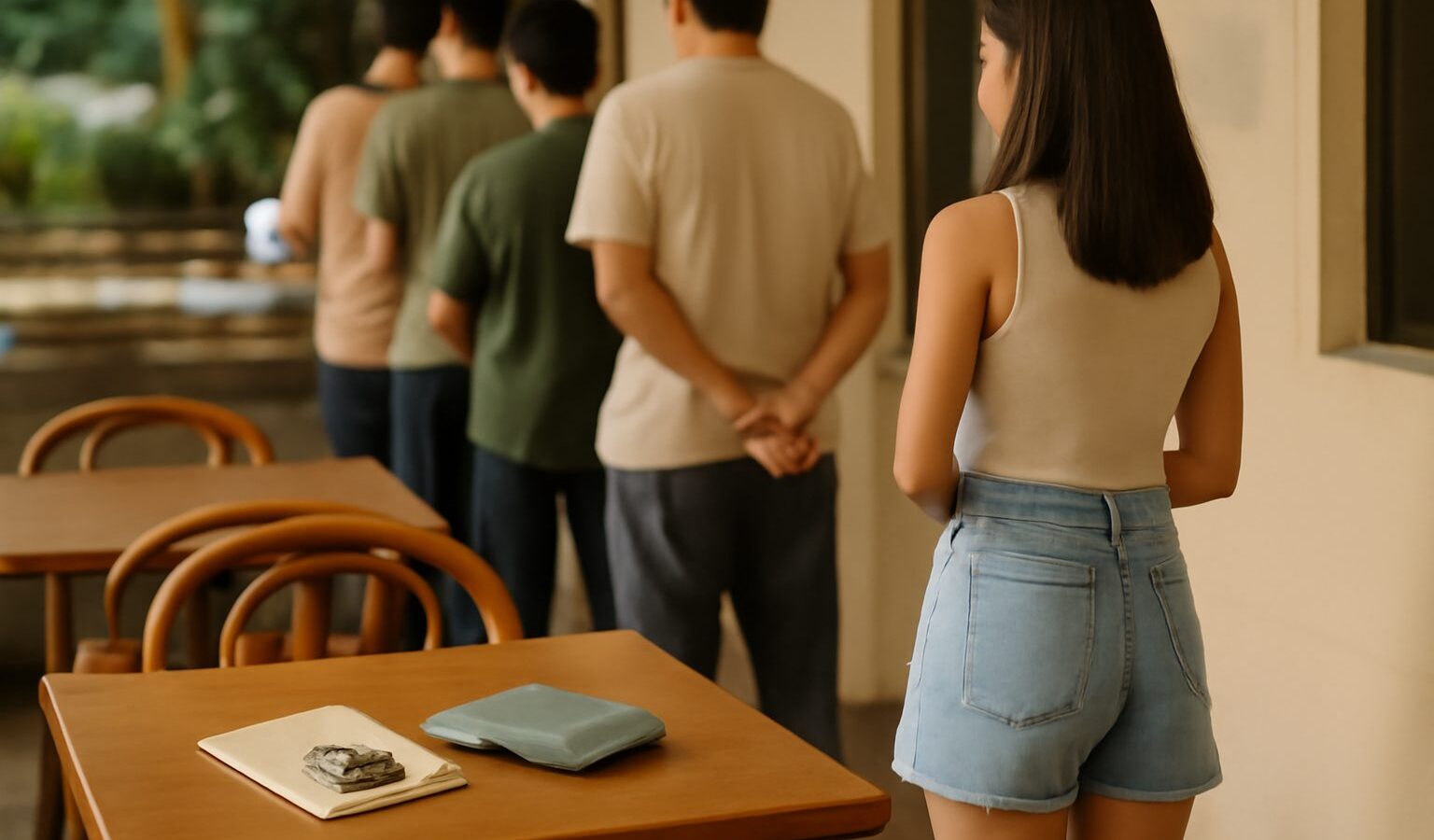
Few local customs puzzle newcomers as much, or as quickly, as chope culture singapore locals practise every lunchtime. Walk into any busy hawker centre or food court and you will see tables dotted with packets of tissue paper, an umbrella here, a name card there, all placed on empty seats. No one is sitting down, yet the seats are firmly taken. This is choping, the informal but widely understood custom of reserving a place to eat before you go off to buy your food. It is a small ritual, but it says a great deal about how people share crowded public space with a mix of practicality and trust.
What Choping Is and Where It Came From
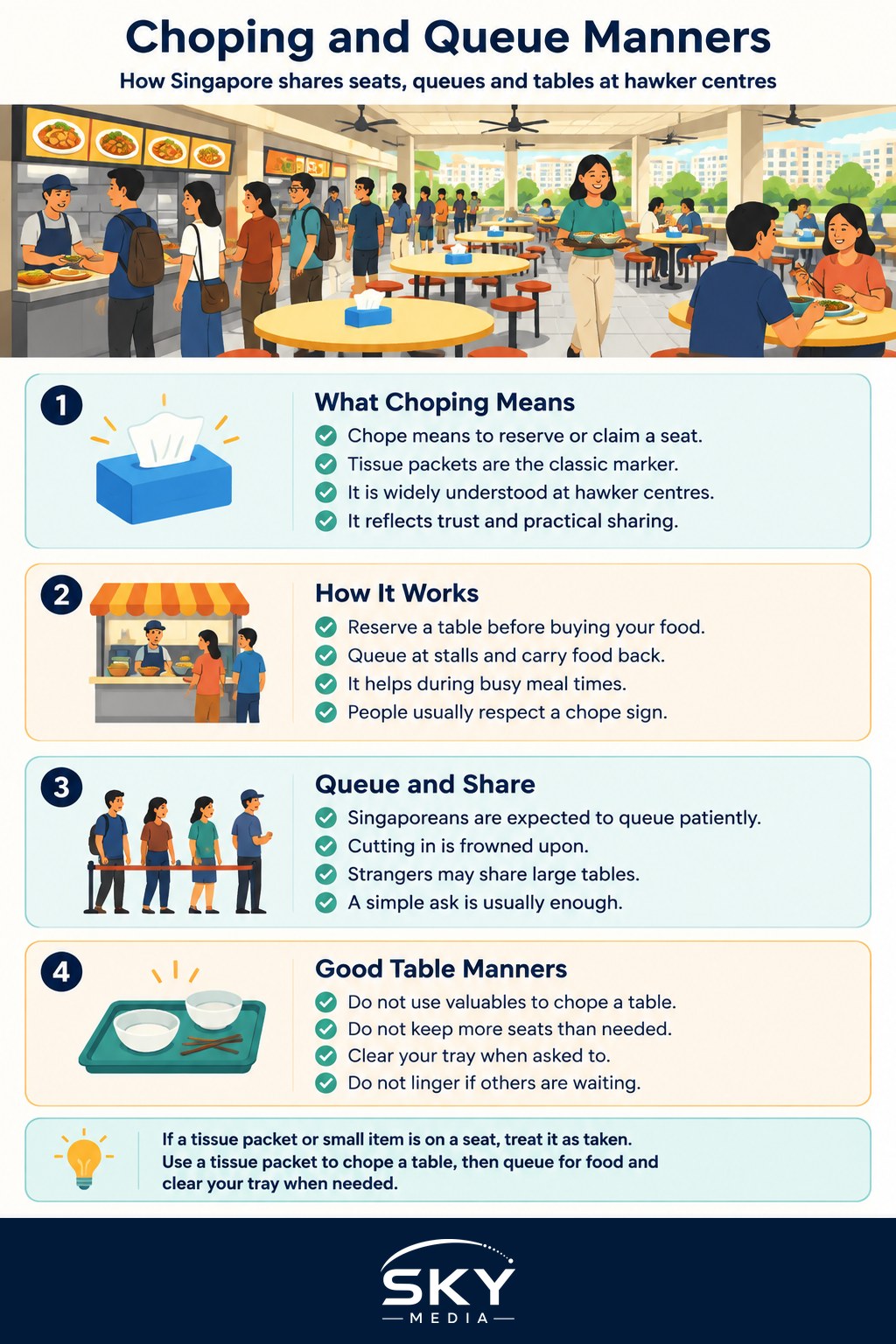
To chope simply means to reserve or to claim. The word comes from local usage and has long been part of the everyday vocabulary that also gives us so much of Singlish. The most iconic tool of the trade is the humble packet of tissue paper, small, cheap and easy to leave behind. Placing it on a chair or table is a signal to everyone else that the seat is spoken for, and by convention people respect it.
The custom grew naturally out of the hawker centre way of life. In a typical food centre, you queue at individual stalls to order and pay, often at more than one stall for a group, and you carry the food back to your table yourself. During peak hours seats are scarce, so it makes sense to secure a spot first, then join the queues without the worry of returning to find nowhere to sit. Choping solves a genuine coordination problem in a fair enough way, and because tissue packets are inexpensive, the practice never felt like anyone was hoarding something valuable.
Like any social convention, it works because most people honour it. There is an unwritten etiquette around how long a claimed seat should reasonably be held, and using a packet of tissue rather than a wallet or phone is partly a nod to the trust involved. Leaving valuables to chope a table is generally unwise, and most locals would advise against it. The system rests on a shared understanding rather than any rule, which is exactly what makes it a piece of living culture rather than mere logistics.
Queuing, Sharing Tables and Everyday Courtesy
Choping sits within a broader set of habits around queues and shared space. Singaporeans are, on the whole, orderly queuers, and lining up patiently is expected at stalls, taxi stands, bus stops and counters. Cutting in is frowned upon, and jostling to the front tends to draw quiet disapproval rather than open confrontation, which fits the local preference for avoiding a scene and saving face.
Table sharing is another feature worth understanding. At busy periods it is normal to share a large table with strangers, each group keeping to its own space. A simple question, asking whether a seat is taken, is all that is needed, and a nod usually settles it. There is no need for lengthy conversation, and people generally respect one another’s quiet enjoyment of a meal. This easy sharing of space among people of different backgrounds is one of the small everyday expressions of a multiracial society that has learned to rub along comfortably.
There are gentle debates about the etiquette of choping. Some feel that reserving many seats when you are a small group, or holding a table long before buying food, stretches the spirit of the custom. Others point out that at the busiest centres a bit of flexibility keeps everyone fed. Clearing your own tray at centres that ask you to, and not lingering once you have finished when others are waiting, are courtesies that keep the whole system pleasant.
For visitors, the practical advice is simple. If you see a tissue packet or a small personal item on a seat, treat the seat as taken and look elsewhere. If you want to secure a table yourself, a packet of tissue does the job, and you can then queue for your food with a clear mind. Understanding choping is part of a wider picture of social etiquette and norms, and getting it right is a quiet way of showing that you understand how things are done here.
Choping endures because it is useful, fair and unpretentious, a homegrown solution to the friction of eating well in a crowded, food-loving city. Long after many customs fade, the sight of a tissue packet holding a seat remains one of the most charming and recognisable rituals of daily life.