
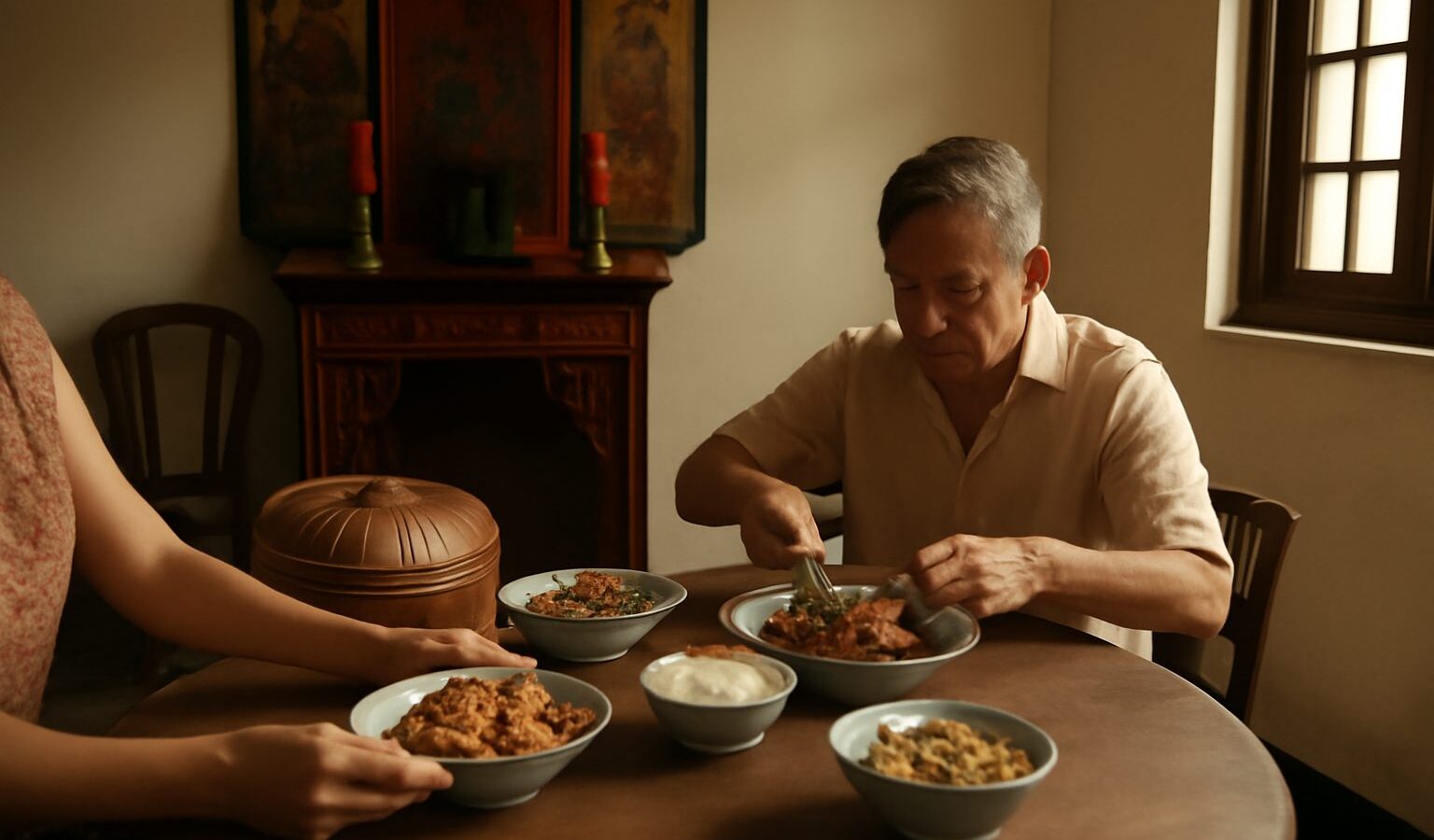
The Hokkien community is the largest of the Chinese dialect groups in Singapore, and its influence on the island’s history, commerce, religion and culture has been profound. As one of the earliest and most numerous communities to settle here, the Hokkien helped lay the foundations of Singapore’s Chinese society, building temples, trading houses and community institutions that remain landmarks of heritage today. Their story is central to any understanding of how the island’s Chinese population took shape.
Origins and Migration to Singapore
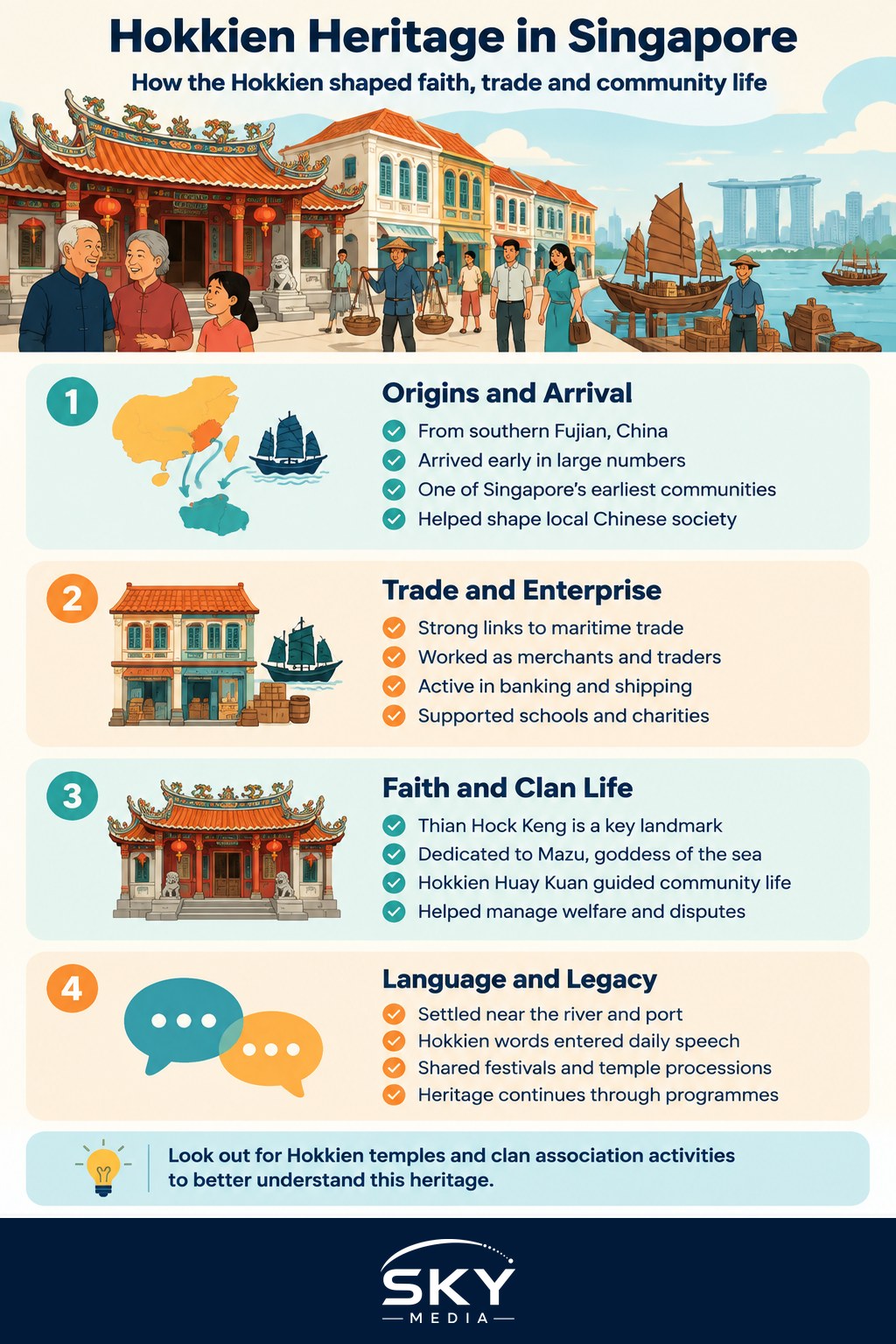
The Hokkien trace their origins to the southern part of Fujian province in southeastern China, a mountainous coastal region with a strong maritime tradition and a long history of overseas migration. Ports such as those around the Minnan area sent generations of traders and labourers across the seas, and the Hokkien became one of the most widely dispersed Chinese communities throughout Southeast Asia. In Singapore they arrived early and in large numbers, and by sheer scale they came to form the backbone of the local Chinese population.
Their early arrival and maritime connections positioned the Hokkien strongly in trade and commerce. Many became merchants, shopkeepers, traders and shipowners, building extensive business networks that linked Singapore to China and to ports across the region. Hokkien enterprise was prominent in banking, shipping, commodities and retail, and successful Hokkien businessmen became leading philanthropists who funded schools, hospitals and community projects. To see how the Hokkien fit within the wider picture, readers may consult accounts of Singapore’s Chinese dialect groups and their varied roles.
Thian Hock Keng and the Hokkien Huay Kuan
No account of Hokkien heritage in Singapore is complete without Thian Hock Keng, one of the oldest and most revered Chinese temples on the island. Dedicated to Mazu, the goddess of the sea and protector of sailors and travellers, the temple was built by the Hokkien community as a place to give thanks for safe passage across the treacherous seas. Early migrants who survived the long and dangerous voyage would come to offer their gratitude, and the temple became the spiritual heart of the community. Its architecture, craftsmanship and history make it a treasured monument, and the full history of Thian Hock Keng temple reflects the faith and devotion of the early Hokkien.
Closely tied to the temple is the Hokkien Huay Kuan, the community’s leading clan association, which grew into one of the most influential Chinese organisations in Singapore. The Huay Kuan looked after the welfare of the Hokkien community, managed temple affairs, resolved disputes and, in later years, became a major patron of Chinese education, founding and supporting schools that served children of all backgrounds. This tradition of communal organisation reflects the broader importance of clan associations in Singapore in binding migrant communities together and channelling their resources toward the common good.
Settlement, Trade and Cultural Contributions
The Hokkien settled widely across Singapore, with strong concentrations in the historic commercial districts near the river and the port, where their shophouses, trading firms and temples clustered. As the largest community, their language became one of the most commonly heard Chinese dialects in the streets and markets, and Hokkien words and expressions found their way into the local vernacular, enriching the everyday speech of Singaporeans.
Beyond commerce, the Hokkien contributed to the island’s religious life, festivals and cuisine. Popular dishes associated with the community became part of the shared hawker heritage enjoyed by all Singaporeans, though this article celebrates community heritage rather than serving as a food guide. Hokkien festivals, temple processions and customs added colour and meaning to the calendar, and their philanthropy in education and healthcare benefited the whole of society. The community’s outlook forms an essential part of Nanyang Chinese identity in Singapore, shaped by migration, trade and adaptation to a new home.
Heritage and Identity Today
Today the Hokkien community continues to sustain its heritage through the Hokkien Huay Kuan, its temples, cultural programmes and support for education and the arts. While the use of the dialect has declined among younger generations, there is renewed interest in preserving Hokkien language, opera and customs, and the community remains active in celebrating its history and passing it on.
The Hokkien heritage stands as a cornerstone of Singapore’s Chinese story. From the incense drifting through Thian Hock Keng to the enduring work of the Huay Kuan, the community’s legacy of faith, enterprise and generosity remains woven into the fabric of the nation, honoured as a foundational chapter in the island’s history.
Frequently Asked Questions
Why is Thian Hock Keng dedicated to Mazu? Mazu is the goddess of the sea and protector of sailors and travellers. The Hokkien community built the temple to give thanks for safe passage across the treacherous seas, and survivors of the long voyage came to offer gratitude.
What is the Hokkien Huay Kuan? It is the community’s leading clan association, which looked after welfare, managed temple affairs, resolved disputes and later became a major patron of Chinese education, founding and supporting schools that served children of all backgrounds.
Where in China did the Hokkien come from? From the southern part of Fujian province in southeastern China, a mountainous coastal region with a strong maritime tradition. Its ports around the Minnan area sent generations of traders and labourers abroad.
Which businesses were the Hokkien strong in? Hokkien enterprise was prominent in banking, shipping, commodities and retail. Many became merchants, shopkeepers, traders and shipowners, and successful businessmen funded schools, hospitals and community projects.
Has Hokkien influenced Singapore’s everyday speech? Yes. As the largest community, their language was one of the most commonly heard Chinese dialects in streets and markets, and Hokkien words and expressions entered the local vernacular. Use of the dialect has declined among younger people, though interest in preserving it is renewed.
Further reading: Jade Emperor’s Birthday and Hokkien New Year in Singapore · The Hakka Community Heritage · The Cantonese Community Heritage