

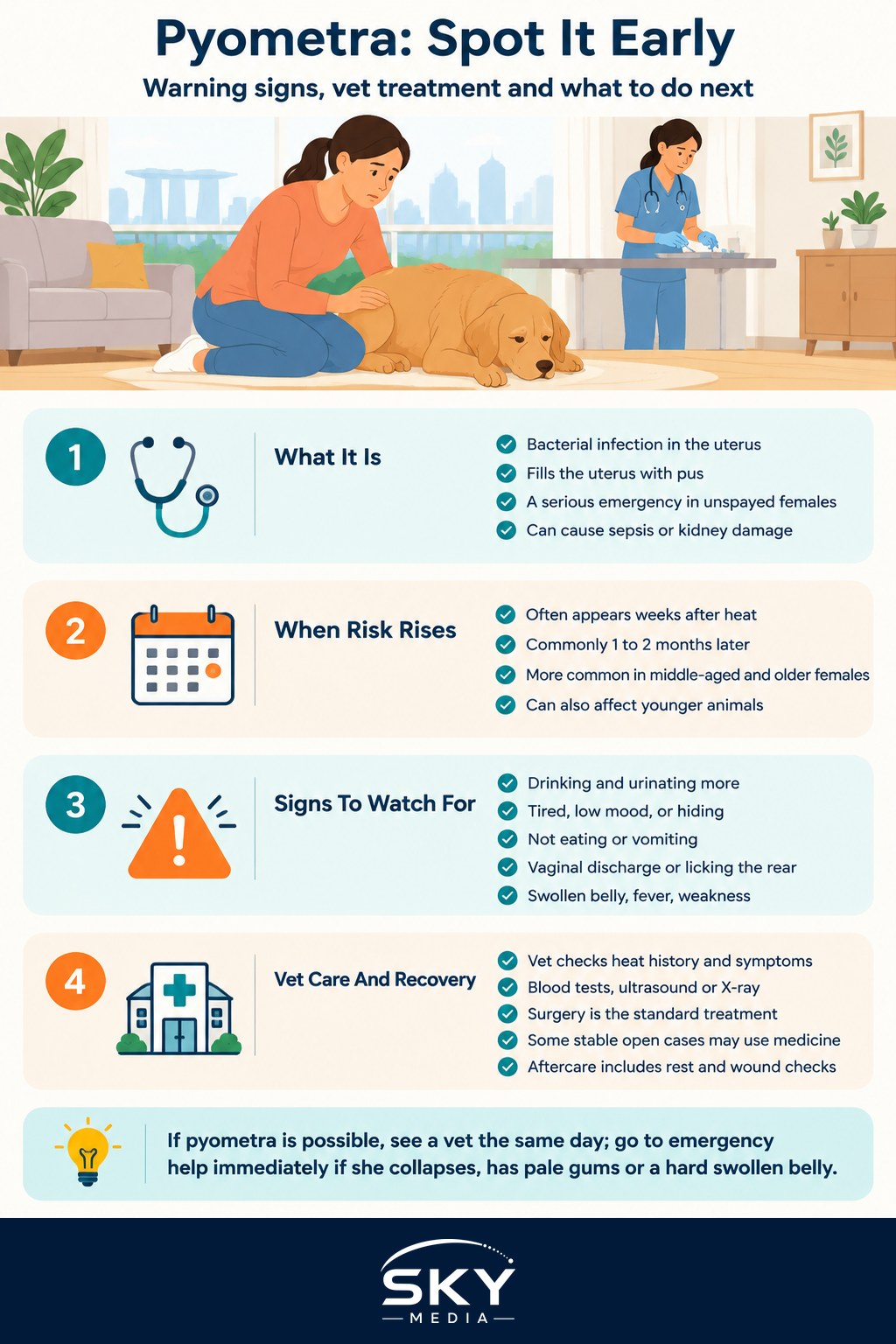
Pyometra is one of the most serious emergencies an unspayed female pet can face. It is a bacterial infection of the uterus that fills it with pus, and without prompt treatment it can lead to sepsis, kidney damage or a ruptured uterus. If you share your home with an intact female, knowing the signs of a pyometra dog or cat case can genuinely save her life.
This guide focuses on the emergency itself: how to spot it, why timing after a heat cycle matters, what the vet will do and how recovery usually goes. It is general information, not veterinary advice. If you suspect pyometra, call a vet or an emergency animal clinic straight away rather than waiting to see if things improve.
What Pyometra Is and Why It Happens
After each heat (oestrus) cycle, a female dog’s body produces high levels of the hormone progesterone for several weeks, whether or not she becomes pregnant. Progesterone thickens the uterine lining and relaxes the immune response inside the uterus so that a pregnancy could develop. Over repeated cycles, the lining can become thickened and cystic, and bacteria (often ones normally found in the gut) can take hold and multiply.
The result is a uterus filled with infected fluid. Because the condition is driven by repeated hormone cycles, it tends to be more common in middle-aged and older females that have never been spayed, although younger animals can be affected too. Some hormone medications used to delay or suppress heat may also raise the risk, which is one reason to discuss any such treatment carefully with your vet.
Cats can develop pyometra as well, but it is seen less often than in dogs, partly because of differences in how their reproductive cycle works. The warning signs and the treatment are broadly similar, so the advice below applies to both.
The Timing Clue: Weeks After a Heat Cycle
The single most useful thing an owner can remember is the timing. Pyometra commonly shows up in the weeks after a heat cycle has ended, often within one to two months, when progesterone is still elevated. Vets will usually ask when your pet was last in heat, so it helps to jot down the dates of each cycle in your phone or a pet health notebook.
If your unspayed female seems “off” a few weeks after her season, treat it as a red flag rather than assuming she has just eaten something odd.
Warning Signs of Pyometra in Dogs and Cats
Signs can be subtle at first and then worsen quickly. Watch for:
- Drinking and urinating much more than usual. Toxins from the infection can affect the kidneys, so an unusually empty water bowl or accidents indoors are worth noting.
- Lethargy and low mood. She may sleep more, hide or seem reluctant to walk.
- Reduced appetite or refusing food.
- Vaginal discharge. It may be creamy, yellow, green, brown or blood-tinged, and can smell unpleasant. Cats in particular may groom it away, so you might only notice frequent licking of the rear.
- A swollen or tender belly. A distended abdomen with no discharge is especially concerning.
- Vomiting or diarrhoea.
- Fever, panting or a fast heartbeat.
- Collapse, pale gums or weakness, which suggest she may be going into shock and needs help immediately.
Not every pet shows every sign, and some of these symptoms overlap with other illnesses such as kidney disease or diabetes. That is exactly why a proper examination is needed.
Open vs Closed Pyometra
Vets describe pyometra as “open” or “closed” depending on whether the cervix (the entrance to the uterus) is open enough for pus to drain out.
| Feature | Open pyometra | Closed pyometra |
|---|---|---|
| Cervix | Open, so pus can drain | Closed, so pus is trapped |
| Visible discharge | Usually yes, from the vulva | Usually none |
| How it may look at home | Discharge plus tiredness, thirst, poor appetite | Swollen belly, vomiting, rapid decline |
| Urgency | Emergency, see a vet the same day | Severe emergency, risk of rupture and sepsis |
Closed pyometra is often more dangerous because there is no obvious discharge to alert you, and the swollen uterus can rupture into the abdomen. Owners sometimes mistake the belly swelling for weight gain or even pregnancy. Never assume a missing discharge means she is fine.
How Vets Diagnose and Treat It
At the clinic, the vet will usually ask about your pet’s heat history and symptoms, examine her, and recommend tests. These commonly include blood tests to check for infection and organ function, and an ultrasound or X-ray to look at the size of the uterus. Results help the vet judge how sick she is and plan treatment.
Surgery is the standard treatment in most cases. The vet removes the infected uterus and ovaries in an operation called an ovariohysterectomy. This is the same basic procedure as a routine spay, but performed on a sick animal with an enlarged, fragile uterus, so it carries more risk, takes more care and usually costs more. Before surgery, your pet may need intravenous fluids and antibiotics to stabilise her. Afterwards, she will typically stay in hospital for monitoring until she is eating, drinking and recovering well.
Medical management (hormone-based treatment instead of surgery) is sometimes considered for valuable breeding animals in stable condition with open pyometra. It is not suitable for every case, needs close follow-up, and the condition can come back with later heat cycles. Your vet will explain whether it is appropriate and what the trade-offs are. Do not give any medicine at home unless a vet has prescribed it.
Costs vary widely between clinics and depend on how unwell your pet is, so ask for an estimate when you arrive and check whether your pet insurance policy covers emergency surgery. Policy wording differs, so confirm with your insurer.
Recovery at Home After Surgery
Most pets that are treated promptly recover well. Typical aftercare includes:
- Keeping her calm and restricting running and jumping for the period your vet advises.
- Using a cone or recovery suit so she cannot lick or chew the wound.
- Checking the incision daily for redness, swelling, discharge or gaps.
- Giving any prescribed medication exactly as directed.
- Returning for wound checks and stitch removal if needed.
Call the clinic if she stops eating, vomits repeatedly, seems in pain or becomes lethargic again. In Singapore’s heat, make sure she rests somewhere cool with fresh water always available.
Prevention and When to Act
Spaying is the most reliable way to prevent pyometra, because removing the uterus removes the risk. If you are not planning to breed, talk to your vet about the right time to spay. If you do keep an intact female, keep a record of her heat cycles and stay alert in the weeks after each one.
When in doubt, act early. A pet showing several of the signs above, particularly after a recent heat, should be seen by a vet the same day. If she collapses, has pale gums or a hard, swollen belly, go to the nearest 24-hour emergency animal clinic immediately. Check that your regular clinic’s after-hours arrangements are saved in your phone before you ever need them.
Explore more: Vaccinations for Dogs and Cats in Singapore, Caring for a Pregnant Dog or Cat in Singapore and Tick Fever in Dogs: Warning Signs to Watch.
Further reading: Pancreatitis in Dogs: Causes, Signs and Recovery · FIP in Cats: Signs and Treatment Options in Singapore · Spaying and Neutering Your Pet in Singapore