

A year end reflection is easy to start and easy to abandon. Many of us open a notebook in late December, write a few lines about being “busier than expected”, and never look at it again. The problem is not motivation. It is method. Without a structure, reflection drifts into a vague diary entry or a list of resolutions that has nothing to do with what actually happened.
This guide offers a structured writing method focused on three things you can use: the lessons the year taught you, the habits that shaped it, and the decisions you made or avoided. The goal is a short document you will genuinely want to reread in a month, in six months and next December.
Why a Written Reflection Beats a Mental Review
Thinking back over the year in your head feels productive, but memory is selective. We tend to remember the most recent weeks, the most emotional moments and the stories we have already told friends. Writing slows this down. It forces you to name specifics, notice patterns and separate what happened from how you felt about it.
A written reflection also creates a record. Next year, you can compare entries and see whether the same frustrations keep appearing. That comparison is often more useful than any single year’s insight.
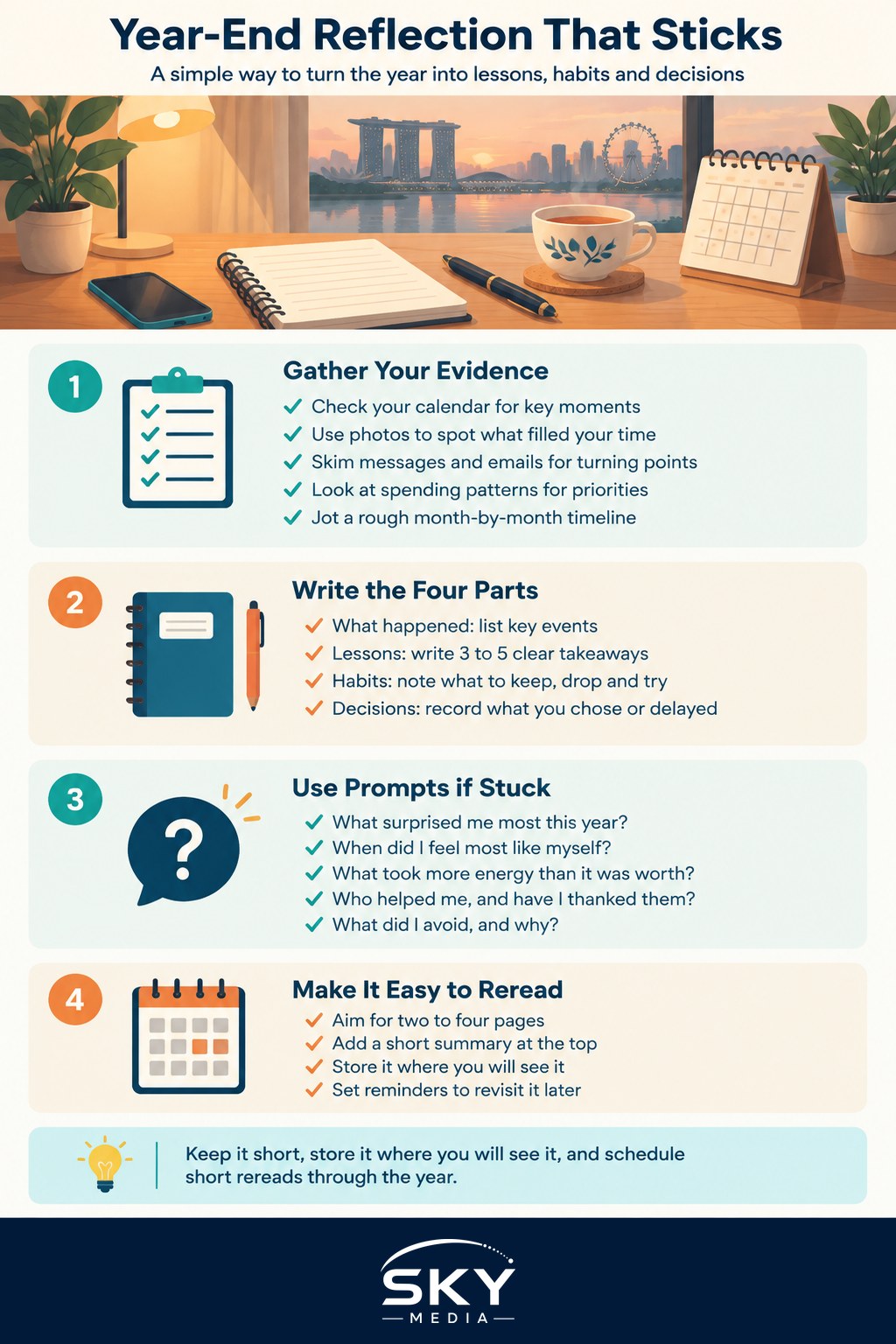
Before You Start: Gather Your Evidence
Spend 20 to 30 minutes collecting raw material before you write a single reflective sentence. You are looking for facts, not feelings.
- Your calendar. Scroll month by month. Note trips, projects, events and the weeks that looked overloaded.
- Your phone photos. They show what you actually spent time on, which is often different from what you think.
- Your messages and emails. Skim for big conversations, offers, conflicts and turning points.
- Your finances. A quick look at spending patterns reveals priorities. If you want to go further, our guide to an end-of-year money review in Singapore walks through this in detail.
- Any notes, journals or to-do lists you kept during the year.
Jot down a rough timeline with one or two lines per month. This becomes the backbone of your reflection.
The Four-Part Reflection Method
Work through these four sections in order. Each one builds on the last, and together they usually take one to two hours. You can split them across a few evenings.
| Part | Question to answer | What to write | What to avoid |
|---|---|---|---|
| 1. What happened | What were the defining events of my year? | A factual list of 8 to 12 key moments, good and bad | Judging or explaining yet |
| 2. Lessons | What did these events teach me? | 3 to 5 lessons phrased as clear sentences | Vague statements like “I grew a lot” |
| 3. Habits | Which routines helped or hurt me? | Habits to keep, habits to drop, habits to try | A long list you cannot act on |
| 4. Decisions | What did I decide, and what did I postpone? | Key decisions, their outcomes, and open decisions for next year | Turning this into a resolution list |
Part 1: What Happened
Using your timeline, list the moments that defined the year. Include wins, setbacks, changes in relationships, work shifts, health events, moves and anything that took a lot of your energy. Keep each item to one line. Resist the urge to analyse; that comes next.
Part 2: Lessons
Look at your list and ask: what did each moment teach me about myself, other people or how I work? Write each lesson as a full sentence that you could hand to a friend. Compare:
- Weak: “Work was stressful.”
- Useful: “I take on too much when I say yes in meetings without checking my calendar first.”
Three to five strong lessons are better than fifteen weak ones. If a lesson feels uncomfortable to write, it is usually worth keeping.
Part 3: Habits
Habits explain a lot of what happened. Divide a page into three columns or headings:
- Keep: routines that clearly helped, such as a weekly exercise slot, a Sunday planning hour or a phone-free dinner.
- Drop: routines that drained you, such as late-night scrolling, skipped lunches or always replying to work messages after hours.
- Try: one or two small experiments for the coming year.
Be honest but specific. “Exercise more” is not a habit; “a 30-minute walk after dinner on weekdays” is.
Part 4: Decisions
This is the part most reflections skip, and it is often the most valuable. List the significant decisions you made this year, from changing jobs to ending a commitment to choosing a course. For each, write a sentence on how it turned out and what you would do differently.
Then list the decisions you postponed. These are the open loops that tend to resurface every December. Naming them is the first step to dealing with them. If some of these involve long-term direction, our guide on how to make a five-year plan you will actually follow can help you turn them into a longer arc.
Prompts to Unlock Better Answers
If you get stuck, these prompts tend to produce useful writing:
- What surprised me most about this year?
- When did I feel most like myself?
- What took more energy than it was worth?
- Who helped me, and have I thanked them?
- What did I avoid, and why?
- What would I tell myself on 1 January of this year, knowing what I know now?
- Which small change had an outsized effect?
You do not need to answer all of them. Pick three or four that spark something.
Making Your Reflection Easy to Revisit
A reflection only matters if you return to it. A few practical steps help:
- Keep it short. Aim for two to four pages. A 20-page document will not be reread.
- Add a one-paragraph summary at the top. Future you will read this even when skipping the rest.
- Store it somewhere you will see it. A pinned note on your phone, a dedicated notebook, or a cloud folder named by year.
- Schedule check-ins. Put calendar reminders for the end of March, June and September to reread it for ten minutes.
- Link it to your plans. If you set goals for the new year, reference the lessons they come from.
Fitting Reflection Into a Busy Singapore December
December in Singapore is often packed with office parties, family gatherings, school holiday plans and year-end deadlines. Rather than waiting for the perfect quiet evening, block one or two specific sessions in your calendar, ideally before the last week of the year when energy dips. A café corner, a library seat or an early morning at home all work.
If the year-end period also brings financial decisions, a year-end bonus checklist is a good companion to your reflection, since money choices often connect directly to the lessons and decisions you write about.
A good year end reflection is not about judging the year as good or bad. It is about turning twelve months of experience into a handful of clear lessons, honest habits and visible decisions, written down where you can find them again.
Further reading: How to Write a Personal Mission Statement