
If you have ever lain down after a long day feeling wired but exhausted, unable to switch off yet too tired to do anything useful, yoga nidra might be worth a try. Often described as guided deep rest or yogic sleep, it is a lying-down practice where you stay still and follow a voice as it walks your attention slowly through the body and breath. For anyone curious about yoga nidra in Singapore, the appeal is simple: it asks nothing of you physically, it fits into a short window, and it gives an overstimulated mind somewhere gentle to land. This guide explains what it is, how a session tends to go, and how to make it a realistic part of a busy week.
What Yoga Nidra Actually Is
Despite the name, yoga nidra is not a series of poses and it is not really sleep either. You lie down, usually on your back, get comfortable, and then listen. A recording or a live teacher guides your attention through different parts of the body, invites you to notice the breath, and often introduces simple images or sensations to rest on. The aim is to settle into a state that sits somewhere between waking and sleeping, where the body is deeply relaxed but a thread of awareness stays present.
The practice has roots in older yogic and meditative traditions, and modern versions have been simplified into accessible guided sessions that anyone can follow. You do not need to be flexible, fit, or experienced. You do not even need to do it correctly in any strict sense, because there is no posture to hold and no goal to achieve. If your mind wanders, which it will, you simply return to the voice when you notice.
It helps to be clear about what this is and is not. Yoga nidra is a relaxation and self-care practice, a way of giving yourself structured rest. It is not a medical treatment and it is not a substitute for care from a doctor if you are dealing with a health condition, ongoing anxiety, or a sleep problem that will not shift. Think of it as one gentle tool among many, sitting comfortably alongside our wider notes on managing stress and relaxation.
How a Session Tends to Go
A typical session runs anywhere from about ten minutes to forty, and you can find guided recordings in that whole range. Longer is not automatically better, so a short session you actually do beats a long one you keep putting off.
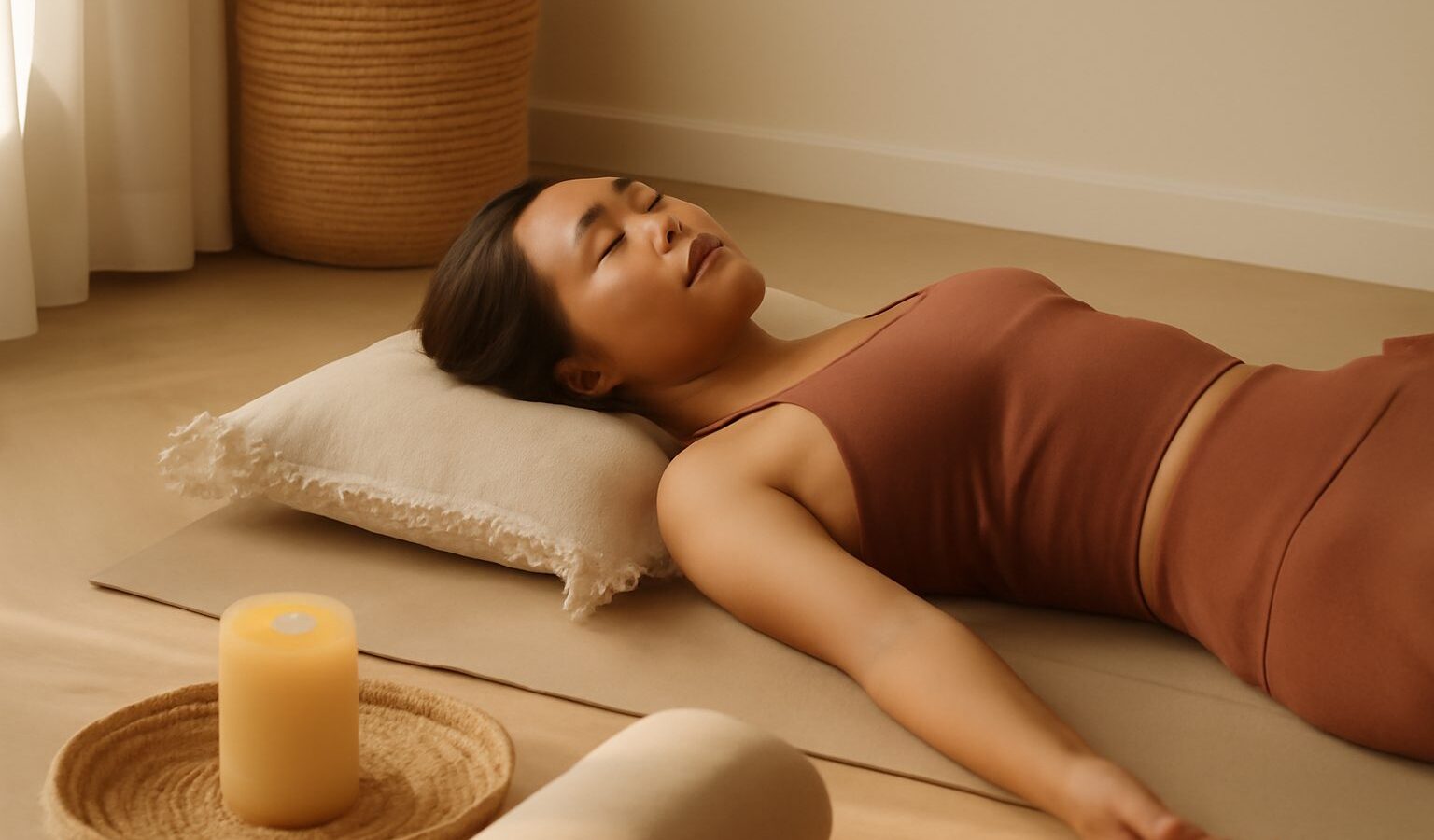
You begin by getting genuinely comfortable. Most people lie on their back on a mat, bed, or rug, with a cushion under the head and perhaps another under the knees to ease the lower back. In our climate, comfort often means a light layer or a thin blanket, because lying still can make you feel cooler than you expect even with the fan or aircon on. Once you are settled, you stay still for the rest of the practice.
From there, the guide leads you through a few familiar stages, which usually include:
- Settling in and noticing the body’s weight and the surface beneath you.
- A slow tour of the body, moving attention from one part to the next.
- Gentle awareness of the natural breath, without forcing it.
- Resting on a simple image, feeling, or sense of calm.
- A slow, unhurried return to ordinary alertness at the end.
You may drift off to sleep, and that is fine, especially if you are tired. If your goal is rest rather than a nap, a slightly more upright position or an earlier time of day can help you stay on that quiet edge of awareness instead of dropping straight into sleep.
Fitting Deep Rest Into a Busy Week
The honest truth is that the best practice is the one that survives contact with real life. You do not need a special room, equipment, or a large block of time. A quiet corner, a pair of headphones, and a guided recording are enough.
A few practical ideas for a Singapore routine:
- Use a short session in the afternoon slump instead of another coffee, if you can find fifteen minutes somewhere private.
- Try a longer session in the evening as a wind-down, which pairs naturally with building a better sleep routine.
- Keep expectations gentle. Some days you will feel wonderfully rested, other days a bit restless, and both are normal.
- Combine it with other calming habits over time rather than expecting one practice to do everything.
If you enjoy the stillness of yoga nidra, you may also like the more active attention training in mindfulness and meditation, or the muscle-by-muscle unwinding of progressive muscle relaxation. They are close cousins, and many people move between them depending on mood and energy.
A quick wrap-up. Yoga nidra is a low-effort, high-comfort way to give an overworked mind some genuine rest, and it asks very little of you beyond lying down and listening. Start with a short guided session, make yourself comfortable, and let go of any need to do it perfectly. If persistent tiredness, low mood, or sleep trouble is weighing on you, treat that as a reason to see a doctor rather than something a relaxation practice alone should fix.