

Your first week of work in Singapore sets the tone for how you settle into a new job and a new country at the same time. It is exciting and a little nerve-wracking, and there is a lot coming at you: new faces, new systems, an unfamiliar office culture and a city you are still learning to navigate. The reassuring news is that most workplaces here are welcoming to newcomers and expect a settling-in period. This guide covers what to expect and how to make those first days go smoothly, so you can focus on making a good, natural impression rather than worrying about the details.
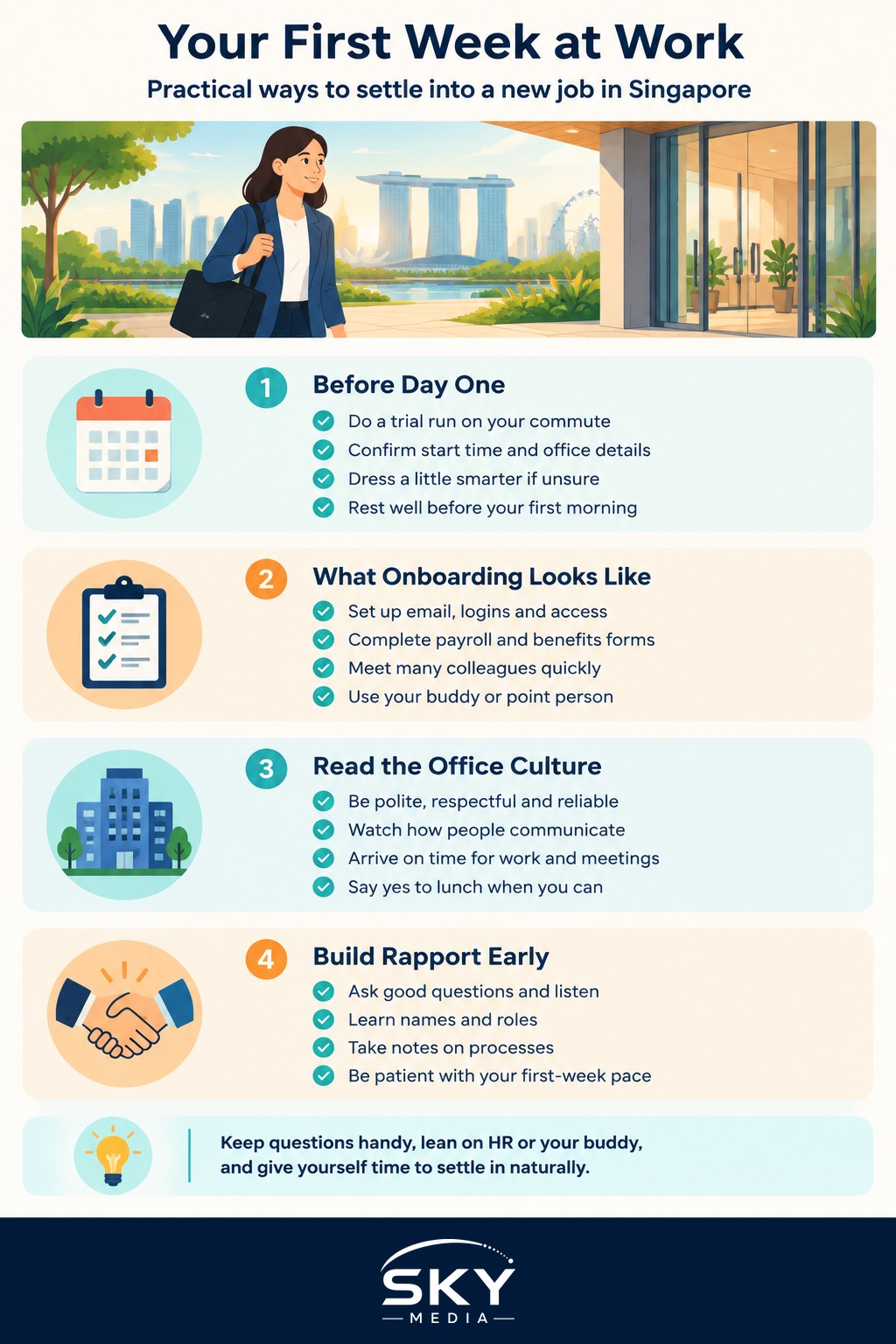
Before Day One
A little preparation takes the pressure off. Sort out the practical basics so your first morning is calm rather than rushed.
- Plan your commute. Do a trial run on the MRT or bus so you know your route and timing. Tapping in is simple once your transport is set up, and our guide to setting up public transport when you arrive covers the options.
- Confirm the logistics. Check your start time, the office address, who to ask for on arrival, and whether you need any documents. If HR has asked for paperwork, have it ready.
- Dress for the norm. When unsure, lean slightly smart on day one and adjust once you see what colleagues wear. Offices vary from formal to relaxed, so read the room in the first day or two.
- Rest and hydrate. The heat and humidity plus first-day nerves are tiring, so give yourself an easy evening beforehand.
Keep in mind that anything about your contract, leave, benefits or working hours is set by your employer and governed by local employment rules. Your HR team is the right source for the specifics, and this article is general orientation rather than HR or legal advice.
What Onboarding Usually Looks Like
Most first weeks follow a familiar shape, even if the details differ by company.
Expect to spend time on administrative setup: getting your work email and system logins, your building or lift access, and being added to team chats and calendars. You may complete forms for payroll and benefits, and you might be asked about details connected to your work pass. If questions about your pass or its conditions come up, your HR team handles those, and our Singapore work pass guide is useful background.
You will likely meet a lot of people quickly. Do not worry about remembering every name at once. Jot down names and roles, and it is perfectly fine to ask someone again politely. Many companies assign a buddy or point person for your first days, so use them freely for the questions that inevitably come up.
Payroll and your first payslip can look unfamiliar if you are new to the local system. When your first payday arrives, your first payslip explained breaks down what the line items mean, including deductions you may not have seen before.
Reading the Office Culture
Singapore workplaces are diverse, blending local norms with a very international mix of colleagues. A few general tendencies help you settle in.
- Politeness and consideration go a long way. A friendly, respectful manner is valued, and rushing to prove yourself is less important than being reliable and easy to work with.
- Communication styles vary. Some teams are direct, others more indirect, and titles or seniority may carry weight in how people interact. Watch how colleagues speak to managers and to one another, and follow their lead.
- Punctuality matters. Arriving on time to work and to meetings signals respect.
- Lunch is social. Colleagues often head to a nearby hawker centre or food court together, and saying yes is one of the easiest ways to build rapport in your first week.
For the bigger picture beyond the first days, adjusting to Singapore work culture is a helpful companion.
Building Rapport From Day One
You do not need to be the loudest person in the room to start well. Small, genuine gestures build trust.
- Ask good questions and listen. Curiosity about how things are done here reads as engaged, not clueless.
- Learn people’s names and what they do. Understanding who owns what makes you effective faster.
- Take notes. Writing down processes and passwords saves you asking twice and shows you are organised.
- Say yes to the coffee or lunch invite. Informal time is where working relationships actually form.
- Be patient with yourself. You are not expected to deliver big results in week one. Absorbing how the place works is the real task.
Settling In Calmly
Give yourself grace. Starting a job while also finding your way around a new city is a genuine double load, and feeling tired or slightly overwhelmed is completely normal. Focus on learning rather than performing, keep a running list of questions, and lean on your buddy or HR when you are unsure. Outside work, protect a bit of downtime so you can recharge for the next day.
Your first week of work in Singapore is the beginning of a longer settling-in journey, not a test you have to ace. Show up prepared, stay curious and considerate, and let relationships and confidence build naturally. Within a few weeks the systems will feel routine, the faces will feel familiar, and you will look back on the nervous first morning with a smile.
Frequently Asked Questions
What documents will HR usually ask for in my first week? It varies by employer, but typically HR collects identification, bank details for payroll and any papers linked to your pass or qualifications. Your offer letter or onboarding email often lists them. Ask HR for a checklist before day one, so nothing delays your first payday.
What should I ask my manager during my first week? Ask about your priorities for the first month, how success will be measured, who to go to for what, and how they like to receive updates. Also ask about working hours and any team routines. Asking early shows initiative, not weakness.
Should I bring lunch or eat out with colleagues on day one? Joining colleagues for lunch is a friendly way to start, and it’s often how new hires are welcomed. If nobody invites you, ask someone politely or bring your own food. Either is fine, and you can settle into a routine after the first week.
What if I make a mistake in my first week? Stay calm, tell your manager promptly, and explain what happened and how you will fix it. Most employers expect newcomers to make small errors while learning. Owning the mistake and learning from it builds more trust than hiding it.
Is a probation period normal when starting a new job? Yes, probation is common and your contract should state its length and terms. During this period, both you and the employer assess fit. Read your contract carefully, ask HR to clarify anything, and check the Ministry of Manpower for your rights.
Official sources: Ministry of Manpower (MOM)