

Starting a job in a new country is exciting and a little daunting all at once. You are learning new faces and systems while also picking up the unwritten rules of how things are done. Singapore work culture has its own rhythm, shaped by the country’s efficiency, its multicultural workforce and its blend of global and Asian business norms. The good news is that workplaces here are generally professional, orderly and welcoming to newcomers, and with a little observation you will settle in comfortably.
This guide offers a general overview of what to expect and how to adapt gracefully. Every company and team is different, so treat this as a starting point and pay attention to the specific norms where you work.
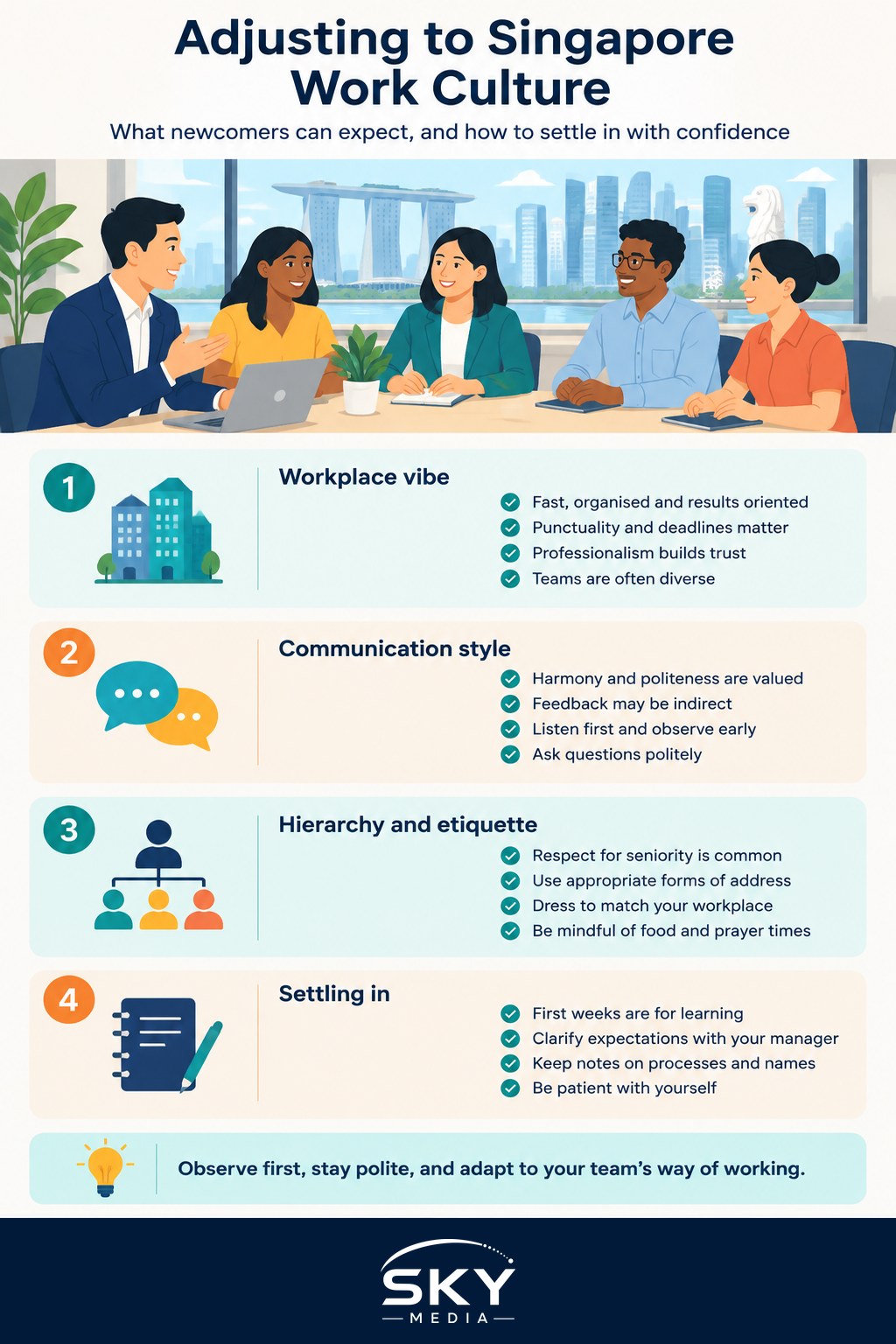
The General Feel of the Workplace
Singapore is known for being fast moving, organised and results oriented, and that tends to show up at work. Deadlines are usually taken seriously, punctuality is valued, and there is a strong emphasis on getting things done well. At the same time, teams are often diverse, bringing together colleagues from many backgrounds and nationalities, which makes openness and adaptability real assets.
A few themes newcomers often notice:
- Professionalism and reliability matter. Doing what you said you would do builds trust quickly.
- Efficiency is prized. Meetings often have a clear purpose, and people appreciate preparation.
- Diversity is the norm. You will likely work alongside colleagues of many cultures and faiths, so respect and flexibility go a long way.
If you are also adapting to the general tempo of the city outside work, you will find it takes a little time to match the local rhythm, and that is perfectly normal.
Communication and Relationships
Communication styles at work can feel different depending on where you have come from. Singapore workplaces often value harmony and politeness, so people may express disagreement indirectly or soften feedback. Reading between the lines and paying attention to tone helps. At the same time, many modern and international companies encourage more direct discussion, so the norm varies by workplace.
Some practical habits that serve newcomers well:
- Listen first. Spend your early weeks observing how colleagues speak, run meetings and make decisions.
- Be respectful and measured. A calm, courteous tone is rarely the wrong choice.
- Ask questions politely rather than assuming, especially about processes and expectations.
- Build relationships steadily. Sharing a meal, joining pantry chats and being friendly all help you become part of the team.
Because so much of settling in at work comes down to how you interact, it is worth reading more about building professional relationships as a newcomer and the local communication styles in Singapore workplaces.
Hierarchy, Etiquette and Everyday Norms
Respect for seniority and structure is common in many Singapore workplaces, though the degree varies widely between traditional local firms and international or startup environments. Being courteous to senior colleagues, using appropriate forms of address and being mindful of the chain of communication are generally appreciated. You will get a feel for how formal or relaxed your particular office is within your first few weeks.
Other everyday norms to be aware of:
- Dress codes range from formal to smart casual depending on industry, so observe what colleagues wear and match it.
- Lunch is often a social occasion, and joining in is a friendly way to bond.
- Sensitivity to the multicultural, multireligious workplace matters, for example being mindful around food, festivals and prayer times.
For a deeper look at the structural side of office life, see our guide to understanding office hierarchy and etiquette.
Settling In Over Time
Adjusting to any new work culture takes patience, and it is completely normal to feel unsure in the first month or two. Give yourself permission to learn, ask for guidance when you need it, and remember that your fresh perspective is valuable too. Colleagues generally understand that newcomers are finding their feet, and most are happy to help someone who is respectful and willing to learn.
A gentle roadmap for your first stretch:
- In your first weeks, focus on observing, listening and building rapport.
- Clarify expectations with your manager early so you know what good performance looks like.
- Keep notes on processes and names to help you settle faster.
- Be patient with yourself, and celebrate small wins as you go.
If you want a closer look at those crucial early days, our article on your first week of work in Singapore walks you through it.
Adjusting to Singapore work culture is a journey, not a single leap. Stay curious, be respectful of local ways, and lean on the friendliness of the people around you. Before long, the workplace that felt foreign will feel like a place where you truly belong.
Frequently Asked Questions
How many hours a week will I be expected to work in Singapore? It depends on your contract, your industry and your employer, so there is no single answer. Your employment contract should state your working hours and overtime arrangements. For the legal framework and your rights, check with the Ministry of Manpower and ask HR if anything is unclear.
Is it okay to share ideas as a new joiner, or should I wait? Sharing ideas is usually welcome, but how you do it matters. Spend your first weeks listening, then raise suggestions politely, ideally framed around a shared goal and with a question rather than a criticism. In flatter or startup teams you can speak up earlier than in traditional firms.
How does Singapore work culture differ from Western workplaces? Many newcomers notice more emphasis on harmony, seniority and indirect feedback, though international firms can feel much closer to Western styles. Work is often fast paced and deadline driven. Because every company differs, treat these as tendencies and check how your own team operates.
How can I find out what my manager expects from me? Ask directly in a one-to-one chat early on, covering priorities, how success is measured and how often you should update them. Asking is seen as conscientious, not weak. Following up with a short written summary keeps everyone on the same page.
What should I do if I feel lost or lonely in my first months? Feeling that way is common for newcomers. Join colleagues for lunch, ask a friendly teammate to show you the ropes, and keep your manager informed about how you are coping. If stress becomes overwhelming, speak to HR or a doctor, since support exists.