
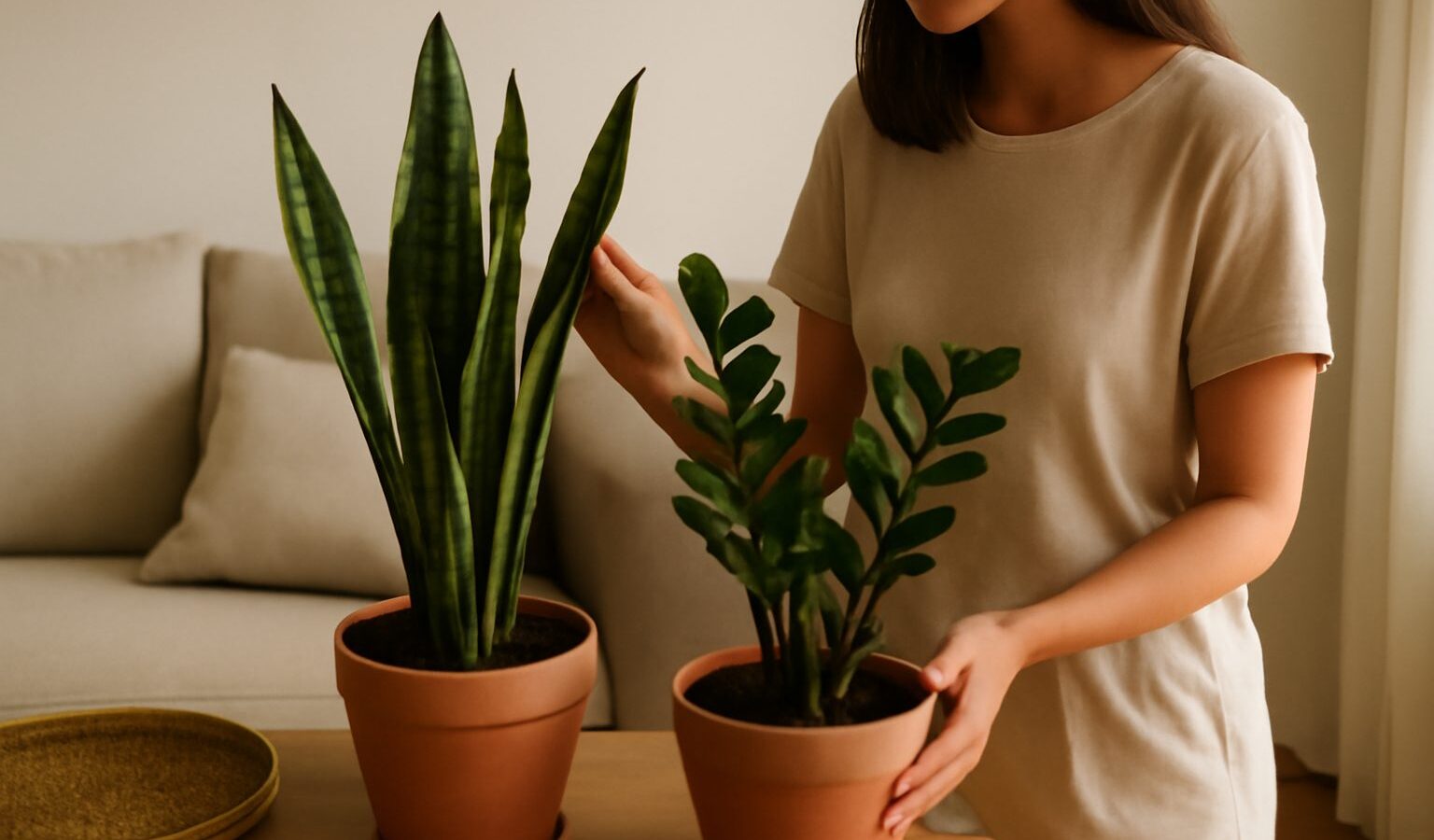
If you want greenery at home but suspect you will forget to water it, these two plants were made for you. The snake plant and ZZ plant are the classic “impossible to kill” houseplants, and in Singapore they are a brilliant choice for busy people, dim flats and first-time plant owners. This guide to the snake plant and ZZ plant for Singapore homes explains why they thrive here, how to keep them alive with barely any effort, and how to choose between the two.
Why Snake Plants and ZZ Plants Suit Singapore Homes
Both plants earned their tough reputation honestly. The snake plant (Sansevieria, now also called Dracaena trifasciata) sends up stiff, upright, sword-shaped leaves, often banded or edged in yellow. The ZZ plant (Zamioculcas zamiifolia) grows glossy, waxy leaflets along arching stems that look almost artificial. Both store water in their thick leaves and roots, which means they cope easily with a missed watering or two.
For Singapore living that resilience is gold. Our flats vary from bright balconies to shady inner rooms, and these two handle the dim end of that range better than almost anything. They tolerate air-conditioning, they do not need misting in our natural humidity, and they grow slowly enough that you rarely have to repot. If you have killed plants before, start here and rebuild your confidence.
Light: Where to Put Them
The great strength of both plants is their tolerance of low light. They will happily sit in a spot that most houseplants would hate: an inner corridor, a bathroom with a small window, a bedroom corner away from the glass. That makes them some of the few plants that genuinely work in the darker parts of an HDB flat.
That said, tolerating low light is not the same as preferring it. Both grow faster and look their best in bright, indirect light, and a variegated snake plant keeps its yellow edges better with more brightness. What they do not want is harsh direct sun through glass, which can scorch the leaves. A good rule for Singapore:
- Bright, indirect light: fastest, healthiest growth.
- Medium or low light: slower but perfectly happy, ideal for dim rooms.
- Direct afternoon sun: avoid, or filter it with a sheer curtain.
Watering Without Killing Them
Here is the one way people actually manage to kill these near indestructible plants: overwatering. Because they store water, they rot if the soil stays constantly wet. Water only when the soil has dried out almost completely, then water thoroughly and let all the excess drain away. In our climate that often means once every one to two weeks, and even less in a shady spot. When in doubt, wait. A thirsty snake plant or ZZ plant recovers in a day; a rotted one usually does not.
Always use a pot with drainage holes. And this is the Singapore-critical part: never let water collect and sit in the saucer or tray underneath. Standing water in pot saucers, trays and container bases is exactly where Aedes mosquitoes breed, and dengue is a real risk here all year round. Tip out any water that drains into the saucer within a day, keep the saucer dry between waterings, and follow NEA’s anti-mosquito advice. Since both plants like to dry out anyway, an empty, dry saucer suits the plant and protects your home at the same time. Avoid compacted soil that traps water on the surface too.
Snake Plant or ZZ Plant: Which Should You Choose?
Both are easy, so the choice comes down to look, space and light. This comparison should help you decide, or convince you to simply get one of each.
| Feature | Snake Plant | ZZ Plant |
|---|---|---|
| Shape | Tall, upright, sword-like leaves | Arching stems with glossy leaflets |
| Low-light tolerance | Excellent | Excellent |
| Watering needs | Low, drought tolerant | Very low, drought tolerant |
| Growth speed | Slow to moderate | Slow |
| Best spot | Narrow corners, shelves, floor | Side tables, shelves, low-light rooms |
| Toxic if eaten | Yes | Yes |
Feeding, Repotting and Propagation
Neither plant is hungry. A diluted balanced liquid fertiliser once every month or two during active growth is more than enough, and many people barely feed them at all. Follow the product label, keep fertilisers away from children and pets, and choose eco-friendly options where you can. Overfeeding does more harm than skipping it.
Both are slow growers that actually like being a little snug in their pots, so repot only every two to three years, or when roots visibly fill the pot or push it out of shape. Move up one pot size, use a free-draining potting mix, and do not water heavily straight after. Propagation is easy and free: snake plants can be divided at the roots or grown from leaf cuttings, while ZZ plants are usually multiplied by dividing their underground rhizomes when you repot.
A Note on Pets and Children
One honest caution: both the snake plant and ZZ plant are toxic if eaten, and can cause mouth irritation, drooling or an upset stomach in pets and young children. This is general guidance and not a complete or medical reference, as many common houseplants are toxic to some degree. If you have curious pets or small children, place these plants out of reach, verify each plant’s safety for yourself, and if anyone or any pet does eat part of a plant, contact a vet, doctor or the Poison Information Centre.
Where to Buy and Getting Started
You will find both plants at almost every plant seller in Singapore: the nurseries at Sungei Tengah and along Thomson Road, Far East Flora, community nurseries, IKEA and countless online sellers. Prices range from budget small pots to pricier large or variegated specimens, so check with the nursery or shop rather than assuming a figure. A small plant is the cheapest, easiest way to begin and will settle in fast.
To start you need only the plant in a pot with drainage holes, a saucer you keep dry, some free-draining potting mix and a watering can you will barely use. Pick the snake plant for a tall, structural look or the ZZ plant for glossy, spreading greenery, put it in that awkward dim corner, and let it prove how forgiving a good snake plant and ZZ plant can be.
Explore more
These two are gateway plants, so once you are hooked, explore our beginner’s guide to houseplants in Singapore and more of the best low-maintenance indoor plants. For that gloomy corner, see the best plants for low-light homes, and if you want another easy win, try caring for succulents and cacti.