
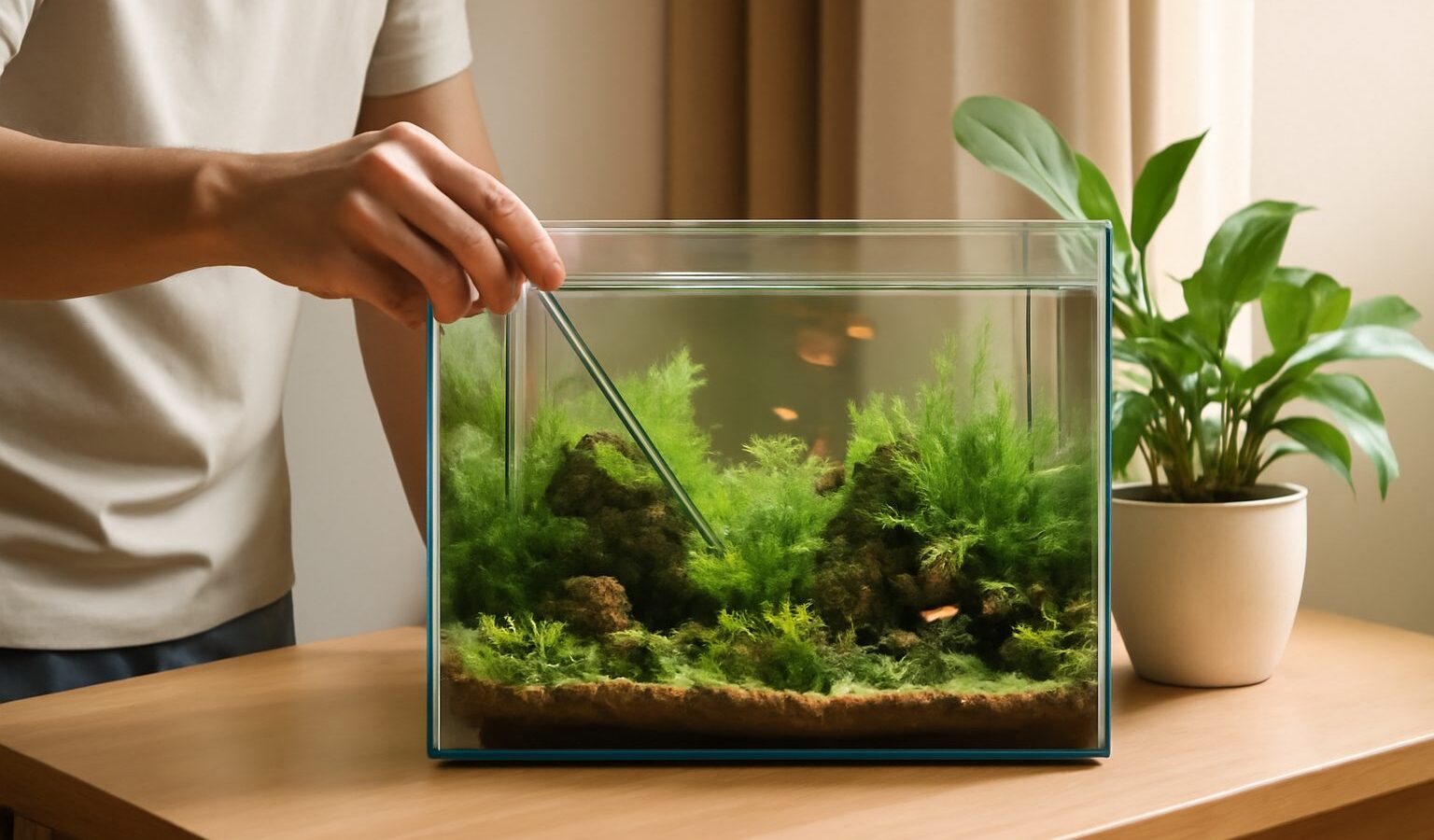
The aquascaping Singapore hobby has quietly become one of the most rewarding corners of the local plant world. It sits at the meeting point of gardening and fishkeeping, turning a glass tank into a living underwater landscape of mossy stones, carpeting greens and gently swaying stems. For flat and condo dwellers with little outdoor space, a planted aquarium offers a slice of nature that thrives indoors, cools a room visually and gives you something calming to watch after a long day.
A well-planted tank is also genuinely good for the fish. Living plants absorb waste, add oxygen and give shy fish and shrimp places to hide. Best of all, aquarium plants sidestep the mosquito worry that puts many people off water features. A proper aquarium is either stocked with fish that eat any larvae or fitted with a lid and filter that keeps the surface moving, so it does not become the still, open water that mosquitoes need to breed. The golden rule is simple: never set up open, stagnant water outdoors. Keep your water indoors, moving and covered, and you have a beautiful feature rather than a dengue risk.

Choosing Aquarium Plants for Beginners
If you are new to aquascaping, start with hardy, forgiving species rather than the demanding carpeting plants you see in competition tanks. Many easy plants grow well in low to moderate light and do not need injected carbon dioxide, which keeps your first setup affordable and low fuss.
Good beginner choices include Java fern, Anubias, Java moss, Amazon sword, Cryptocoryne and Vallisneria. Java fern and Anubias are especially useful because they are tied or glued onto driftwood and stones rather than planted in the substrate, so they will not rot if their roots are exposed. Cryptocoryne and Amazon sword root into the substrate and reward you with lush growth once settled, though crypts often shed a few leaves after planting before they adapt. This is normal, so do not panic and pull them out.
Group your plants by height to build a natural scene. Low, spreading plants go at the front, medium stems and rosettes in the middle, and tall stems or grassy Vallisneria along the back to hide equipment. Leaving open foreground space, whether sand or fine gravel, gives the eye somewhere to rest and makes even a small tank feel deep.
Substrate, Light and CO2 Basics
The three things that most affect plant growth are substrate, light and carbon dioxide. Get the balance right and your plants flourish. Push one too hard without the others and you invite algae.
Substrate is the foundation. Root-feeding plants such as swords and crypts do best in a nutrient-rich planted-tank substrate, often called aqua soil, which slowly releases nutrients into the roots. If you prefer plain gravel or sand for looks, you can tuck root tablets under heavy feeders to keep them fed. Plants that attach to wood and stone draw their nutrients straight from the water, so they are happy over any substrate.
Light drives photosynthesis, and here Singapore homes need a little thought. Bright indirect daylight helps, but you should not place a tank where strong direct sun hits the glass for hours, as our equatorial sun heats the water and fuels green algae blooms. A dedicated LED aquarium light on a timer gives far more control. Most low-tech planted tanks do well on around six to eight hours of light a day. If algae starts creeping over surfaces, shorten the lighting period before anything else.
Carbon dioxide is the growth accelerator. Low-light, easy plants grow perfectly well without it, so beginners can skip a CO2 system entirely. As you move toward carpeting plants and dense, fast growth, injected CO2 becomes the difference maker, but it adds cost and needs balancing with light and nutrients. Start low-tech, learn how your plants behave, then upgrade only if you want to.
| Symptom | Likely cause | What to do |
|---|---|---|
| Green algae on glass and leaves | Too much light or direct sun | Shorten lighting to six to eight hours; move tank out of direct sun |
| New leaves pale or yellowing | Nutrient shortage | Add root tablets or a liquid plant fertiliser |
| Melting leaves after planting | Crypt or new plant adjusting | Wait; leave roots in place and let new growth emerge |
| Stunted, slow growth | Low CO2 or low light | Choose easy plants, or add CO2 to match the light |
| Leaves covered in brown dust | Diatoms in a new tank | Normal early on; clears as the tank matures |
Planting, Water and Ongoing Care
When you first set up the tank, plant into a moist substrate before filling, or fill slowly to avoid uprooting everything. Use aquascaping tweezers to push stem plants gently into the substrate, and space them so water can circulate. Tie or glue Java fern and Anubias to hardscape with fishing line or aquarium-safe glue, keeping their crown or rhizome above the substrate so it does not rot.
Singapore tap water is generally fine for most common aquarium plants and community fish once treated with a dechlorinator to remove chlorine and chloramine. A gentle filter keeps water clear and moving, which also helps prevent any surface stillness. Aim for regular partial water changes, around a quarter of the tank each week, to keep nutrients balanced and waste low. Our warm climate means tank water often sits comfortably in the tropical range, though during heatwaves a small fan across the surface or a slightly open lid helps cool it.
Ongoing care is mostly light trimming and observation. Prune stem plants when they reach the surface and replant the healthy tops to keep growth bushy. Wipe algae off the front glass with a soft pad, remove dying leaves promptly and dose a liquid fertiliser if leaves look hungry. Keep the lid or cover in place, both to reduce evaporation and to reassure yourself that mosquitoes have no way in.
Aquascaping rewards patience more than money. A simple low-tech tank with hardy plants, sensible lighting and steady water changes will mature into a lush, living scene over a few months. Once you have the basics working, you can experiment with new plants, hardscape layouts and eventually CO2, growing your skills alongside your tank.
Explore more
A Beginner’s Guide to Houseplants
Understanding Soil and Potting Mix
How to Water Plants in Singapore’s Heat
Common Houseplant Problems and Fixes
Frequently Asked Questions
Do I need to cycle a new planted tank before adding fish? Yes, a new tank needs time for beneficial bacteria to establish and process fish waste. Plants help, but do not replace this. Let the filter run with plants and water for a period, test the water if you can, and add fish gradually.
Can I keep shrimp in a planted tank? Yes, many people keep small shrimp with plants, which give them grazing surfaces and shelter. Choose peaceful tank mates, avoid fish that eat shrimp, and be careful with any medication or fertiliser, as shrimp can be sensitive. Check the product label first.
What plants suit a room with no direct sunlight? Java fern, Anubias and Java moss are hardy low-light choices. With a timed LED aquarium light you do not need sun at all, and a low-tech tank avoids the algae that direct sun can cause. Check each plant’s light needs when you buy.
How can I keep my planted tank going while I am on holiday? For a few days, a healthy planted tank with a timer on the light usually copes. Do a water change before leaving and avoid overfeeding. For longer trips, ask someone to check on it. Keep the lid on so mosquitoes cannot get in.
How can I set up a planted tank on a small budget? Start low-tech with hardy plants, a simple filter and an LED light on a timer, and skip CO2 at first. Attach Java fern and Anubias to stones or wood rather than buying expensive substrate for them. Add equipment later if you want.
Further reading: Building a Vivarium or Paludarium