
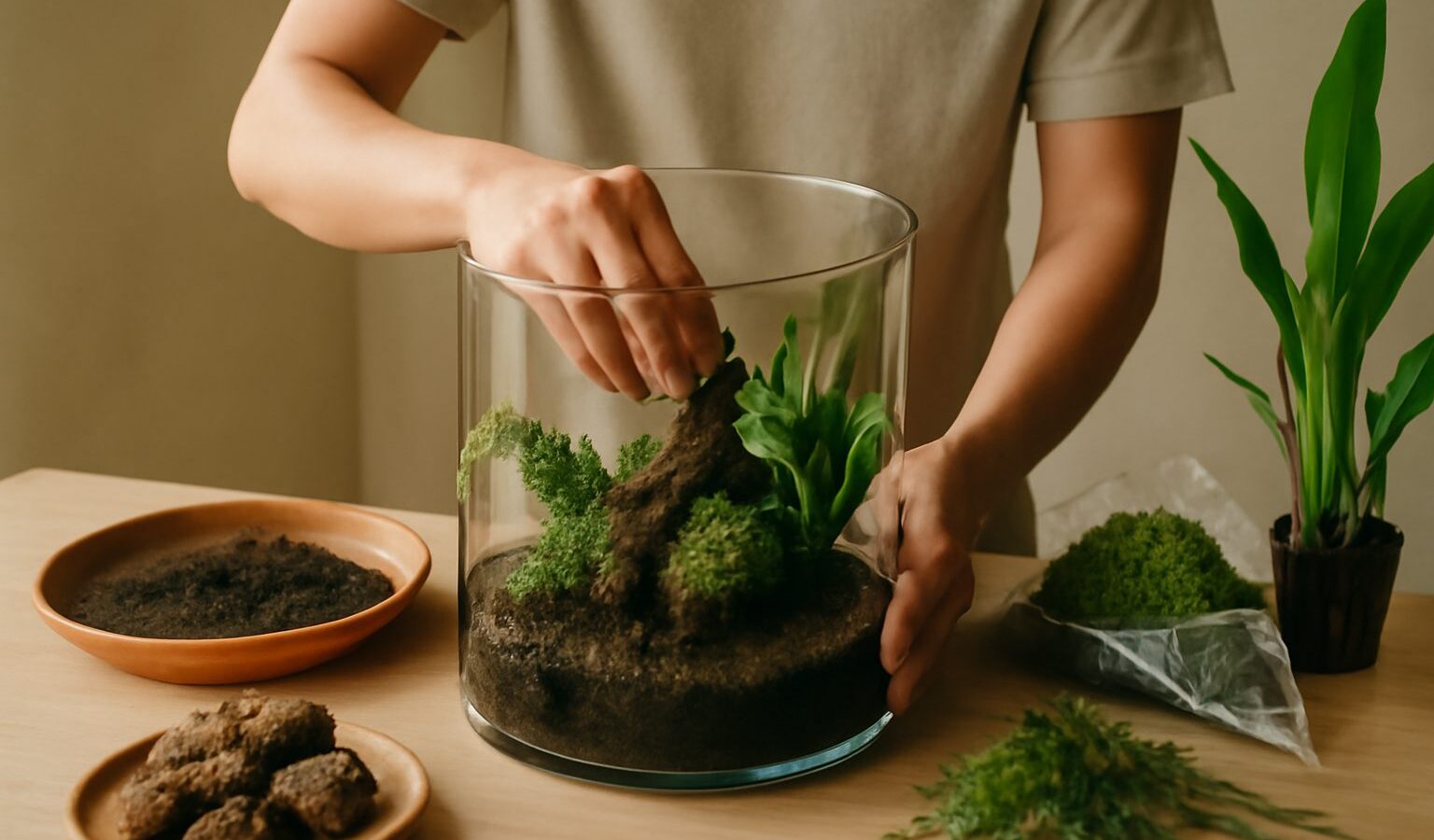
Building a vivarium in Singapore is one of the most rewarding projects a small-space grower can take on, because our warm, humid climate is exactly what these lush, enclosed jungles want. A vivarium is a planted glass enclosure that recreates a slice of rainforest, while a paludarium adds a water section so you get both land and a pool or stream in one tank. Both sit happily on a sideboard or a sturdy shelf in an HDB flat, and both turn a corner of your home into a living, misty green world you can watch grow.
This guide keeps things plant-focused. If you ever plan to add frogs, geckos, snails, shrimp or fish, treat that as a completely separate project and research each animal’s needs carefully first, because livestock have specific requirements for space, temperature, water quality and diet that a plant guide cannot cover.

Vivarium vs paludarium: which suits your space
The simplest way to choose is to think about water. A vivarium is essentially a tall, humid terrarium: a drainage layer at the bottom, a soil layer on top, and plants that love damp air. A paludarium goes a step further by dedicating part of the tank to standing water, so you build up a land area, or “hardscape”, that rises out of a shallow pool. Paludariums look spectacular but they are heavier, need more careful sealing, and take more effort to keep the water clean, so most beginners in Singapore start with a planted vivarium and graduate later.
For an HDB flat or condo, a small sealed glass tank of around 30 to 45 centimetres is plenty. It fits on a bookshelf, stays humid on its own, and does not demand a whole balcony. Choose a tank with a lid or front-opening doors, because trapping moisture is the whole point. A closed environment in our climate can hold high humidity for days, which is a gift when you consider how much misting an open setup would need.
If you enjoyed making a terrarium at home, a vivarium is the natural next step up, with a taller layout and even more emphasis on humidity-loving foliage.
Layers, plants and keeping it alive
Build from the bottom up. Start with a drainage layer of light expanded clay balls (LECA) so excess water has somewhere to sit below the roots. Add a mesh divider, then a layer of moisture-retentive substrate. Slope the substrate higher at the back to create depth and let you tuck plants at different heights. A few pieces of driftwood or clean rock give roots something to climb and make the scene look wild rather than flat.
For planting, lean on small tropical species that thrive in still, humid air:
- Mosses and small ferns for the ground and lower walls
- Fittonia (nerve plant) for splashes of pink and white
- Small-leaved creeping figs to trail over hardscape
- Miniature bromeliads or peperomias for structure
- A rooted cutting or two to fill gaps over time
Because our homes are already warm, your main jobs are light and airflow. A small LED grow light on a timer gives steady, gentle brightness without cooking the tank near a sunny window. Open the lid for a few minutes every couple of days to let fresh air in and stop stagnant, mouldy conditions from taking hold. If you spot fuzzy grey growth, that is a signal to ventilate more and mist less. Our guide to dealing with mould and fungus on plants is worth a read before you seal everything up.
A note on safety: many tropical foliage plants are mildly toxic if chewed, and sap can irritate skin and eyes, so keep the tank out of reach of young children and curious pets. If you want a safer planting list, cross-check against our child-safe plants for family homes guide.
A living project worth the patience
The real joy of a vivarium is watching it settle. In the first few weeks the moss knits together, the ferns unfurl, and the whole scene starts to look established rather than newly planted. Trim anything that outgrows its space, wipe condensation off the glass when you want a clear view, and top up humidity with the occasional light mist during a dry, hazy spell.
Kept simple and plant-only, a vivarium is a low-fuss way to bring rainforest greenery into even the smallest Singapore home. Start small, watch how the tank behaves, and add complexity, including any animals, only after you have done the separate homework each step deserves.
Frequently Asked Questions
Which plants are best for a first vivarium? Small humidity-lovers such as mosses, small ferns, fittonia, creeping figs and miniature bromeliads or peperomias, as the article suggests. Choose compact varieties so nothing outgrows the tank quickly, and trim as needed.
Do I need special lighting for a vivarium? A small LED grow light on a timer is usually the easiest option, as it gives steady brightness without overheating the glass. A spot near a sunny window can cook the tank, so keep it out of direct sun.
How do I stop mould growing in my vivarium? Ventilate by opening the lid for a few minutes every couple of days, mist less if fuzzy grey growth appears, and remove dead plant matter. Stagnant, overly wet conditions encourage mould, so balance humidity with some fresh air.
Can I keep animals in a vivarium I built for plants? Treat that as a separate project. Animals need specific space, temperature, water quality and diet, so research each species first and confirm any rules that apply. Build and balance the plants before adding anything living.
How is a paludarium harder to maintain than a vivarium? It holds standing water, so it is heavier, needs careful sealing and takes more work to keep the water clean. That is why most beginners start with a planted vivarium and move on to a paludarium later.