
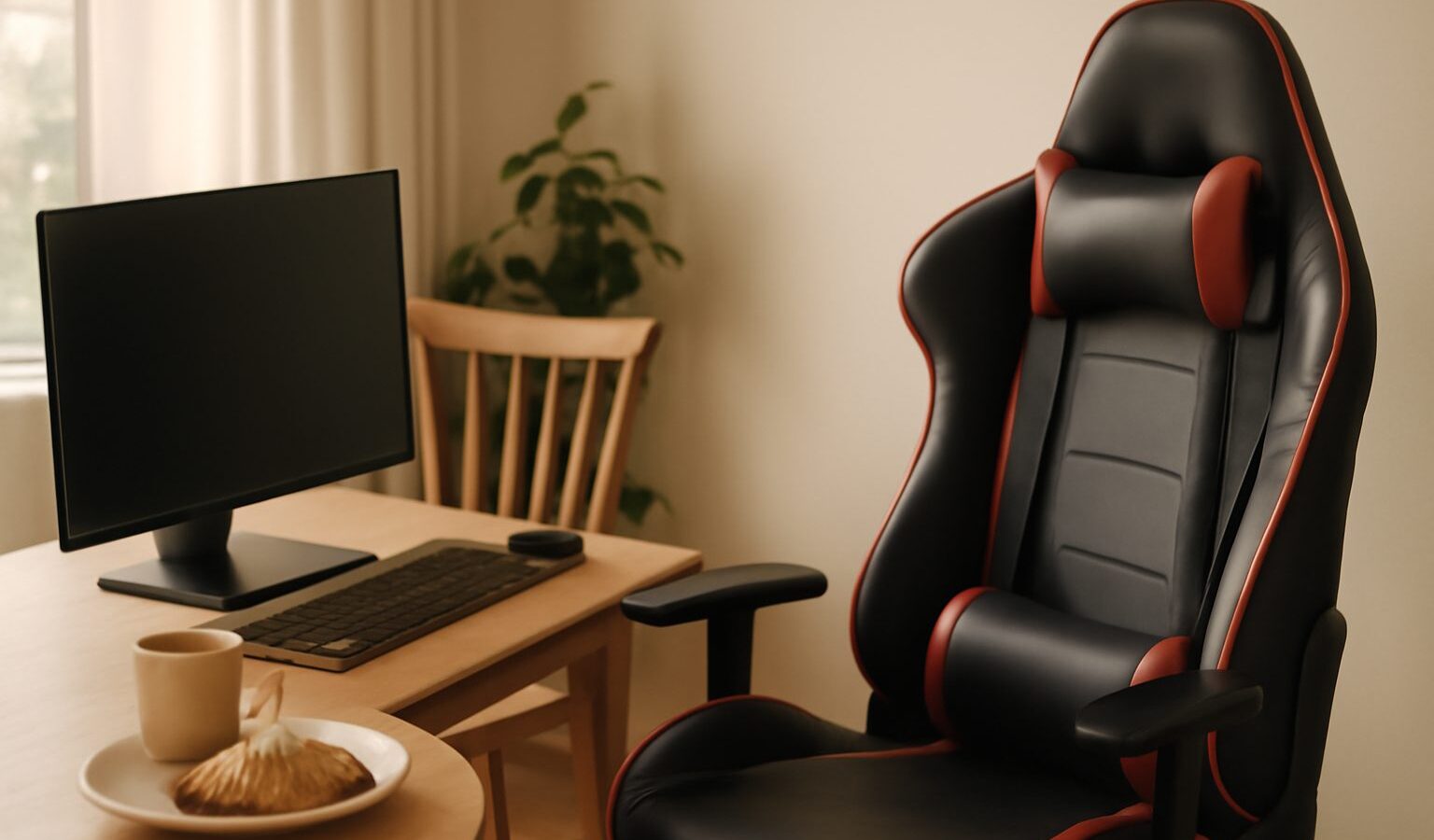
Walk through any IT mall in Singapore or scroll a local shopping site, and the racing-style gaming chair is hard to miss, all bold colours, tall backs, and promises of comfort. If you are setting up a gaming corner at home, you have probably wondered whether one of these is a smart buy or just a flashy add-on. The honest answer is that gaming chairs can be worth it for some people and a waste of money for others. This guide walks a beginner through what these chairs actually offer, where they disappoint, and how they compare with a plain office chair, so you can decide with clear eyes rather than clever marketing.
What Makes a Gaming Chair Different
A gaming chair is, at heart, a padded office chair dressed up in a racing-seat look. Most share a familiar recipe: a tall backrest that rises above your shoulders, moulded side bolsters that hug your torso, a reclining mechanism, and a pair of loose cushions for your lower back and neck. The styling borrows from motorsport bucket seats, which is where the bright stitching and brand logos come from.
Underneath the styling, the useful parts are the adjustments. A decent gaming chair lets you change the seat height, tilt or recline the back, and swing the armrests through several directions. The lumbar cushion is meant to fill the gap behind your lower back, and the reclining back lets you lean away from the screen during a break. None of this is unique to gaming, but the package is aimed squarely at people who sit for long sessions, which is exactly what a long play session or a work-from-home day involves.
What a Gaming Chair Does Well
For the right person, a gaming chair earns its place. The strengths are real, as long as you know what you are paying for.
- Support for long sittings. The tall back and firm padding suit people who sit for hours at a stretch, giving your shoulders and head somewhere to rest when you lean back.
- Plenty of adjustment for the price. Compared with a cheap fixed office chair at the same money, a gaming chair usually offers more ways to tune the fit, which matters because no two bodies are the same.
- A reclining break. Being able to tip the back well past upright is genuinely nice for a rest between rounds, or for watching a video without hunching.
- It looks the part. If the whole point of your gaming corner is to enjoy the space, the styling is part of the appeal, and there is nothing wrong with liking how your setup looks.
- Easy to find locally. Stock is everywhere in Singapore, so you can sit in one before buying, which is the single best way to judge comfort.
That last point deserves weight. Comfort is personal, and the only reliable test is your own body in the seat for a few minutes.
Where Gaming Chairs Fall Short
The marketing rarely mentions the downsides, so here they are plainly. These are the reasons a gaming chair can end up being poor value.
- The bolsters do not fit everyone. Those moulded side wings are shaped for a slim, average frame. If you are broader, taller, or shorter than the mould assumes, they can dig in rather than support you.
- Padding softens over time. Cheaper foam compresses and flattens after months of daily use, and once it goes, the comfort goes with it.
- The lumbar cushion is a loose add-on. Because the support is a strap-on pillow rather than a built-in curve, it slides around and often ends up ignored.
- Warm to sit in. In our climate, thick padding and synthetic leather-look covers trap heat, and a fan or good airflow becomes a must.
- Style over substance at the low end. The cheapest chairs spend the budget on looks, not on the seat mechanism, so they can wobble or sag surprisingly fast.
None of these are dealbreakers on their own, but together they explain why a bargain gaming chair sometimes feels worse a year later than a plain, well-made office chair.
Gaming Chair or Ergonomic Office Chair
The real question is rarely gaming chair versus nothing. It is gaming chair versus a proper office chair at a similar price, since both are competing for the same money and the same corner of your HDB flat. Here is how the common options stack up.
| Chair type | Best for | Watch out for |
|---|---|---|
| Gaming chair | Long sessions, reclining breaks, a bold look and lots of adjustment for the money | Bolsters that suit only average frames, foam that flattens, heat build-up |
| Ergonomic office chair | Upright posture, breathable mesh, built-in lumbar support that stays put | Higher price for a good one, plainer looks, fewer recline extremes |
| Basic office chair | A tight budget or light, occasional use | Little adjustment, thin padding, less support over long hours |
| Reusing a dining chair | Very short, casual play only | No back support or height adjustment, poor for long sittings |
A good ergonomic office chair, often with a breathable mesh back, tends to keep you upright and cool, which suits our weather and long desk days. A gaming chair leans towards padded comfort and reclining. Neither is simply better; they solve slightly different problems, so match the chair to how you actually sit.
How to Sit Well in Any Chair
Here is the part the chair sellers underplay: the best chair in the world will not save bad sitting habits, and good habits make a modest chair feel far better. Posture and movement matter more than the label on the seat.
Aim for a neutral, relaxed setup. Adjust the seat so your feet rest flat on the floor with your knees roughly level with your hips, and use a footrest if your feet dangle. Sit back so the chair supports your lower back, rather than perching on the front edge. Set the armrests so your shoulders stay loose and your elbows bend at a comfortable angle, with your forearms roughly level. Position your monitor so the top of the screen sits around eye level and about an arm’s length away, which stops you craning your neck. If you want the full picture on screen height, lighting, and desk layout, our guide on choosing a gaming monitor for your setup pairs neatly with this.
The most important habit costs nothing: move. No chair is healthy if you sit frozen in it for five hours. Stand up, stretch, and walk around every 30 to 60 minutes, and give your eyes a rest with the 20-20-20 idea, looking at something about 20 feet away for 20 seconds every 20 minutes. For more on protecting your body during long sessions, see avoiding gaming strain and injury.
So, Are Gaming Chairs Worth It
Here is the honest verdict. A gaming chair is worth it if you sit for long stretches, you like the look, and you buy a solidly built model after sitting in it yourself, ideally a mid-range one rather than the cheapest on the shelf. It is not worth it if your budget is tight and a well-chosen ergonomic office chair would serve you better, or if the racing-seat bolsters simply do not fit your frame.
Do not buy on looks alone, and do not assume the word gaming means better support. Set a budget, try before you buy where you can, and weigh a gaming chair honestly against a plain ergonomic chair at the same price. Whatever you pick, remember that the chair is only half the story. Good posture, a well-placed screen, and regular breaks do more for comfort than any single purchase. Get those right first, and the rest of your gaming corner falls into place.
Explore more
A chair is one piece of a comfortable space, so plan the whole thing with our guide to setting up a gaming corner in your HDB flat. To keep long sessions kind to your body, read avoiding gaming strain and injury, and to get your screen at the right height and distance, see choosing a gaming monitor for your setup.