
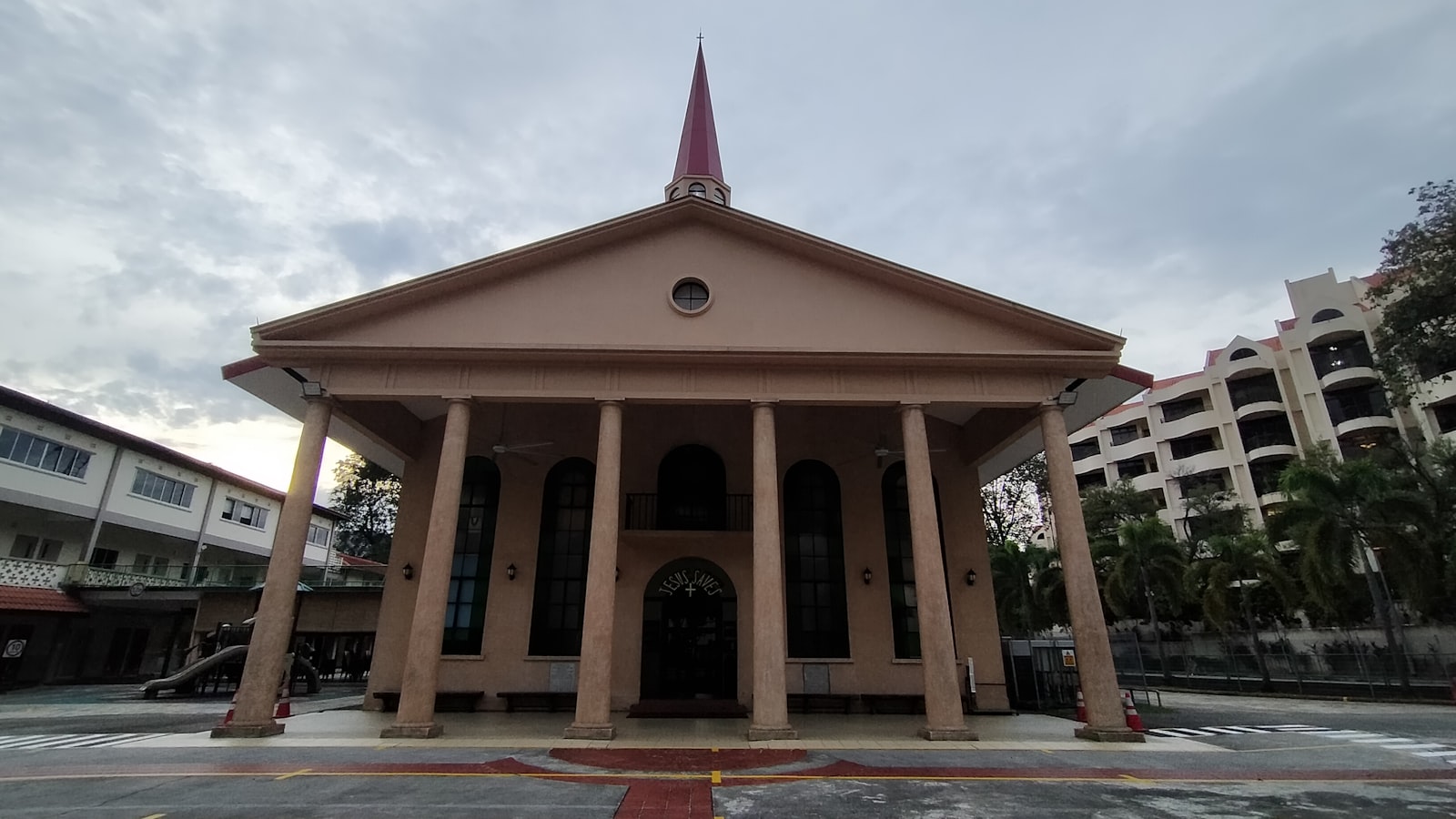
Tucked into a leafy compound on Hill Street, a short walk from the museums and civic buildings of the old colonial district, stands a small white church of quiet grace. This is the Armenian Church, formally the Church of St Gregory the Illuminator, and it holds a special place in the island’s story as the oldest church in the country. Compact where later cathedrals are grand, the Armenian Church Singapore is a jewel of early architecture and a reminder of a tiny but influential community. This guide covers its history, its design and what to see when you visit.
A church built by a small community
The Armenians were among the many trading communities drawn to Singapore in the earliest decades of the settlement. Though never numerous, they were enterprising and well connected across the ports of Asia, and they left a mark on the young town far out of proportion to their numbers. Members of the community were involved in commerce, hospitality and civic life, and they wished for a church of their own.
Built in the 1830s, the Armenian Church was raised by this small congregation with contributions from Armenians in Singapore and beyond. It was consecrated to St Gregory the Illuminator, the saint credited with bringing Christianity to Armenia, and it served the community’s spiritual needs for generations. As the resident Armenian population dwindled over the twentieth century, regular services in the Armenian rite eventually ceased, but the building was preserved and remains cared for as a heritage site and a place of quiet reflection.
The work of a pioneering architect
The Armenian Church is widely admired as one of the finest works of George Coleman, the Irish-born architect who shaped so much of early colonial Singapore and after whom Coleman Street and Coleman Bridge are named. Coleman designed a compact building of great refinement, adapting the neoclassical style he favoured to the tropical climate, with deep porticoes and shaded verandahs to cool the interior.
The original design was crowned by a rounded roof, and a spire and tower were added in later years, giving the church the silhouette recognised today. Painted a clean white and set within its garden, the building has an elegance that has made it a favourite of architects and heritage lovers. Its importance was formally recognised when it was gazetted as a national monument in the 1970s, among the earliest buildings in Singapore to be so protected.
The Garden of Memory and Agnes Joaquim
Part of the church’s charm lies in its grounds. The compound includes a memorial garden where headstones and monuments, relocated here from an old cemetery, have been arranged to preserve the memory of members of the Armenian community and other notable early residents. Wandering among them is a gentle way to connect with the people who built this corner of Singapore.
The most celebrated name associated with the church is Agnes Joaquim, a member of the Armenian community who cultivated the orchid hybrid that was later chosen as Singapore’s national flower, the Vanda Miss Joaquim. Her connection to the church links this small building to one of the nation’s most beloved symbols, a lovely example of how a modest community left an outsized legacy.
The garden is also a reminder of how the city has grown around this quiet compound. Where the church once stood in open surroundings, it is now framed by the offices and civic buildings of the modern centre, and the trees of its grounds offer a rare pocket of stillness. Taking a slow turn around the garden, reading the inscriptions and pausing beneath the shade, is one of the gentlest ways to feel the passage of time in Singapore, connecting the earliest chapters of the settlement with the busy district that surrounds the church today.
How the Armenian Church compares among Singapore’s monuments
Placing the church alongside other early landmarks helps show what makes it distinctive.
| Landmark | Community and role | Distinction |
|---|---|---|
| Armenian Church | Armenian Christian community | The oldest church in Singapore, a Coleman design |
| Thian Hock Keng | Hokkien Chinese community | The oldest Hokkien temple |
| Sri Mariamman | Hindu community | The oldest Hindu temple |
| Sultan Mosque | Malay-Muslim community | Grand mosque and centre of Kampong Glam |
Visiting the Armenian Church respectfully
The Armenian Church and its grounds are open to visitors, and the peaceful compound makes a welcome pause on a walk through the civic district. As a heritage building and consecrated space, it calls for the same respect you would show any place of worship.
- Dress neatly and modestly out of respect for the setting.
- Keep your voice low and your movements gentle, especially if a service, event or private moment of prayer is taking place.
- Treat the memorial garden with care, and do not sit on or lean against the headstones and monuments.
- Photography is usually welcome in the grounds, but be discreet and mindful of anyone present.
- The church sometimes hosts services, events and heritage activities, so opening times can vary. Check the church’s official information before you visit for current hours and any arrangements.
Getting there is easy. The church stands on Hill Street, and the nearest MRT stations are City Hall and Bras Basah, both a short walk away, placing it within an easy stroll of the National Museum, the old colonial civic buildings and the Bras Basah arts district. Set aside a little time simply to sit in the garden, where the traffic of the city fades and the oldest church in Singapore keeps its quiet watch.
Small in scale but large in significance, the Armenian Church distils an entire chapter of the island’s history into a single graceful building. It speaks of a community that has all but vanished yet left a lasting imprint, from a masterwork of early architecture to the orchid that became a nation’s flower.
Explore more
The Armenian Church sits within easy reach of the civic district and other early landmarks. For more of Singapore’s founding-era heritage, read about the grand houses of worship raised by other communities, including Sultan Mosque in Kampong Glam and Thian Hock Keng, the oldest Hokkien temple. Together they show how many communities built the Singapore we know today.