
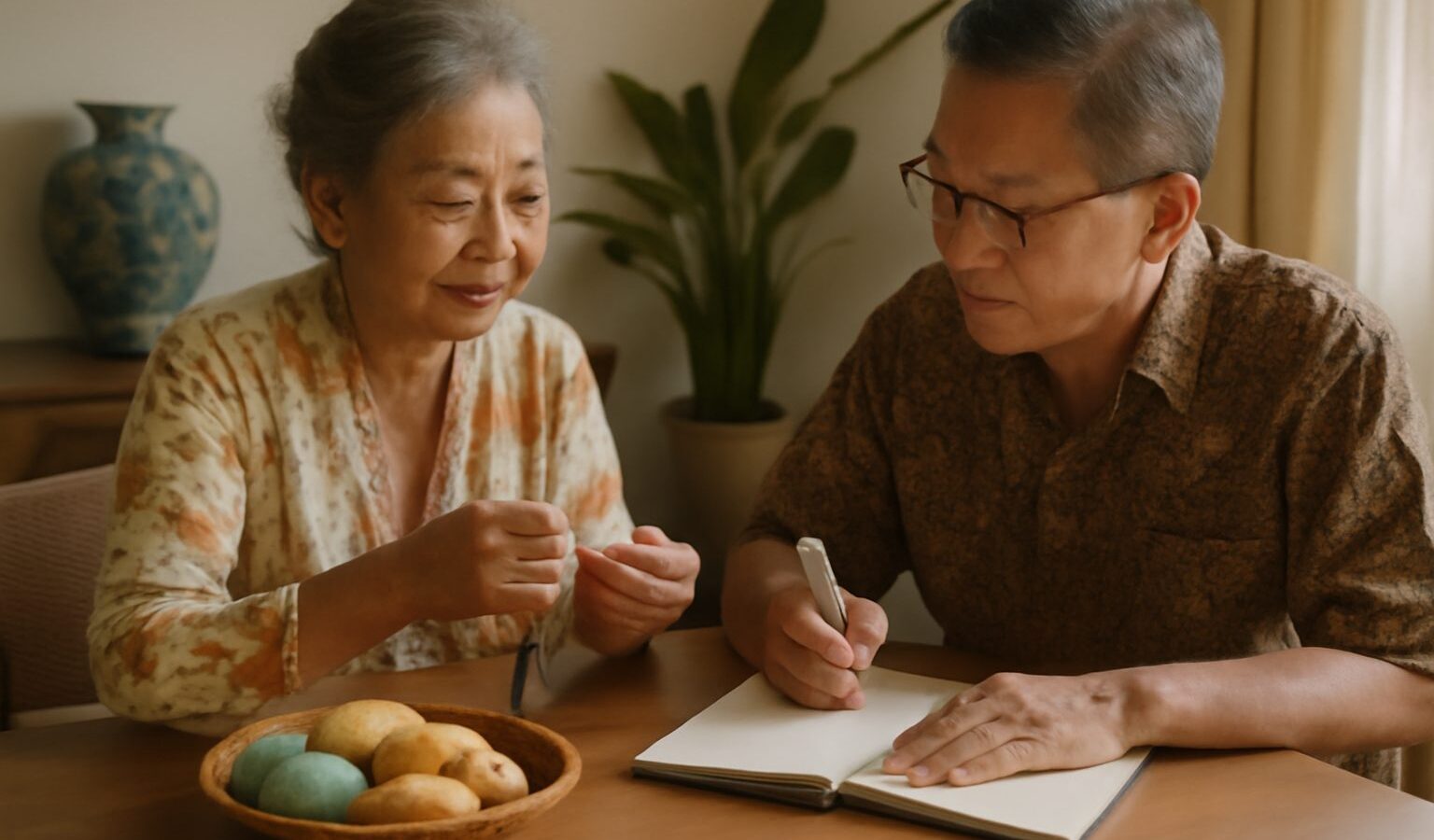
Beneath the familiar mix of English, Mandarin, Malay and Tamil lies a quieter linguistic heritage worth celebrating and protecting. Baba Malay singapore has long associated with the Peranakan community, together with Kristang, the language of the Eurasian community, are two creole languages that carry centuries of shared history in their words. Both are now considered endangered, spoken fluently by fewer and fewer people, yet both are living treasures, rich with the memory of how communities met, mingled and made something new. To understand them is to hear the sound of Singapore’s deeper past.
Baba Malay, Voice of the Peranakans
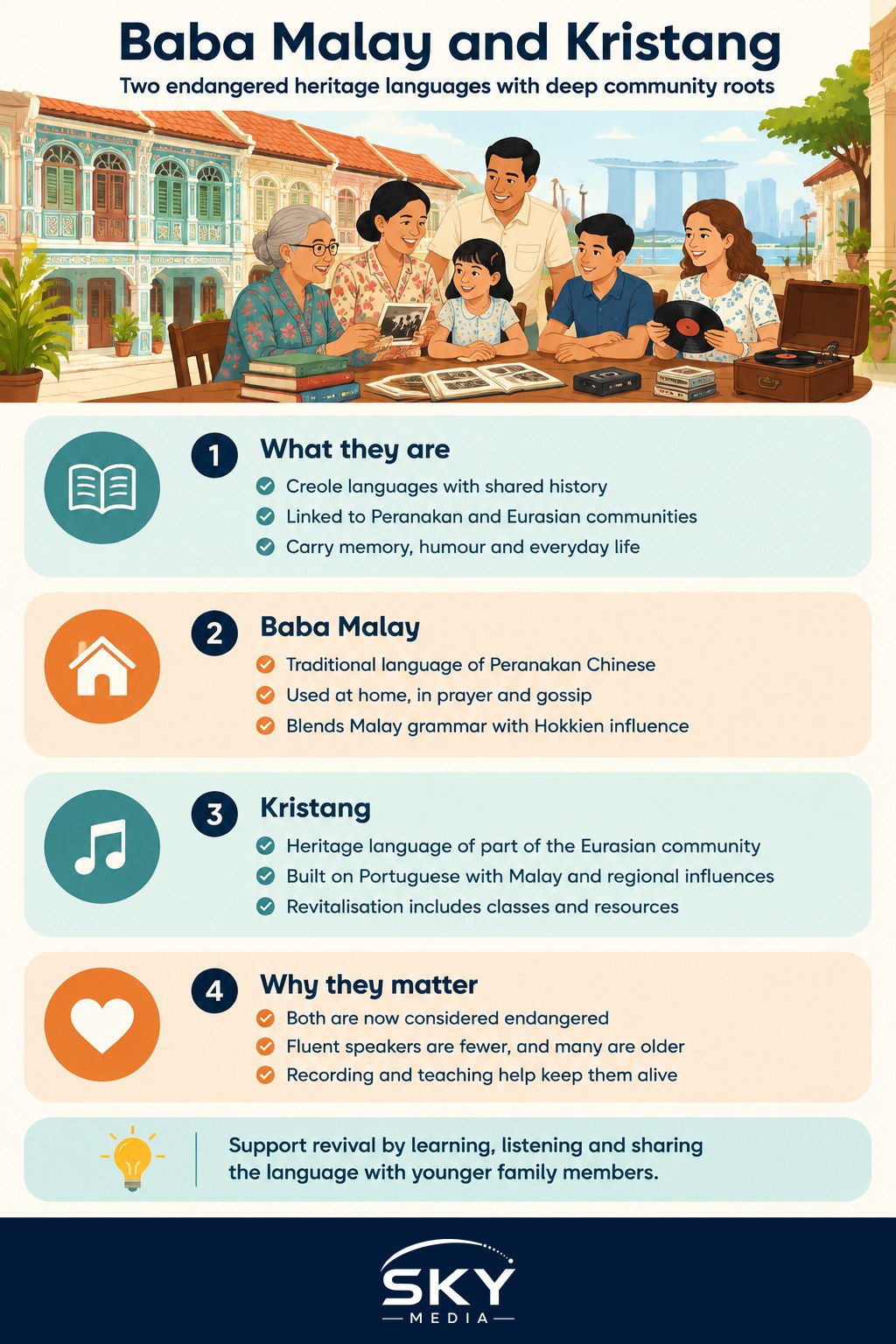
Baba Malay is the traditional language of the Peranakan Chinese, often called the Straits Chinese or, more affectionately, the Babas and Nyonyas. It is a creole, a language born from sustained contact between communities, blending a largely Malay grammatical and vocabulary base with a significant layer of Hokkien Chinese, along with borrowings from other tongues that passed through the region’s trading ports.
The language grew out of generations of Chinese settlement and intermarriage within the Malay world, producing a distinctive community with its own cuisine, dress, customs and speech. Baba Malay was the everyday language of the home, spoken at the family table, used in courtship and cooking, prayer and gossip. It is inseparable from the wider fabric of Peranakan culture, and you can still hear its cadences echoed in the names of dishes and the phrases that older Nyonyas use with warmth and humour.
Today Baba Malay is regarded as endangered. Younger generations more often grow up with English and Mandarin, and the number of fluent native speakers has declined, with many of the most confident speakers now elderly. This is a familiar pattern for community languages that were passed down orally rather than taught in schools. Yet there is real cause for hope. Cultural groups, families and researchers have worked to record, document and revive the language, through wordlists, recordings, classes and performances, and through the pride that many Peranakans feel in their distinctive heritage. Every conversation kept alive, every phrase taught to a grandchild, helps carry the language forward.
Kristang, the Eurasian Creole
Kristang is the heritage language of part of the Eurasian community, descended from the meeting of Portuguese and local Asian populations that began centuries ago in the region’s ports and settlements. Its very name comes from the word for Christian, reflecting the faith that travelled with the Portuguese, and its vocabulary is built on an old form of Portuguese overlaid with Malay and other regional influences. The result is a creole of remarkable character, unlike any single parent language and full of its own idioms and songs.
Kristang belongs to the story of the Eurasian community, whose members have long been part of the island’s diverse society. Like Baba Malay, Kristang is considered endangered, with few fully fluent speakers remaining and most of them from older generations. For much of the twentieth century it was spoken mainly at home and rarely written or formally taught, which left it vulnerable as English became dominant.
Encouragingly, Kristang has become a focus of committed revitalisation efforts in recent years. Younger community members, linguists and volunteers have organised classes, festivals, dictionaries and online resources aimed at teaching the language to new learners and reconnecting families with their roots. These grassroots movements have given the language fresh visibility and reminded a wider public that it exists at all. The work is difficult and the outcome uncertain, but the energy behind it is genuine and inspiring.
Both Baba Malay and Kristang matter because languages are not merely tools for communication. They are archives of a community’s history, values and imagination, holding jokes, prayers, recipes and endearments that translate only imperfectly into anything else. Their survival is bound up with the survival of the communities’ sense of themselves, and their story is part of the larger tale of a multiracial society built from many meetings and mixtures.
To celebrate these heritage languages is not nostalgia but stewardship. They deserve to be recorded, taught and, wherever possible, spoken, so that the distinctive voices of the Peranakan and Eurasian communities are not lost. In every effort to keep them alive, from a class of eager beginners to an elder patiently teaching a grandchild, Singapore honours the depth and richness of its own past.
Frequently Asked Questions
Where does the name Kristang come from? It comes from the word for Christian, reflecting the faith that travelled with the Portuguese. The vocabulary is built on an old form of Portuguese overlaid with Malay and other regional influences, making a creole unlike any single parent language.
Is Baba Malay just a dialect of Malay? Not quite. It is a creole, born from sustained contact between communities, with a largely Malay grammatical and vocabulary base plus a significant layer of Hokkien and borrowings from other tongues. So it differs from standard Malay in important ways.
Can I learn Baba Malay or Kristang as an adult? Yes, the revival work gives beginners ways in. Baba Malay has wordlists, recordings, classes and performances, while Kristang has classes, festivals, dictionaries and online resources. Cultural groups run these, so look up current offerings rather than expecting formal school lessons.
Why are these two languages called endangered? Fluent native speakers are few and mostly elderly, because younger generations grow up with English and Mandarin. Both were passed down orally at home and rarely written or formally taught, which left them vulnerable as English became dominant.
How can ordinary families help keep a heritage language alive? Speak it at home, teach phrases to children, and take part in community classes and events. Every conversation kept alive and every phrase taught to a grandchild helps carry the language forward. Recording elders’ words is also valuable before they are lost.
Further reading: Why Singapore’s National Language Is Malay · Pantun and the Heritage of Malay Poetry in Singapore