
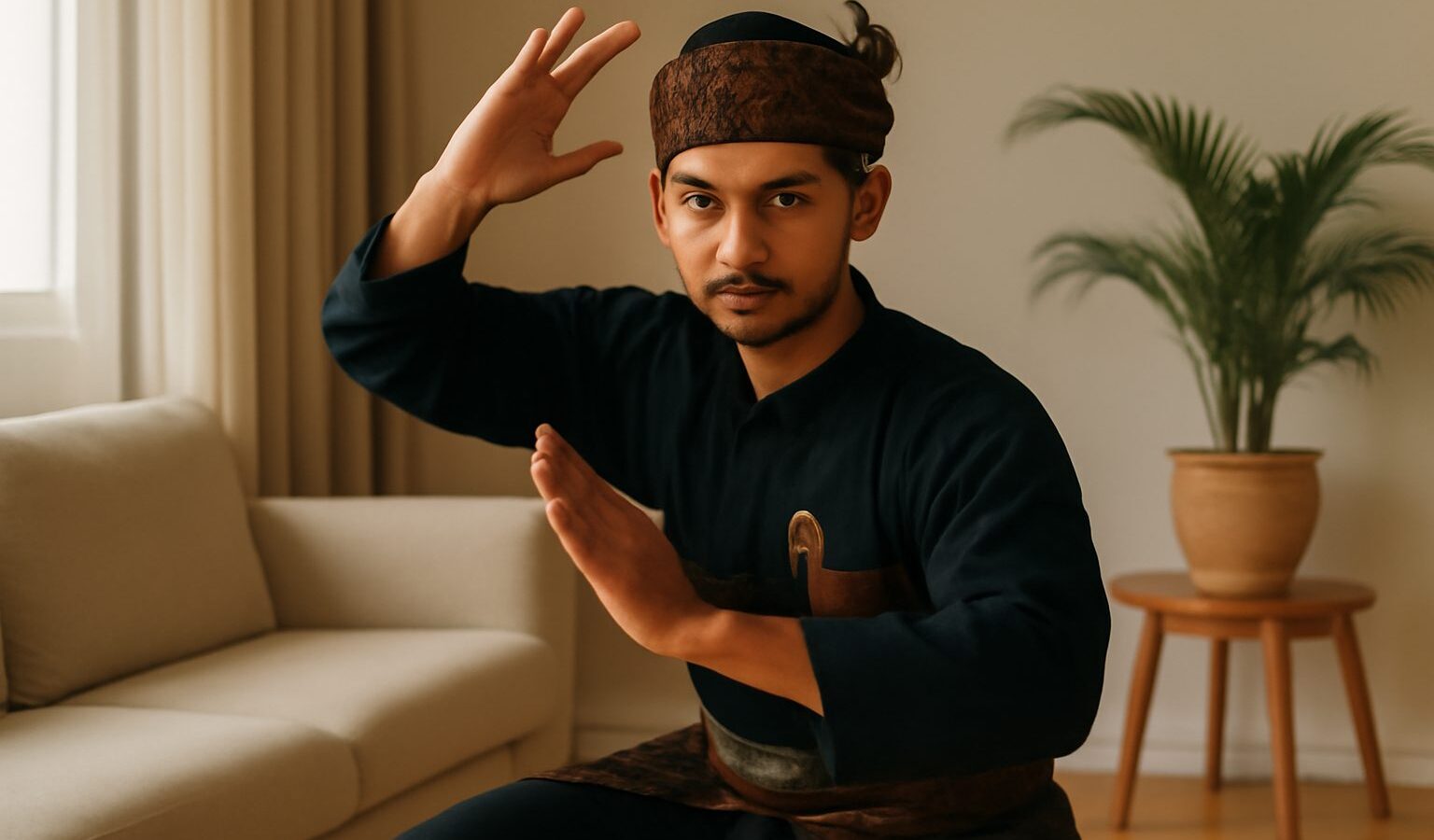
Malay silat in Singapore is far more than a method of self-defence. It is a martial art, a performance art and a bearer of Malay values, taught with discipline and practised with pride across the region. Whether seen at a wedding, on a cultural stage or in a training hall, silat carries a heritage of poise, respect and community that runs deep in the Malay world. This guide offers a respectful introduction.
What Silat Is
Silat is the broad name for the martial arts traditions of the Malay world, a family of styles rather than a single fixed system. At its core it teaches a person to defend themselves, using footwork, strikes, locks, and in some traditions weapons, all bound together by principles of timing, balance and control. Yet to describe it only as fighting misses its spirit.
The art is closely tied to Malay culture and values. Students learn courtesy, patience and self-control alongside physical technique, and a good practitioner is expected to carry those qualities off the training floor. In this sense silat is as much an education in character as it is in combat.
The Two Faces Of Silat
One reason silat is so cherished is that it lives comfortably in two worlds at once.
The Martial Face
As a martial art, silat trains the body to move efficiently and to respond under pressure. Practitioners drill stances, steps and techniques until the movements become second nature. The emphasis is often on economy and timing rather than brute force, using position and leverage so that a smaller person can hold their own. Because this side of the art carries real risk, it is meant to be learned under a qualified teacher who can guide the student safely.
The Performance Face
Silat also has a graceful, ceremonial side sometimes called the artistic or dance-like form. Here the movements are performed with flowing, expressive beauty, frequently to the beat of traditional music. This form appears at weddings, cultural celebrations and stage performances, where it showcases the elegance of the art rather than its combat function. The performer’s poise, the flow of the arms and the precision of the footwork become a spectacle of controlled grace.
Both faces draw on the same foundations of stance, step and posture. What changes is the intent, whether the practitioner is training to defend or performing to delight.
Learned From A Teacher
Silat is a discipline handed down from teacher to student, and this relationship is central to the art. A qualified teacher does more than demonstrate techniques. They set the standards of respect, ensure that training is safe, and pass on the values and etiquette that give the art its meaning. Beginning silat means beginning a relationship of trust and humility with a teacher and a training community.
This is worth stressing for anyone curious about the art. Silat is not something to be picked up casually from a screen. The physical techniques carry risk, and the deeper heritage of the art only comes alive through guided, respectful practice. Seeking out a proper teacher and training group is the right and safe way to begin.
Silat At A Glance
| Aspect | What it involves |
|---|---|
| Nature | A family of Malay martial arts, not one fixed style |
| Two forms | A combat form and a graceful performance form |
| Foundations | Stance, footwork, balance, timing and control |
| Values taught | Respect, patience, humility and self-control |
| How to learn | Under a qualified teacher, within a training community |
Silat In Singapore
In Singapore, silat is a living part of Malay heritage and of the wider multicultural fabric. It is practised in community clubs and training groups, performed at cultural festivals and celebrations, and showcased as both a competitive sport and an art form. At Malay weddings, the graceful performance form is a familiar and welcome sight, honouring the couple and the occasion with its dignity and beauty.
The art also serves as a bridge between generations. Elders and experienced practitioners pass their knowledge to the young, keeping alive not just the movements but the courtesies and stories that surround them. In doing so, silat helps sustain a sense of identity and continuity within the Malay community while sharing its beauty with all Singaporeans.
Where You Might See It
- At Malay weddings, where the performance form honours the celebration.
- At cultural festivals and heritage events across the island.
- In community training halls and clubs that welcome new students.
- On competitive and exhibition stages, where the art is showcased.
Values At The Heart Of The Art
Ask experienced practitioners what silat has given them and many will speak of character before combat. The art asks for discipline in training, humility toward teachers and seniors, and respect toward opponents and partners. These values are not decoration. They are the reason the art has been trusted and treasured across generations.
The performance form makes this visible. A silat exponent moving with calm, controlled grace embodies the ideal the art strives for, strength held in check by discipline, power expressed as beauty. That balance is the lesson at the centre of the tradition.
Approaching Silat With Respect
- Recognise it as a serious discipline, not a casual pastime.
- Learn from a qualified teacher rather than attempting techniques alone.
- Honour the etiquette and courtesies that come with the art.
- Appreciate both its martial depth and its performance beauty.
A Heritage Held With Pride
Malay silat in Singapore endures because it offers something rare, a practice that trains the body, shapes the character and delights the eye all at once. It is a martial art to be respected, a performance art to be enjoyed, and a heritage to be protected. By supporting the teachers and communities who keep it alive, and by approaching it with the respect it deserves, Singaporeans help ensure that this dignified tradition continues to move, to teach and to inspire.
Explore more: Malay customs and traditions · Traditional dance of Singapore · Traditional trades of Singapore