
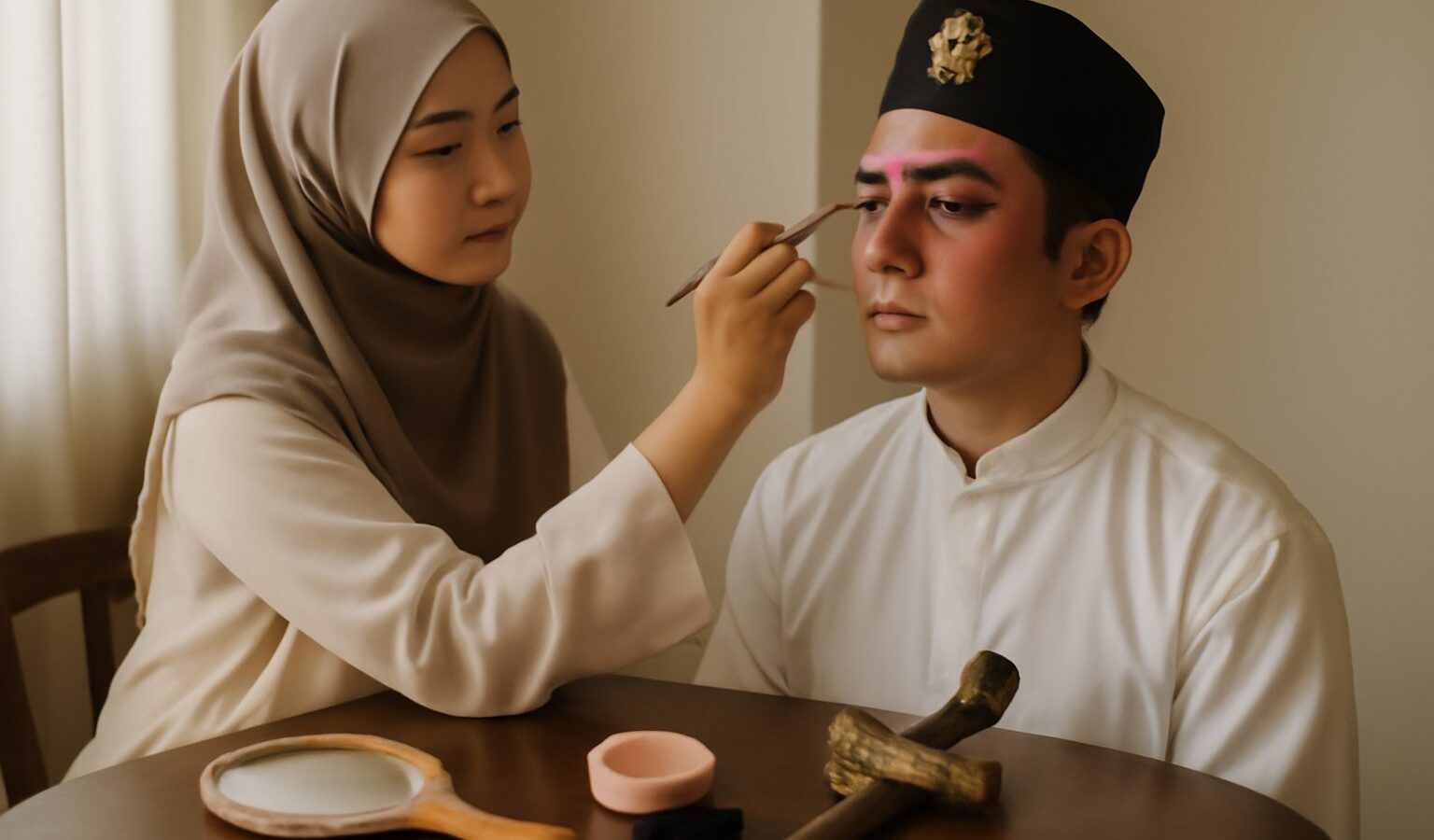
Imagine a stage lit for a fairy tale, actors in shimmering costumes, live music swelling beneath the dialogue, and a story that leaps from royal palaces to enchanted forests. This is bangsawan, the grand tradition of Malay opera that once drew crowds across the region and helped make early Singapore a hub of Malay entertainment. Though it is quieter now than in its heyday, bangsawan still has devoted performers and audiences here. This guide explains what bangsawan is, how a show unfolds, and where a curious newcomer can encounter it today.
Bangsawan means different things to different families and troupes, and modern revivals adapt it in their own ways. Read this as a warm introduction to the form rather than a strict definition.
What Bangsawan Is and How It Began
Bangsawan is a form of traditional Malay theatre that combines acting, singing, music, dance and elaborate staging into a single spectacle. The word “bangsawan” comes from the Malay for nobility or people of good lineage, a nod to the royal and aristocratic characters who so often fill its stories. In spirit it sits close to what many people would call opera or musical theatre, told through a Malay lens.
The form took shape in the late nineteenth century in the Malay Peninsula, drawing inspiration from travelling theatre traditions that had reached the region, including Parsi theatre brought by troupes from India. Malay performers adapted these influences, sang in Malay, and drew on local legends and courtly tales to create something distinctly their own. Travelling companies then carried bangsawan across the Malay world, and Singapore, as a busy port city, became an important centre for it in the early twentieth century.
Part of what made bangsawan so popular was its openness. It borrowed freely and told stories from many worlds, so a season might range from Malay legend to Arabian romance to imported drama, all reshaped for a Malay speaking audience.
How a Bangsawan Performance Unfolds
A bangsawan show is designed to dazzle and to move. Several ingredients work together to create the experience:
- Story and drama: actors perform scripted and semi improvised scenes, often built around love, loyalty, royalty and adventure.
- Song: key emotions and turning points are carried by singing, backed by a live ensemble of musicians.
- Music: the accompaniment blends Malay musical idioms with other regional and Western influences, matching the mood of each scene.
- Costume and set: rich costumes, painted backdrops and scene changes create a sense of grandeur and spectacle.
- Comic interludes: lighter comic turns between scenes give the audience a breather and a laugh, a much loved feature of the form.
Stories are frequently drawn from Malay hikayat, the traditional prose tales of kings, heroes and enchanted worlds, as well as from wider sources. A single production might feature a prince on a quest, a wronged heroine, loyal servants and a villain, all resolved through song, spectacle and a satisfying ending. Because the form once relied on travelling troupes performing night after night, versatility and showmanship have always been prized.
Where to See Bangsawan in Singapore Today
Bangsawan no longer fills nightly halls as it did a century ago, but it has not vanished. Committed community groups, cultural organisations and arts practitioners keep it alive, and newcomers can still find it if they know where to look:
- Cultural performances and festivals, where Malay arts groups stage bangsawan or bangsawan inspired productions for the public.
- Heritage institutions, which present Malay performing arts and sometimes host talks, showcases or restagings.
- Community and youth groups, where the form is taught and adapted so that younger performers can carry it on.
- Arts venues and theatres, which occasionally programme Malay opera as part of Singapore’s diverse performing arts calendar.
A visit to the Malay Heritage Centre is a natural starting point for understanding bangsawan’s place in Singapore’s story, and it can point you toward the wider world of Malay culture. Watching a live production, even a modern reinterpretation, is the best way to feel why this art once captivated whole cities.
How Bangsawan Compares to Other Malay Performing Arts
Bangsawan is one of several treasured Malay art forms, and comparing them helps a newcomer see what makes each special.
| Art form | Main medium | Typical setting | What stands out |
|---|---|---|---|
| Bangsawan | Sung musical theatre | Staged productions | Costumed stories, song and spectacle |
| Dikir barat | Group singing and rhythm | Community stages, contests | Improvised verse and unison clapping |
| Wayang kulit | Shadow puppetry | Screen and lamp performances | Puppets, narration and a lone puppeteer |
| Gamelan | Ensemble music | Ceremonies and stage shows | Layered gongs and metallophones |
The table simplifies a rich scene, so treat it as a gentle guide. If these forms draw you in, explore our companion guides to dikir barat, wayang kulit shadow puppetry and gamelan and kompang music.
Why Bangsawan Still Matters
Bangsawan matters because it captures a moment when Singapore was a crossroads of cultures, and it shows how Malay artists absorbed many influences to create something confident and new. Its stories preserve Malay legends and language, its music records how tastes blended across the region, and its very existence reminds us that popular entertainment can also be a carrier of heritage.
For a newcomer, bangsawan offers a window into a golden age of local performance. Even a modern staging conveys the ambition of the form, the pleasure of a live band, and the timeless appeal of a well told tale. You do not need fluent Malay to be swept up by the costumes, the music and the drama, and seeing it deepens your appreciation of how central the Malay community has been to Singapore’s cultural life.
Keeping bangsawan alive is demanding work, since it calls for singers, actors, musicians and designers all at once. That is why the efforts of community groups, teachers and heritage bodies such as the National Heritage Board matter so much. Each new production, each young performer trained in the form, keeps this grand tradition breathing. For anyone wanting to understand the depth and generosity of Malay arts in Singapore, an evening of bangsawan is a memorable place to begin.
Explore More
Bangsawan is one jewel in Singapore’s Malay performing arts. To see how it connects to other traditions, read our guides to dikir barat and gamelan and kompang music, and visit the Malay Heritage Centre to trace the wider heritage they belong to.