

Many dog owners in Singapore prefer to bathe their dogs at home between grooming appointments. It saves trips, lets you check your dog’s skin regularly and can become a calm routine your dog accepts. But bathing in a small flat, in a hot and humid climate, comes with its own challenges: slippery floors, limited space and the risk of a coat that never quite dries.
This guide explains how to bathe dog at home in a typical Singapore home, from setting up the space to drying thoroughly. It is general information, so if your dog has a skin condition, wounds or is unwell, ask your vet before bathing.
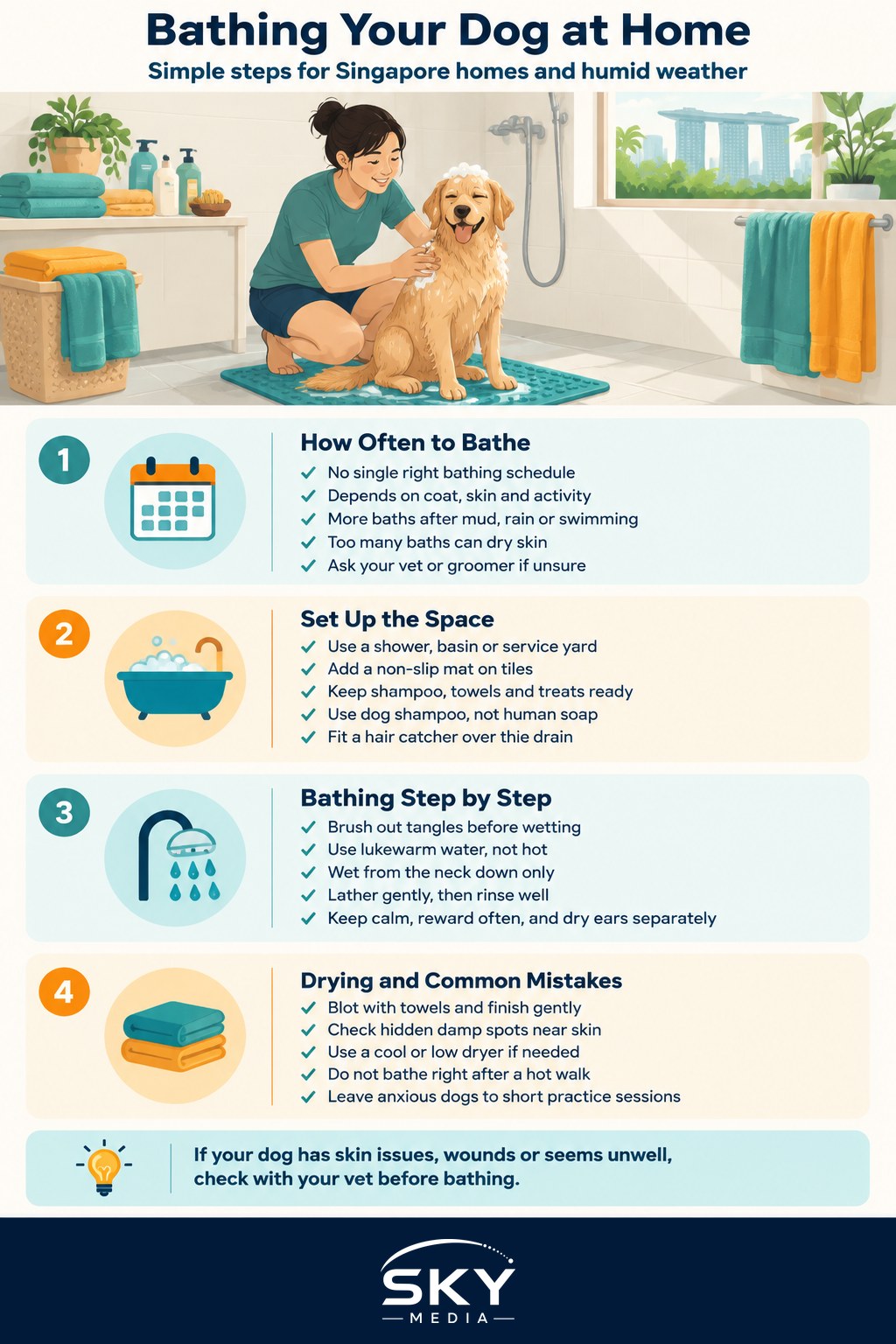
How Often Should You Bathe Your Dog Here
There is no single right frequency. It depends on your dog’s coat, skin, activity level and any vet advice. Some general points:
- Dogs that swim, roll in grass at parks or come home muddy after rainy walks will need baths more often.
- Bathing too often with harsh products can strip natural oils and leave skin dry and itchy, even in humid weather.
- Dogs with skin conditions may be prescribed medicated shampoos with specific instructions. Follow those exactly and do not swap in other products.
If you are unsure, ask your vet or groomer what interval suits your dog. Between baths, a damp towel wipe of paws and belly after walks keeps things fresh.
Setting Up a Bathing Space in an HDB Flat or Condo
Most homes do not have a dedicated pet tub, so owners improvise. Choose a spot that is easy to drain and clean.
- Shower area. The most common choice for medium and large dogs. Lay a rubber non-slip mat so your dog does not slide on tiles.
- Basin or plastic tub. Works well for small breeds and puppies, and saves your back.
- Service yard. Some owners use it for bigger dogs, but check that water drains properly, the surface is not slippery and there are no gaps your dog could squeeze through.
Prepare everything before your dog enters the bath, so you never have to leave a wet dog alone:
- Dog shampoo, and conditioner if you use one
- A handheld shower head or a jug for rinsing
- Two or three absorbent towels
- Cotton wool or a soft cloth for wiping around the face
- Treats for rewards
- A hair catcher over the drain to avoid clogging
Use dog specific shampoo. Human shampoos and soaps are formulated for different skin, and your vet or pet shop can recommend a gentle option for your dog’s coat type.
Step by Step: Giving the Bath
- Brush first. Brushing out tangles and loose fur before wetting the coat prevents mats from tightening and reduces hair down the drain.
- Check the water temperature. Aim for lukewarm. Singapore tap water can come out warm on hot days, so test it on your wrist. Water that feels hot to you is too hot for your dog.
- Wet the coat from the neck down. Keep water away from the eyes, nose and ears. Many dogs panic when water hits their face.
- Lather gently. Massage shampoo into the coat, paying attention to the belly, armpits, paws and between the toes, where moisture and dirt collect.
- Clean the face with a damp cloth. Avoid pouring water over the head.
- Rinse, then rinse again. Leftover shampoo is a common cause of itchy, flaky skin. Keep rinsing until the water runs clear and the coat no longer feels slippery.
- Reward and stay calm. Speak softly and give treats throughout. Short, positive baths build a dog that tolerates the next one better.
Keep ears dry. If your dog’s ears need cleaning, do it separately and carefully; our guide to cleaning your dog’s ears at home explains how.
Drying Thoroughly in Hot and Humid Weather
Drying is the step owners in Singapore most often rush, and it matters. In a humid climate, a coat that stays damp close to the skin, especially in thick or double coated breeds, can create conditions where skin irritation and odours develop. Ask your vet if you notice redness, persistent scratching or smells after baths.
| Drying method | Works best for | Watch out for |
|---|---|---|
| Towel drying only | Short coated dogs on a dry day | Undercoat and armpits may stay damp |
| Pet or hair dryer on a cool or low setting | Medium and long coats | Keep it moving, never point it at the face or hold it close |
| High velocity pet dryer | Thick and double coated breeds | Loud, so introduce slowly; many owners leave this to groomers |
| Air drying under a fan or in aircon | Finishing off after towelling | Too slow alone for dense coats in humid weather |
A good routine is to squeeze out excess water with your hands, blot with towels rather than rubbing hard, then finish with a dryer on a gentle setting. Part the fur and feel near the skin, especially behind the ears, under the collar area, armpits, groin and between the toes. If it still feels cool and damp, keep going.
Running the aircon or a dehumidifier in the room while drying can help reduce humidity. Avoid letting your dog lie on damp floors or bedding straight after a bath.
Common Mistakes to Avoid
- Bathing a dog straight after a long walk in the midday heat. Let your dog cool down and drink water first.
- Using too much shampoo, which is harder to rinse out.
- Leaving the collar or harness on so the area underneath stays wet. Remove it and dry the neck properly.
- Letting a damp dog outside for a walk immediately. The coat can trap moisture and pick up dirt.
- Punishing a scared dog. Fear makes the next bath harder. Slow, rewarded practice works better.
If your dog is very anxious, try short practice sessions: walking into the empty shower, a little water on the paws, treats, then out. Over a few weeks, many dogs relax.
When to Leave It to a Groomer or Vet
Home baths are great for maintenance, but some tasks are better handled by professionals. Consider a groomer for heavy matting, full haircuts, de-shedding of thick coats or nail trimming if your dog resists. See your vet before bathing if your dog has open wounds, rashes, signs of parasites, or is recovering from surgery or illness.
For a broader look at coat care, trims and choosing a professional, see our guide to dog grooming in Singapore. Pairing regular home baths with dog dental care at home gives you a simple weekly hygiene routine that keeps your dog comfortable in Singapore’s climate.