
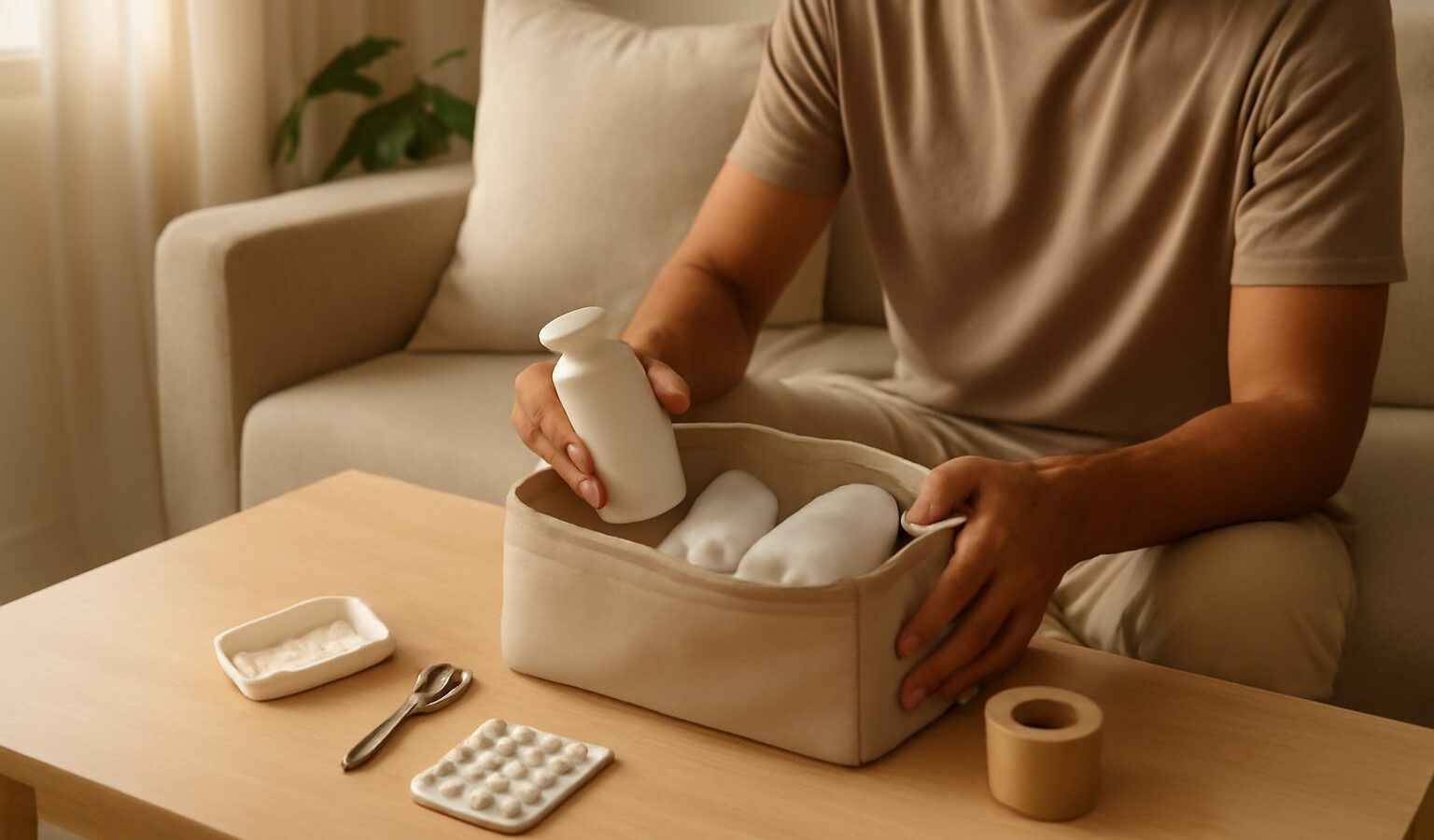
Small mishaps are part of everyday life, from a scraped knee at the playground to a kitchen nick or a feverish child at midnight. A well stocked home first-aid kit in Singapore lets you handle these calmly without a late night dash to the pharmacy. Putting one together is simple, affordable and worth the hour it takes. This is general information, not medical advice, and a kit is for minor issues; serious injuries and emergencies still need a doctor or 995.
Why Every Home Should Have One
When something happens, you do not want to be hunting through drawers for a plaster or wondering if you have anything to clean a wound. Having supplies in one known place, ready to grab, saves time and stress, especially with children or older family members at home. It also means whoever is around, including a helper or a visiting grandparent, can find what they need quickly.
A kit is not about handling emergencies yourself. It is about managing the small, common things at home and steadying a situation until you can get medical help for anything bigger.
Think about your own household as you plan. A home with young children might lean on plenty of plasters and a reliable thermometer, while a flat with older family members may want easy access to their regular medicines and a note of their conditions. If you have a domestic helper, an elderly parent living alone, or family members with allergies, tailor the kit and make sure everyone knows the plan. A kit that matches how your family actually lives is far more useful than a generic box that sits forgotten in a cupboard.
What to Include in Your Kit
Aim for a sensible core that covers cuts, grazes, burns, sprains and everyday aches. You can buy a ready made kit from a pharmacy and top it up, or assemble your own. The table below groups the essentials by purpose.
| Purpose | Items to include |
|---|---|
| Wound cleaning | Antiseptic solution or wipes, saline, clean gauze, cotton |
| Covering wounds | Assorted plasters, sterile dressings, adhesive tape, roller bandage |
| Support and tools | Triangular bandage, scissors, tweezers, disposable gloves, safety pins |
| Everyday relief | A thermometer, and simple remedies your family can safely use |
| Reference | A basic first-aid guide and a list of emergency and doctor numbers |
For medicines, keep only what suits your household, follow the labels, and ask a pharmacist about suitable options for fever, pain, allergies, or common tummy upsets, particularly for children, older adults, pregnant women, or anyone on regular medication. Do not stockpile prescription medicines for general use. If anyone in the home has a known severe allergy, asthma, or a heart condition, keep their prescribed emergency medication accessible and know how to use it.
Storing and Maintaining Your Kit
A kit only helps if it is findable, complete and current. Keep it practical:
- Use a clean, labelled box or bag that closes securely and is easy to carry to where it is needed.
- Store it somewhere cool and dry and out of reach of young children, but where adults can grab it fast; our heat and humidity can spoil supplies in hot spots.
- Tell everyone at home, including any helper, where it is kept.
- Check it a few times a year, restocking anything used and replacing items past their expiry date.
- Keep a smaller version in the car or your bag for outings, and consider one for the office.
A quick calendar reminder to review the kit, perhaps when you change your clocks or at the start of a school term, keeps it reliable.
Using It Safely and Knowing Your Limits
Supplies are only half the picture; a little know how matters more. Written steps and videos are helpful, but they are not a substitute for hands on training. Consider a certified first-aid or CPR course, such as those run by the Singapore Red Cross or SRFAC providers, so you can act confidently in a real situation. For minor wounds, the basics are usually to clean your hands, gently clean the wound, cover it, and keep an eye on it for signs of infection like spreading redness, swelling, warmth or pus.
Know what a home kit cannot do. Deep or heavily bleeding wounds, possible broken bones, burns that are large or on the face or hands, head injuries, and anything you feel unsure about need medical care. When in doubt, see a doctor at a GP or polyclinic rather than managing alone.
It also pays to keep useful information with the kit. A small card listing household allergies, regular medicines and key contact numbers saves precious minutes when someone is flustered, and it helps whoever is on hand, including a helper or a neighbour, to give clear details to a doctor or the 995 operator. Knowing where your nearest clinic, polyclinic and A&E are, and their opening hours, is just as valuable as the supplies themselves.
When to Call 995
Some situations are emergencies where you should call 995 or go straight to A&E, not reach for the kit. Get urgent help for chest pain, difficulty breathing, signs of stroke such as a drooping face, arm weakness or slurred speech, severe or uncontrolled bleeding, a serious burn, a major injury or fall, a seizure, sudden severe allergic reaction, loss of consciousness, or any time you fear a life is at risk. While waiting for help, stay with the person, keep them as calm and comfortable as you can, and follow the dispatcher’s instructions.
A home first-aid kit is one of those quiet preparations you are always glad to have. Build it once, keep it current, learn the basics, and you will handle the small stuff with ease and know exactly what to do when something bigger happens.
Explore more
A kit pairs well with knowing how to handle common situations. See our guides to managing the common cold and flu and preventing dengue and mosquito bites, both handy when someone at home falls ill. In our climate it also helps to read about recognising heat exhaustion and heat stroke.