
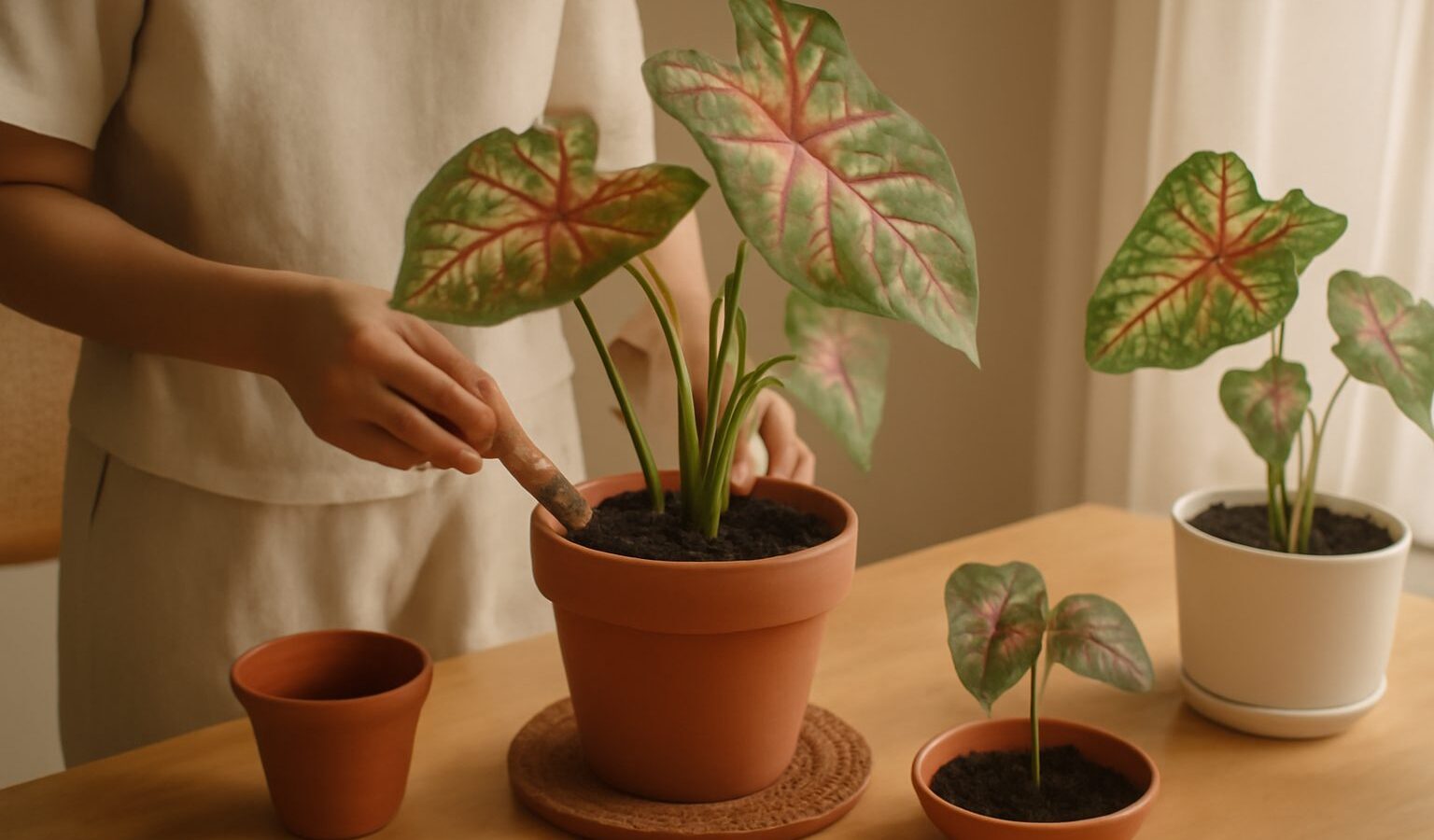
Nothing brightens a shady balcony quite like a caladium. Sometimes called angel wings or the heart of Jesus plant, its large, papery leaves come splashed in pink, red, white and green, often looking hand-painted. The good news for anyone nervous about colour is that caladium care in Singapore is well suited to our climate: these are tropical plants that love the warmth and humidity we have in abundance, and they thrive in the very shade where sun-loving flowers sulk. The trick is to understand their tubers and their rest period, and to keep them well away from curious mouths.
One thing to be clear about from the start: caladiums are toxic if eaten. Every part contains calcium oxalate crystals that cause intense burning and swelling of the mouth and throat, and the sap can irritate skin. They are not edible in any form, so keep them out of reach of young children and pets, and wear gloves when handling the tubers or cut stems so the sap does not irritate your skin.
Light: The Shade Plant That Colours Best
Caladiums are woodland plants at heart, so they want bright shade rather than direct sun. On a Singapore balcony, gentle early morning light or the dappled light under taller plants brings out the richest colours. Harsh afternoon sun scorches the thin leaves, leaving faded, crispy patches, so a west-facing ledge that bakes all afternoon is the wrong home for them.
That said, the darker green varieties tolerate a little more sun than the pale white and pink ones, which burn easily. Indoors, a bright spot near a window that never catches direct beams works well. If the colours look dull and washed out, the plant may want slightly more light; if the leaves bleach or crisp at the edges, move it into deeper shade.
Planting Tubers And Choosing A Pot
Caladiums usually start life as a knobbly tuber. Plant it in a pot with drainage holes, in a light, rich, free-draining mix loosened with some compost and perlite. Set the tuber a few centimetres deep with the bumpy side, where the growth buds sit, facing up. If you cannot tell which way is up, plant it on its side and the shoots will find their way.
Newly planted tubers can take a few weeks to sprout, and they sulk if the soil is cold, though that is rarely an issue in our heat. Warmth speeds them along, so a bright, warm corner gets them going. Once shoots appear, growth is fast and the pot fills out within a month or two. A wide, shallow pot suits their spreading habit, and you can plant several tubers together for a fuller, more dramatic display.
Watering And Feeding Through The Growing Season
While in active growth, caladiums are thirsty and like consistently moist soil, never bone dry and never waterlogged. In our heat that often means watering every day or two for a pot in a breezy spot, and less for one in a cooler, shaded room. Feel the soil and water when the top centimetre begins to dry, letting the excess drain away fully.
Do not let the pot stand in a saucer of water. Beyond risking root rot, a saucer holding still water is a ready breeding site for Aedes mosquitoes, so tip it out after each watering and check any trays at least weekly in line with NEA guidance. The same caution applies to any self-watering reservoir: keep it covered and refreshed so nothing stagnates.
Feed lightly but regularly through the growing months with a balanced liquid fertiliser at half strength every two to three weeks. Steady feeding keeps the leaves large and richly coloured. High humidity, which we have in plenty, keeps the foliage looking its best, so caladiums rarely need the misting that drier climates call for.
Understanding Dormancy And The Rest Period
Here is where caladiums surprise new growers. After several months of growth, the plant naturally winds down: leaves yellow, flop and die back, and it can look as if you have killed it. You have not. This is dormancy, the tuber’s built-in rest, and it is completely normal even in our seasonless climate.
When the leaves die back, stop feeding and cut right back on watering so the tuber does not rot while it sleeps. You can leave the tuber in its pot in a warm, dry spot, or lift it, brush off the soil and store it somewhere dry and airy. After a few weeks to a couple of months of rest, new shoots push up and the cycle begins again. Because our weather stays warm year-round, some caladiums barely rest at all and simply grow on, while others insist on a pause; either is fine.
Caladiums Versus Similar Shade Foliage
Caladiums are often confused with other colourful, shade-loving foliage plants. This quick comparison helps you pick the right one for a spot, and all three share the same safety warning: keep them away from children and pets.
| Plant | Best light | Key quirk | Safety |
|---|---|---|---|
| Caladium | Bright shade | Goes dormant and dies back to a tuber | Toxic if eaten; sap irritates skin |
| Calathea | Bright shade | No dormancy; fussy about tap water | Non-toxic but not for eating |
| Alocasia | Bright shade | Evergreen; upright arrow leaves | Toxic if eaten; sap irritates |
Common Problems And Keeping Them Safe
Yellowing leaves in the middle of the season, rather than at the natural rest, usually mean overwatering or poor drainage, so let the mix dry a little more and check the holes are clear. Faded colour points to too little light, while brown, crispy edges mean too much sun or air that is too dry indoors. Pests are few, though watch for aphids on soft new growth; a firm spray of water or an insecticidal soap used per its label, kept away from children and pets, sorts them out.
Above all, remember the safety point. Caladiums are grown purely for their looks, never for eating, and their sap and tissue irritate skin and mouth. Site them out of a toddler’s or pet’s reach, handle the tubers with gloves, and wash your hands afterwards. Treated with that small caution, a caladium is one of the most rewarding ways to pour colour into a shady corner of a Singapore home.
Explore more
If caladiums have won you over, you will likely enjoy our guides to growing and caring for calatheas and caring for alocasia and aroids in Singapore. For an easier, non-toxic partner in a brighter spot, see caring for spider plants in Singapore.