

Those yellowish, flaky patches on your baby’s scalp can catch you by surprise, but cradle cap is very common and almost always harmless. It usually turns up in the first few months, looking a little like greasy, crusty dandruff, sometimes with a mild redness underneath. It is not caused by poor hygiene, and it is not a sign that you are doing anything wrong. Most of the time it clears on its own with a bit of gentle care and patience. This article shares general information to reassure you and help you look after your baby’s scalp. It is not medical advice, and if you are unsure or worried, please check with a doctor.
What Cradle Cap Looks Like and Why It Happens
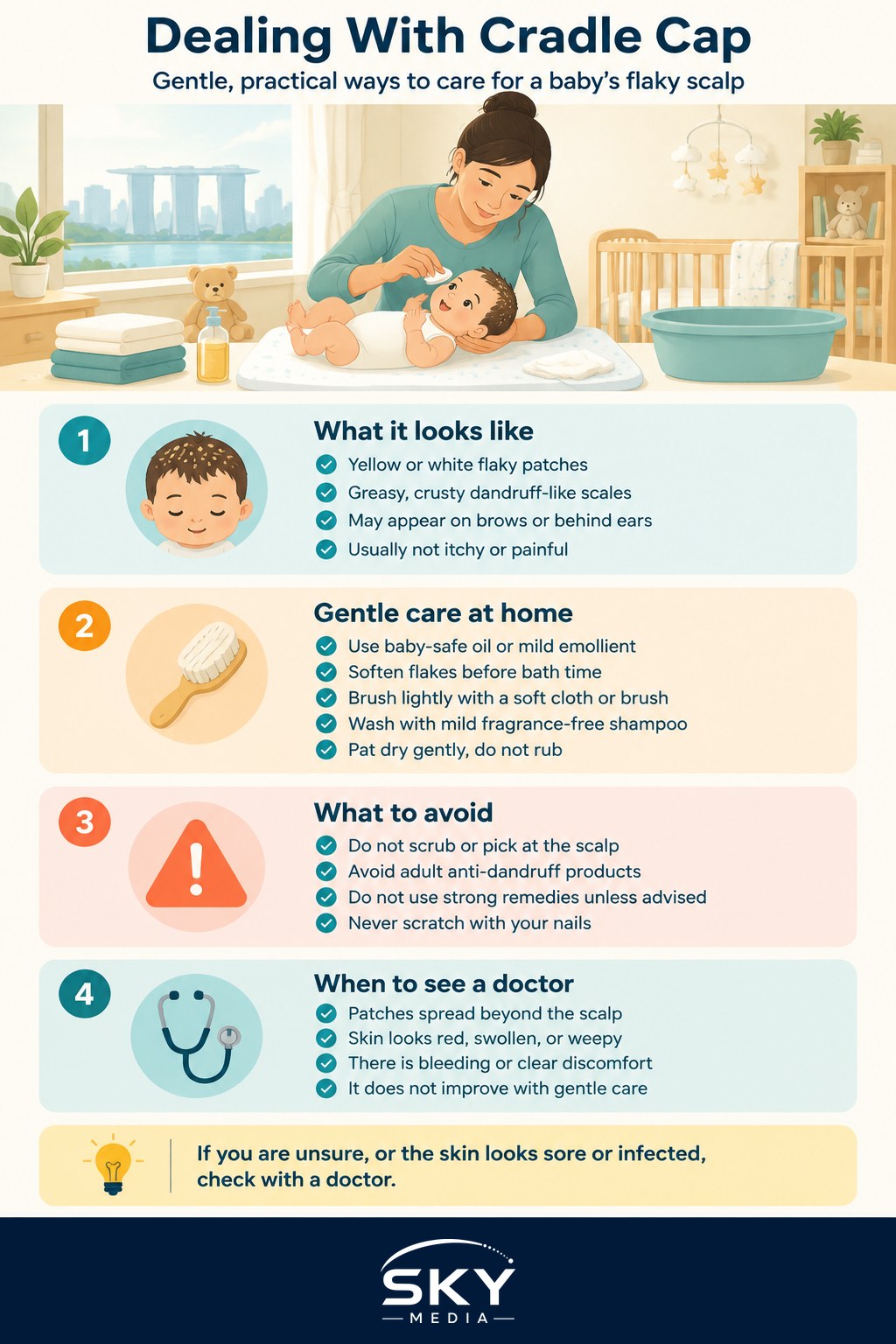
Cradle cap most often appears on the scalp, but you may also spot it on the eyebrows, behind the ears, or in skin folds. The patches can be white or yellow, flaky or crusty, and sometimes slightly oily. The exact cause is not fully understood, but it is linked to the natural oils in your baby’s skin and is not an infection or an allergy. It does not usually itch or bother your baby, so try not to worry if it looks worse than it feels.
In Singapore’s warm and humid climate, a sweaty scalp is common, and heat can make flaky patches look a little more noticeable. Keeping your baby cool and comfortable, dressing them in light breathable cotton, and gently patting the scalp dry after baths all help. There is no need to scrub or pick, and doing so can irritate the delicate skin underneath.
The most reassuring thing to remember is that cradle cap is a passing phase. For most babies it fades over weeks to a few months as their skin matures, with no lasting marks.
Gentle Care That Helps
You do not need to treat cradle cap at all if it is mild, but a soft routine can loosen the flakes and keep the scalp comfortable. Try these gentle steps:
- Before a bath, massage a little baby-safe oil or a plain, mild emollient into the scalp and leave it for a short while to soften the crusts.
- Using a soft baby brush or a clean, soft cloth, brush lightly in gentle strokes to lift loose flakes. Never force or scratch stubborn patches.
- Wash the scalp with a mild, fragrance-free baby shampoo, then rinse well so no residue is left behind.
- Pat the head dry softly rather than rubbing.
A little at a time works better than one big effort. If flakes cling on, leave them and try again another day. Avoid adult anti-dandruff products and any strong remedies unless a doctor has advised them, and never pick at the crusts with your nails, as broken skin can become sore or infected.
Because cradle cap sits alongside other skin questions in the early months, you may find our wider guide to baby skincare and eczema in Singapore useful, especially if your baby also has dry or sensitive skin. Keeping bath time short and gentle, in comfortably warm rather than hot water, suits most little ones in our climate.
When to See a Doctor
Cradle cap itself rarely needs medical treatment, but there are times when a check is wise. Please see a doctor or paediatrician if:
- The patches spread widely, especially beyond the scalp to the face, body, or nappy area.
- The skin looks red, swollen, weepy, or crusted in a way that suggests it may be infected.
- There is bleeding, or your baby seems bothered, itchy, or in discomfort.
- The affected skin does not improve with gentle care, or it keeps coming back strongly.
- You are simply not sure whether it is cradle cap or something else.
A doctor can look at the skin properly, confirm what it is, and advise on care. Please do not reach for prescription creams, medicated shampoos, or any named medicine on your own, and never guess at what to apply, as a baby’s skin is delicate and easily irritated. If you would like a regular doctor who gets to know your baby over time, our guide to choosing a paediatrician in Singapore can help. For a broader sense of childhood symptoms and when to act, see common baby illnesses and when to worry.
A Reassuring Word
Cradle cap can look alarming to a tired new parent, but it is one of the gentler bumps in the road. Keep your care soft and unhurried, resist the urge to pick, and let time do most of the work. Your baby is not in pain, your cuddles are not affected, and before long that little scalp will be smooth again. When in doubt, a quick word with your doctor settles the mind, and that is always a reasonable thing to do.
Frequently Asked Questions
Does cradle cap mean I am not washing my baby’s hair enough? No. Cradle cap is not caused by poor hygiene and is not a sign you are doing anything wrong. It is linked to the natural oils in your baby’s skin and is not an infection or an allergy.
Can I use adult anti-dandruff shampoo on my baby’s cradle cap? Avoid it unless a doctor has advised it. A baby’s skin is delicate and easily irritated. A mild, fragrance-free baby shampoo, rinsed well, is the gentle choice, and a doctor can recommend anything stronger if needed.
Is it okay to pick off the flaky crusts? No, never pick at them with your nails, as broken skin can become sore or infected. Soften the crusts first with a baby-safe oil or mild emollient, then lift loose flakes with a soft brush. If they cling on, try again another day.
How long does cradle cap last? It is a passing phase that usually fades over weeks to a few months as the skin matures, with no lasting marks. Mild cases need no treatment at all, though gentle care can keep the scalp comfortable.
Can cradle cap spread beyond the scalp? It can also appear on the eyebrows, behind the ears or in skin folds. If patches spread widely to the face, body or nappy area, or look red, weepy or sore, have a doctor or paediatrician check it.