
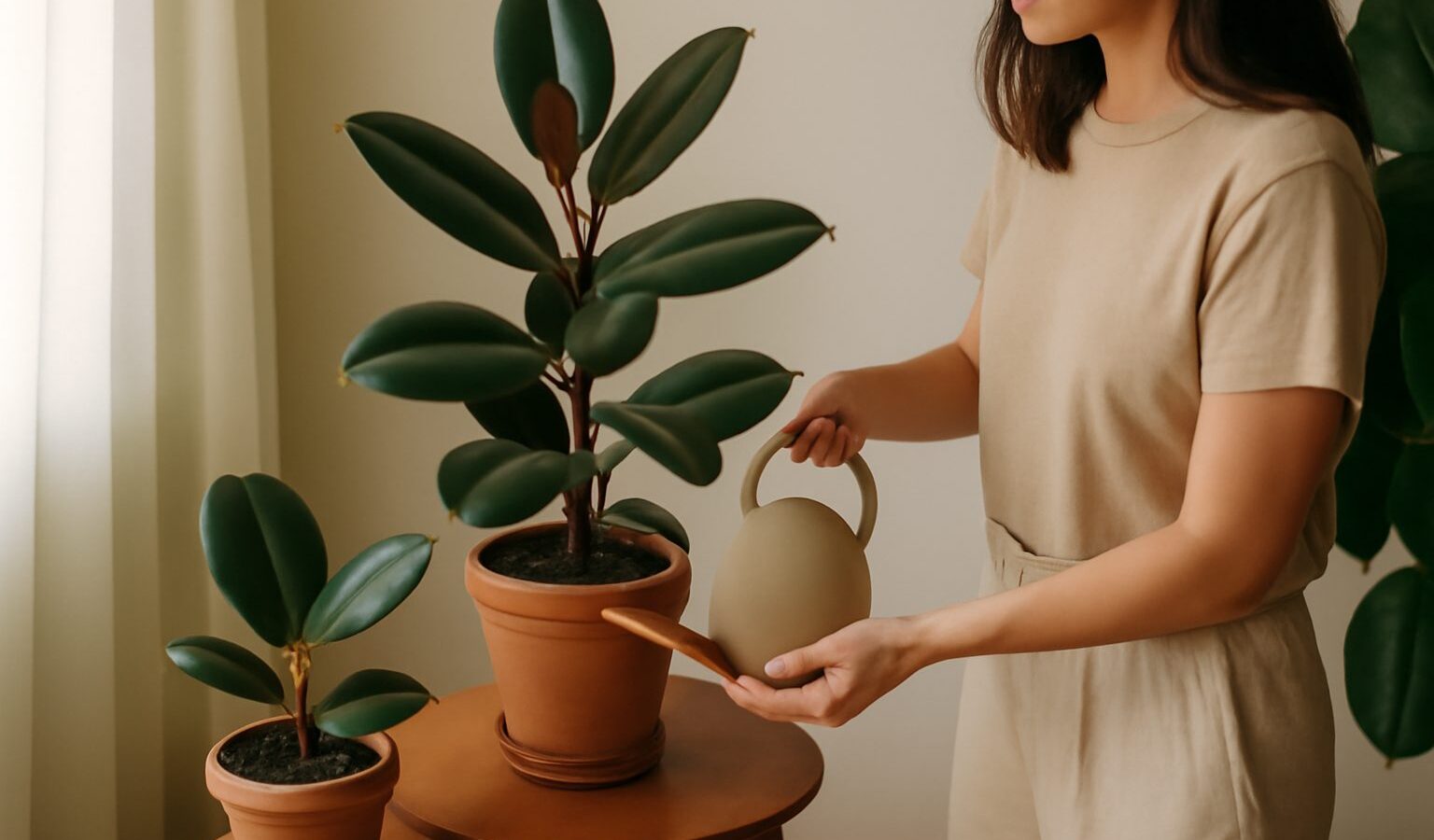
If you want a plant that reads as a proper little indoor tree without demanding a garden, the ficus family is hard to beat. The rubber plant (Ficus elastica), with its broad, glossy, almost polished leaves, is the best known, but the same clan includes the graceful weeping fig and several other handsome relatives. They grow happily in a pot on a bright HDB balcony or in a well-lit corner of the living room, and with a little attention they will stand tall for years. Good rubber plant care is not complicated once you understand what a ficus wants, and most of the common complaints come down to a few easy-to-fix habits.
These plants suit our climate well. They come from tropical and subtropical regions, so Singapore’s year-round warmth and humidity are close to home for them. That said, indoor life, aircon and small pots change the game a little, so let us walk through what actually keeps a ficus looking its best.
Getting the Light Right
Light is the first thing to get sorted, because a ficus that is unhappy with its light will tell you loudly by dropping leaves. Rubber plants and most ficus want bright, indirect light: a spot near a window with plenty of daylight, but shielded from the harshest direct afternoon sun, which can scorch those big leaves. The dark-leaved and variegated rubber plants are a touch different; the variegated ones, with cream or pink markings, need brighter light to keep their colour, while plain green types tolerate slightly dimmer corners.
The one thing ficus genuinely dislike is being moved around. They acclimatise to a particular spot and its light, and a sudden change, even shifting from the balcony indoors, can trigger a sulk of dropped leaves. Choose a good position and leave the plant there. If you must relocate it, do so gradually and expect a few leaves to fall while it adjusts. Turning the pot a quarter now and then helps it grow evenly towards the light rather than leaning.
Watering and Feeding in the Heat
Ficus like their soil to dry out a little between waterings. The reliable test is your finger: push it a couple of centimetres into the soil, and water only when that top layer feels dry. In our heat a plant on a sunny balcony may want watering a few times a week, while one in an air-conditioned room dries out more slowly and needs less. When you do water, water thoroughly until it runs from the drainage holes, then let the pot drain fully.
Overwatering is the more common killer. A pot left standing in a saucer of water will rot the roots, and that trapped saucer water also breeds Aedes mosquitoes, so always tip out any water that collects in the saucer rather than leaving it to sit. Emptying saucers and not letting containers hold standing water, at least weekly, is part of following NEA and NParks guidance on stopping mosquito breeding at home.
Aircon dries the air, and while ficus cope with average indoor humidity, a plant near a cold vent may show crispy leaf edges. An occasional mist or grouping plants together helps. Feed during the warmer, brighter growing stretches with a balanced liquid fertiliser diluted as the label directs, roughly once a month, and ease off if growth slows. Always follow the product label and keep fertiliser away from children and pets.
Pruning, Shaping and the Milky Sap
One of the joys of a rubber plant or ficus is that you can shape it. Left alone, a rubber plant tends to shoot straight up on a single stem; pinching out or snipping off the top growing tip encourages it to branch and grow bushier. Prune to control height or remove leggy, bare stems, ideally during active growth so the plant recovers quickly. A weeping fig responds well to light, regular trimming and can be kept as a neat, rounded little tree.
Here is the important safety part. When you cut or damage a ficus, it bleeds a milky white sap (latex). This sap can irritate the skin and is mildly toxic if eaten, so treat it with respect. Wear gloves when pruning, avoid getting the sap in your eyes or mouth, and wash your hands and any tools afterwards. Keep the plant, its leaves and any trimmings well away from young children and pets, who might chew them, as the sap can cause mouth and tummy irritation. It is a handsome ornamental plant, not something anyone should eat. Wipe up any drips promptly, since the latex is sticky and can stain.
While you are pruning, take the chance to wipe the big leaves. Rubber plant leaves are dust magnets, and a dusty leaf collects less light. A soft, damp cloth wiped gently over each leaf keeps them glossy and lets the plant breathe.
Common Problems and Quick Fixes
Most ficus troubles are the plant reacting to a change or a watering habit. The table below sorts the usual signs by likely cause and the fix, so you can respond calmly rather than assuming the worst.
| Sign | Likely cause | What to do |
|---|---|---|
| Sudden leaf drop | Moved, draught, or watering change | Settle it in one spot, keep watering steady |
| Yellowing lower leaves | Overwatering or soggy roots | Let soil dry more, tip out saucer water |
| Brown, crispy edges | Dry aircon air or underwatering | Mist, move from cold vents, check soil |
| Pale, leggy growth | Too little light | Move to a brighter, indirect spot |
| Sticky leaves or tiny pests | Scale or mealybugs | Wipe off by hand, use insecticidal soap |
For pests, always start with the gentlest approach: wipe insects off with a damp cloth, rinse the plant under a light shower of water, and only then reach for insecticidal soap or neem if needed. If you use any pesticide, follow the label exactly, keep it away from children, pets and food, and use it in a ventilated space.
Repot a ficus every couple of years, or when roots start circling the pot or poking from the drainage holes, moving up just one pot size at a time. On a balcony, keep the pot secured against wind so a top-heavy plant cannot topple, mind your neighbours below, and follow HDB, town council or MCST rules for shared spaces. Look after these basics and a rubber plant will reward you with slow, steady growth into a striking indoor tree.
Explore more
For more leafy companions that enjoy the same bright, indirect light, see our guides to growing hoyas in Singapore and growing air plants (Tillandsia). If you prefer a striking foliage statement, you may also like caring for alocasia and aroids.