

Living near an MRT station is usually a selling point. Living next to an MRT depot is a different matter. A depot is where trains are parked, cleaned, inspected and repaired, and it operates on a rhythm that is quite unlike a station. If you are looking at a home near an MRT depot, it pays to understand what actually happens behind those fences, and when.
This guide focuses on depot-specific issues: night-time activity, the type of noise trains make on depot tracks, lighting, traffic and the long-term plans that can change the area. It does not cover the general pros and cons of being near the rail network, which we explain in our guide to buying property near an MRT line.
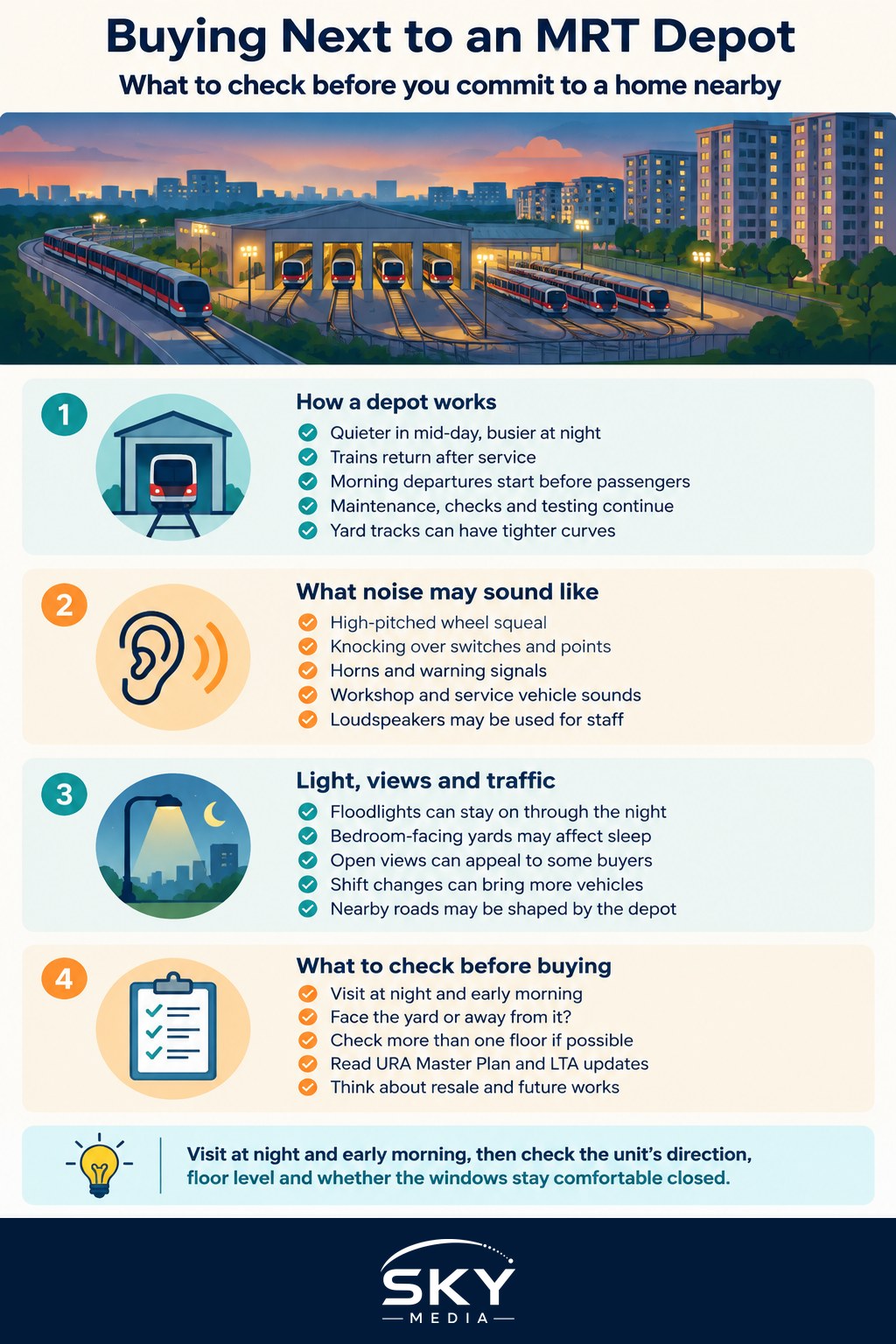
How a Depot Differs From a Station
A station is busiest during the day and quiet after the last train. A depot often does the opposite. Its quietest period can be the middle of the day, when most trains are out in service, and its busiest periods can be early morning and late at night.
Typical depot activity includes:
- Trains returning after service. At the end of the night, trains run back into the depot to be stabled, which means parked overnight.
- Trains leaving before service. In the early morning, trains are prepared and run out before the first passengers board.
- Maintenance and inspection. Routine checks, cleaning and repairs take place across the day and night.
- Track and engineering works. Some heavier work is scheduled during the hours when trains are not running.
- Testing. Trains may be moved, tested or shunted around the yard.
Depot tracks also tend to have tighter curves and more points, the switches that let trains change tracks. This can create sounds that are less common on the main line.
The Noise Profile of a Depot
Noise is the main concern for most buyers, and depot noise has a particular character.
- Wheel squeal. Trains moving slowly around tight curves can produce a high-pitched screech.
- Clunks over points. Wheels crossing switches can make a rhythmic knocking sound.
- Horns and warning signals. Safety signals and alerts may be used within the yard.
- Maintenance equipment. Workshops may use compressors, washing plants, power tools and service vehicles.
- Public announcements. Some yards use loudspeakers for staff.
Not every depot will have all of these, and operators and the Land Transport Authority (LTA) take steps to manage noise. Some depots, or parts of them, are covered or enclosed, which can reduce what reaches nearby homes. The only reliable way to judge is to listen for yourself at the times that matter, which for a depot means late evening, the early hours and early morning.
Station Proximity vs Depot Proximity
The table below compares what you can generally expect when living near a station compared with living next to a depot.
| Factor | Near an MRT station | Next to an MRT depot |
|---|---|---|
| Peak activity times | Morning and evening commuting hours | Late night and early morning, plus scheduled works |
| Typical noise | Crowds, buses, trains passing at speed | Wheel squeal, points, yard equipment, slow train movements |
| Lighting | Street and station lighting | Floodlighting across the yard, often through the night |
| Traffic | Buses, pick-ups and drop-offs | Staff shift changes and service vehicles |
| Convenience | Direct access to the network | Depends on whether a station is also nearby |
Lighting, Views and Vibration
Lighting. Depots need to be lit for safe work at night. If a bedroom faces the yard, floodlights could affect sleep. Look at the view from the unit, and if possible return in the evening to see how bright it gets. Our guide to living near an MRT station touches on light and sound from the rail network more generally, and many of the same coping strategies apply.
Views. A depot can give an open outlook with no block directly opposite, which some buyers like. Others find a view of rail yards and sheds unappealing. This is personal, but it can affect resale appeal.
Vibration. Slow-moving trains in a yard usually cause less vibration than fast trains on a main line, but it depends on the ground, the building and the distance. If you are sensitive to vibration, visit when trains are moving and pay attention to how it feels inside the unit.
Traffic and Access Around the Depot
Depots are workplaces, often with large staff numbers working in shifts. That can mean:
- staff arriving and leaving at unusual hours,
- service vehicles, lorries and occasionally heavy equipment using nearby roads,
- restricted access roads or road layouts shaped around the depot.
These effects are often modest, but they are worth checking during a weekday visit and around shift-change times if you can observe them.
Long-Term Operational and Planning Issues
This is where a depot really differs from other neighbours. Depots are long-term infrastructure, but they are not frozen in time.
- Expansion and upgrading. As rail lines are extended or new trains are introduced, depots may be enlarged, rebuilt or upgraded. That can mean years of construction next door.
- Consolidation. Depots are sometimes combined or reorganised, which can change the level of activity at a given site.
- Land use over or around depots. Planners may consider how depot land and its surroundings could be used in future.
To get a sense of the future, check the URA Master Plan, the Urban Redevelopment Authority’s long-term land use plan, and look for any LTA announcements about rail projects in the area. Plans can change, so treat what you find as a guide, not a guarantee. If there are signs of upcoming works, our guide to buying a home near a future construction site explains what to look out for.
Viewing Checklist for Homes Near a Depot
Before you commit, work through these checks:
- Visit at night and early morning. These are the times depot activity is most likely to affect you.
- Check which way the unit faces. A unit facing away from the yard may be far quieter than one facing it, even in the same block.
- Look at floor level. Sound and light can behave differently on lower and higher floors. Visit more than one level if you can.
- Close the windows and listen. Then open them. If you plan to rely on air-conditioning to keep noise out, factor in the running cost.
- Ask current residents. Neighbours will tell you what the listing will not.
- Search for past feedback. Look for news about works or complaints in the area.
- Check official plans. Review the URA Master Plan and LTA updates for the area.
- Think about resale. Consider how future buyers might view the depot, and whether the price already reflects it.
Finally, keep perspective. Many people live happily next to depots, especially if they are heavy sleepers, appreciate an open view or value nearby rail access. The aim is not to avoid depots altogether, but to buy with a full picture of what living next to one really means.
Further reading: Buying a Home Near an Electrical Substation or Telco Antenna in Singapore · What to Know Before Buying a Home Near a Carpark Entrance · What to Know Before Buying a Corner Terrace House