
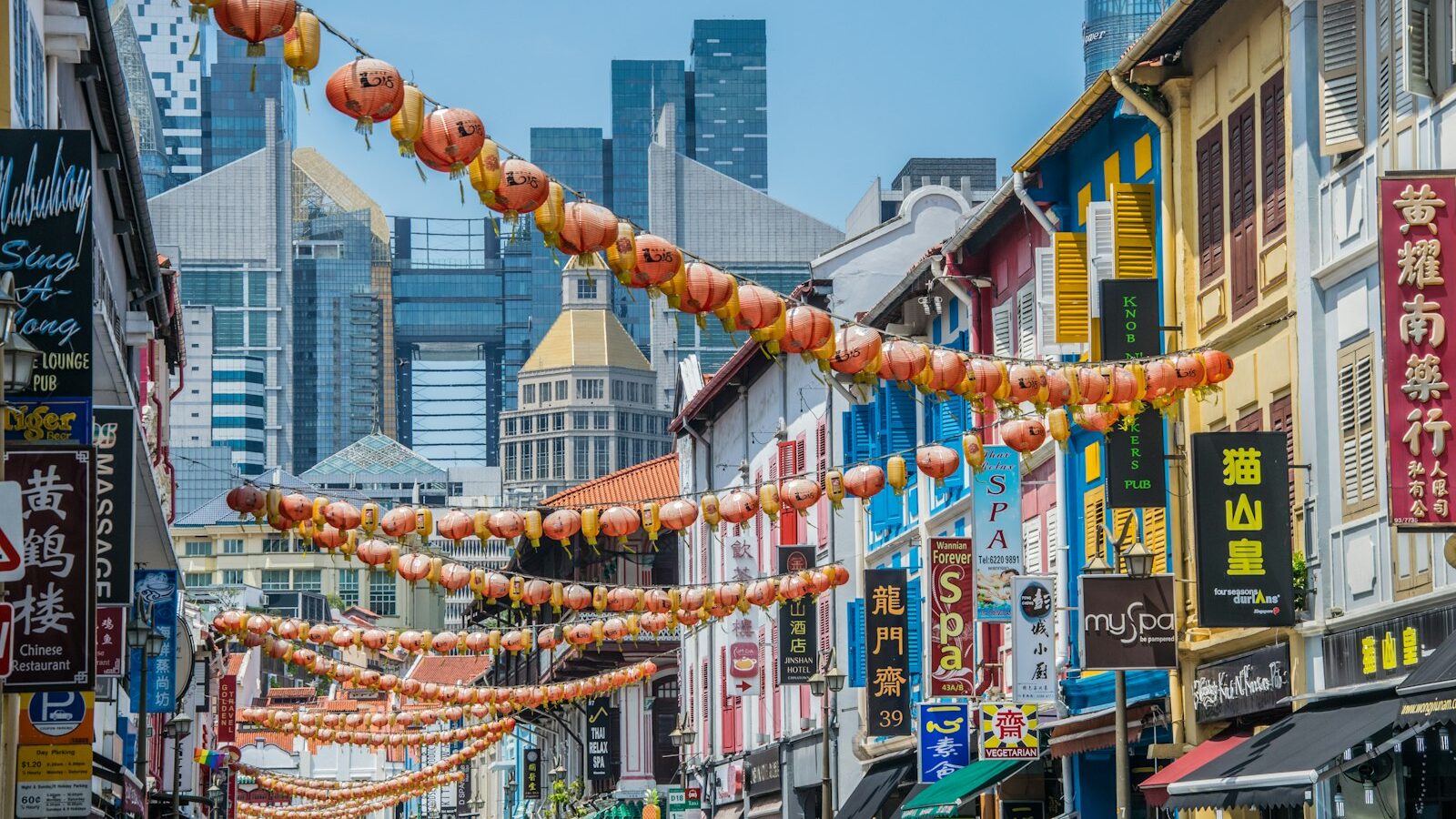
If you have just arrived from China or elsewhere, understanding the Chinese community in Singapore is one of the friendliest ways to find your feet. Chinese Singaporeans make up roughly three-quarters of the resident population, so you will hear Mandarin in hawker centres, see red lanterns at Lunar New Year, and find familiar foods everywhere. Yet Singapore’s Chinese world is not a single, uniform group. It is a layered community with deep local roots, its own dialects and customs, and a growing wave of newer arrivals. Knowing the landscape helps you settle in with confidence and respect.
Who makes up the Chinese community here
Broadly, you will meet two overlapping groups, and it helps to understand both.
Local Chinese Singaporeans are descendants of migrants who came generations ago, mostly from southern China, provinces such as Fujian and Guangdong. Their families have been here so long that they are thoroughly Singaporean: multilingual, shaped by a mix of Chinese, Malay, Indian and Western influences, and often more at home in English than in any Chinese language. Many identify strongly as Singaporean first.
Newer mainland immigrants, often called xin yimin (新移民, “new immigrants”), have arrived more recently to work, study, start businesses or raise families. If you have come from China in the past decade or two, you are part of this group. Mainland Chinese in Singapore bring Putonghua, mainland customs and a fresh perspective, and many put down roots as permanent residents or citizens.
The two groups share a heritage but not an identical culture. Recognising that difference, without exaggerating it, is the first step to fitting in gracefully.
Dialect groups and heritage
Local Chinese Singaporeans trace their ancestry to distinct dialect groups, each with its own language, food and traditions:
- Hokkien (from Fujian), the largest group
- Teochew, known for its porridge and cuisine
- Cantonese, associated with Guangdong and Hong Kong-style food
- Hakka, a widely dispersed group with its own strong identity
- Hainanese, famous locally for chicken rice and kopitiam culture
You may notice these labels on old buildings, temples and, especially, the clan associations described below.
Language: what people actually speak
One thing that surprises many newcomers is how English-centred daily life is. English is the working language of Singapore, used in schools, offices and government, so most Chinese Singaporeans move easily between English and Mandarin, often mixing in a little of both plus some Singlish, the local English creole.
A few cultural notes on language:
- Mandarin is widely spoken and understood, though the local accent, vocabulary and pace differ from mainland Putonghua.
- Dialects like Hokkien and Cantonese are still heard, particularly among older residents, though fewer young people speak them fluently.
- English is often the default with strangers, colleagues and in customer service. Do not assume everyone prefers Mandarin, even if they look Chinese.
If you are more comfortable in Mandarin, you will still manage well day to day. Picking up some English and a few Singlish phrases, though, opens far more doors socially and at work.
A gentle tip: let people lead on language. If a Chinese Singaporean colleague replies to your Mandarin in English, they may simply be more fluent that way. Follow their cue rather than insisting.
Community resources for newcomers
Singapore has a rich network of organisations, both traditional and modern, that can help you find community.
Clan associations and huay kuan
Clan associations, known as huay kuan (会馆), are among the oldest Chinese associations in Singapore. Historically they grouped people by dialect and ancestral hometown, offering lodging, jobs, schooling and a sense of belonging to early migrants. Many still run today, organising festivals, scholarships, cultural classes and networking events. Some now warmly welcome xin yimin, and a number of dedicated new-immigrant associations have formed to help mainland Chinese in Singapore settle in. These groups are a wonderful bridge between old and new.
Business and professional associations
If you are working or running a company, business chambers and professional Chinese associations host talks, trade events and social mixers. They are a practical way to build a network, understand local business culture and meet both established Singaporean entrepreneurs and fellow newcomers.
Everyday community spaces
Beyond formal bodies, community forms in ordinary places:
- Community centres and clubs run by the People’s Association offer low-cost courses, from cooking to language to fitness, and are open to residents of all backgrounds.
- Temples and churches anchor spiritual and social life. Chinese temples, together with many churches with Mandarin-speaking congregations, hold regular gatherings.
- WeChat groups and other online communities connect newcomers by neighbourhood, hobby, parenting stage or profession. They are often the fastest way to ask a practical question and get a quick, friendly answer.
Finding your place and integrating respectfully
Settling in is less about grand gestures and more about small, steady habits. A few ideas:
- Say yes to local invitations. A hawker centre meal or a weekend gathering teaches you more about local life than any guidebook.
- Learn the local rhythm. Observe how neighbours queue, share tables, and keep public spaces clean and quiet. Small courtesies matter here.
- Join something. A clan association event, a community centre class or a volunteering group gives you a natural, low-pressure way to meet people.
- Be curious, not comparative. Ask about local customs rather than measuring everything against how things are done back home.
- Mix beyond your first circle. It is comforting to start within familiar mainland Chinese networks, and that is completely fine. Over time, reaching out to Chinese Singaporeans and to Malay, Indian and other communities makes Singapore feel truly like home.
A quick newcomer checklist
- Learn a few English and Singlish phrases for daily life
- Follow one or two neighbourhood or interest-based groups online
- Visit a nearby community centre and browse its courses
- Attend one clan or new-immigrant association event this season
- Try foods from every dialect group and every community
Cultural notes worth knowing
A little cultural awareness goes a long way. Local Chinese identity is genuinely Singaporean, so treat Chinese Singaporeans as locals, not as an extension of the mainland. Multiculturalism is central to national life, so festivals like Lunar New Year, Hari Raya, Deepavali and Christmas are all celebrated openly. Racial and religious harmony is taken seriously, so keep conversation warm and respectful across communities. And remember that Singapore prizes order and consideration in shared spaces, from public transport to void decks.
Above all, approach the Chinese community in Singapore with openness. You share a heritage with many people around you, and you also have much to learn from how that heritage has grown its own distinctly Singaporean character. Give it time, show respect, and you will find community here sooner than you expect.
Explore more: Making friends in Singapore, Moving from China to Singapore, Mandarin in Singapore