

Living with a long-term condition such as diabetes or high blood pressure usually means regular doctor visits, tests and medication. Those costs add up over the years. The Chronic Disease Management Programme, often shortened to CDMP, is the Ministry of Health (MOH) scheme that lets you use MediSave to help pay for outpatient care of certain chronic conditions at approved clinics.
This guide focuses on how seniors and their families can use MediSave under the Chronic Disease Management Programme, how it fits with other subsidies, and what to check at the clinic counter. It is general information, not medical or financial advice. Scheme details, limits and the list of conditions are updated from time to time, so confirm the latest information with MOH, the CPF Board or your clinic.
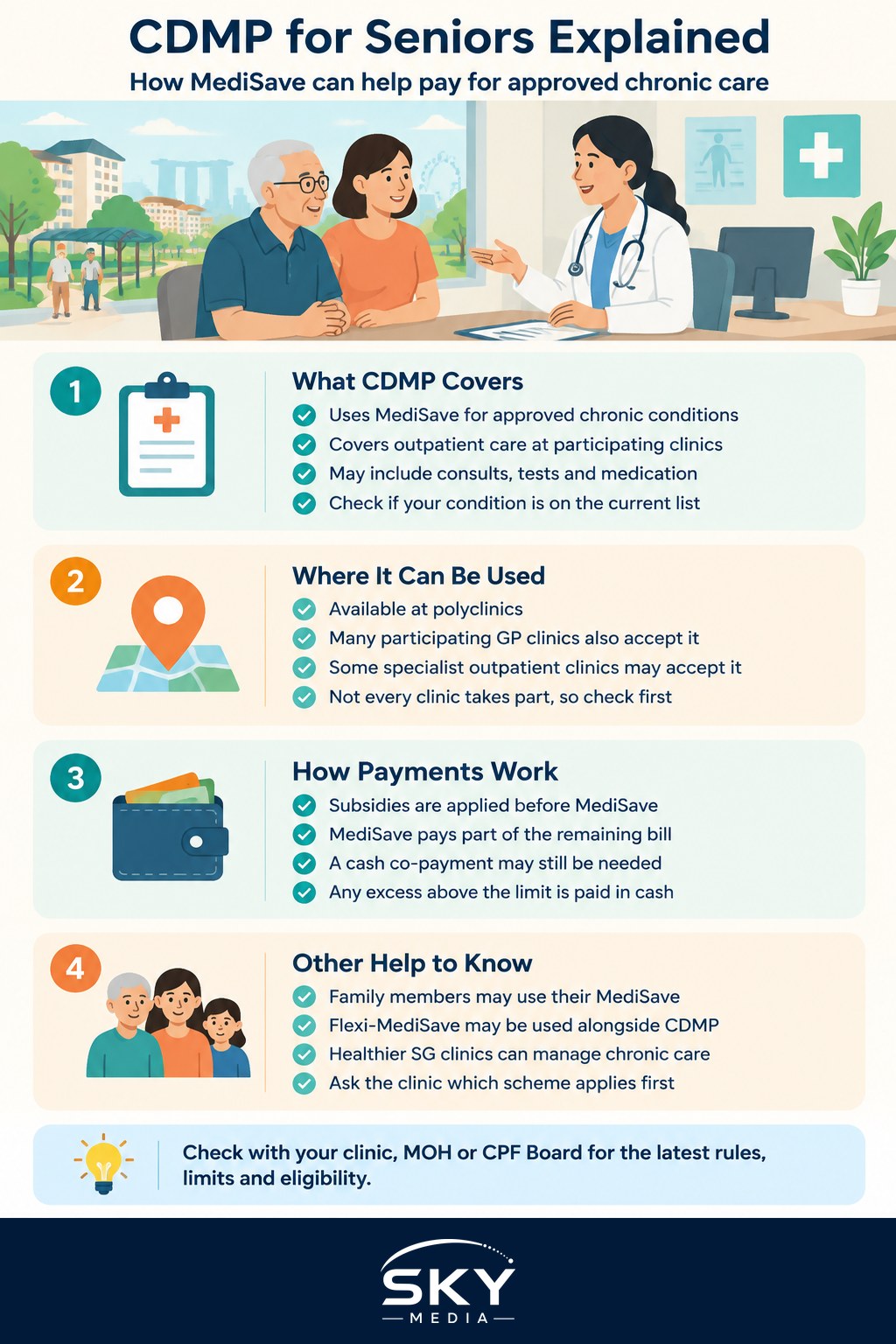
What the CDMP Covers
MediSave is the part of your Central Provident Fund (CPF) savings set aside for healthcare. In general it is used for hospital stays and certain approved treatments. The CDMP extends this so that MediSave can also be used for regular outpatient visits linked to approved chronic conditions.
The list of conditions has grown over the years. Examples commonly covered include:
- Diabetes and pre-diabetes
- High blood pressure (hypertension)
- Lipid disorders, such as high cholesterol
- Stroke
- Asthma and chronic obstructive pulmonary disease (COPD)
- Chronic kidney disease
- Osteoarthritis and osteoporosis
- Some mental health conditions, such as depression and anxiety
- Other conditions that MOH has added over time
Ask your doctor or check the MOH website to confirm whether your condition is on the current list.
Typical costs that may be claimable under the programme include consultations, investigations such as blood tests, and medication prescribed for the approved condition, as long as they are part of your chronic care at a participating clinic.
Where You Can Use It
The CDMP is available at polyclinics, many General Practitioner (GP) clinics and some specialist outpatient clinics in public hospitals. Not every clinic takes part, so check before your visit.
- Polyclinics are government-run primary care centres that handle many chronic patients and already offer subsidised rates.
- GP clinics that participate in the CDMP will usually display it or tell you when asked. Many also take part in the Community Health Assist Scheme (CHAS) and Healthier SG.
- Specialist outpatient clinics may also accept MediSave for chronic care, depending on the treatment.
If you have enrolled in Healthier SG, the national preventive care programme where you commit to one family doctor, your chronic conditions will usually be managed by that clinic. Healthier SG clinics are able to tap on subsidies and MediSave for your chronic care in line with MOH rules.
How MediSave Payment Works Under the CDMP
Here is how a typical visit is paid for, in simple terms:
- Subsidies are applied first. If you are eligible for CHAS, the Pioneer Generation or Merdeka Generation packages, or polyclinic subsidies, these reduce your bill before anything else.
- MediSave pays part of the remaining bill. There is an annual withdrawal limit for chronic outpatient care. MOH sets this limit, and a higher limit has applied for patients with more complex chronic conditions. Check the current amounts with MOH or CPF Board.
- You may pay a cash co-payment. A portion of the bill may need to be paid in cash or by other means. MOH has adjusted co-payment rules over the years, including exemptions or reductions for some groups, so ask your clinic what applies to you.
- Any remaining balance above the limit is paid in cash.
Using a family member’s MediSave
If your own MediSave balance is low, you may be able to use MediSave from immediate family members, such as a spouse, children or parents, subject to CPF rules. This is common for seniors whose children help with healthcare costs. The family member usually needs to give consent, and the clinic will guide you through the authorisation forms.
Flexi-MediSave for older seniors
Separate from the CDMP, Flexi-MediSave allows older Singaporeans to use a set amount of MediSave each year for outpatient treatment at polyclinics, participating GP clinics and specialist outpatient clinics, generally after subsidies. Eligibility is based on age, and the scheme may be used alongside the CDMP. Ask the clinic which scheme will be applied first so that you make the most of both.
Comparing the Main Ways to Pay for Chronic Care
| Support | What it does | Who it helps | What to check |
|---|---|---|---|
| CHAS | Subsidises visits at participating GP and dental clinics | Eligible Singapore Citizens, based on household criteria | Your CHAS card tier and current subsidy levels |
| CDMP (MediSave) | Lets MediSave pay for approved chronic outpatient care | Patients with listed chronic conditions | Annual withdrawal limit and co-payment rules |
| Flexi-MediSave | Extra MediSave use for general outpatient care | Older Singaporeans who meet the age criteria | Yearly limit and how it combines with the CDMP |
| Healthier SG | Enrolment with one family doctor for preventive and chronic care | Residents who sign up | Which clinic you enrol with and the care plan |
Practical Tips for Seniors and Caregivers
The programme works best when you are organised. These steps help:
- Bring your NRIC and CHAS card to every visit, so the right subsidies are applied automatically.
- Ask the clinic before treatment whether your visit will be claimed under the CDMP, and how much you will likely pay in cash.
- Keep track of your MediSave balance using the CPF website or app with Singpass. Check how much you have used for chronic care this year.
- Consolidate care with one clinic where possible. Seeing the same doctor helps with continuity, and it is easier to track claims.
- Review your medication list regularly with your doctor or pharmacist. Ask about subsidised alternatives if costs are high.
- Plan for longer prescriptions if your doctor agrees, to reduce visit frequency.
- Ask about patient education and follow-ups. Many clinics offer support on diet, exercise and monitoring, which can be part of chronic care.
For a broader look at living well with long-term conditions, read our guide to managing chronic conditions in older age. If pain is part of your daily life, coping with chronic pain offers practical strategies beyond medication.
Common Questions About the CDMP
Do I need to apply for the CDMP? Generally no separate application is needed. Your doctor diagnoses and records the condition, and the clinic processes the MediSave claim with your authorisation.
Can I use MediSave for any doctor visit? No. Under the CDMP it is for approved chronic conditions at participating clinics. Other visits may be covered by Flexi-MediSave or need to be paid by other means.
What if my MediSave runs low? Talk to your clinic and family. Options may include using a family member’s MediSave, applying for assistance such as MediFund through a medical social worker, or reviewing your treatment plan with your doctor.
Where can I find the latest rules? The MOH website, CPF Board and HealthHub have up-to-date information, and polyclinic or clinic staff can explain how the rules apply to you.
Which chronic conditions are covered under the CDMP? Commonly covered examples include diabetes, high blood pressure, high cholesterol, stroke, asthma, COPD, chronic kidney disease, osteoarthritis and some mental health conditions. MOH has added conditions over time, so ask your doctor or check the MOH website for the current list.
Can my children’s MediSave pay for my chronic care? Often yes, subject to CPF rules. If your own balance is low, immediate family such as a spouse, children or parents may be able to use their MediSave for your care. The family member usually has to give consent, and the clinic guides you through the forms.
What is the difference between the CDMP and Flexi-MediSave? The CDMP covers approved chronic conditions at participating clinics, while Flexi-MediSave lets older Singaporeans use a set yearly amount of MediSave for outpatient treatment generally after subsidies. They can be used together, so ask the clinic which one applies first.
Does Healthier SG replace the CDMP? Not exactly. Healthier SG is a preventive care programme where you enrol with one family doctor, and that clinic usually manages your chronic conditions. Such clinics can tap subsidies and MediSave in line with MOH rules, so the schemes work alongside each other.
How can I keep track of how much MediSave I have used this year? Log in to the CPF website or app with Singpass to see your MediSave balance and how much you have used for chronic care. Ask the clinic before treatment how much you will likely pay in cash, and bring your NRIC and CHAS card to every visit.
The Chronic Disease Management Programme makes ongoing care more affordable for many seniors. Used alongside CHAS, Flexi-MediSave and Healthier SG, it helps you keep chronic conditions under control without carrying the full cost in cash.
Official sources: HealthHub
Further reading: The Medication Assistance Fund (MAF) Explained for Seniors · Dialysis for Seniors in Singapore: Options and Support · Home Oxygen Therapy for Seniors: Concentrators and Safety