
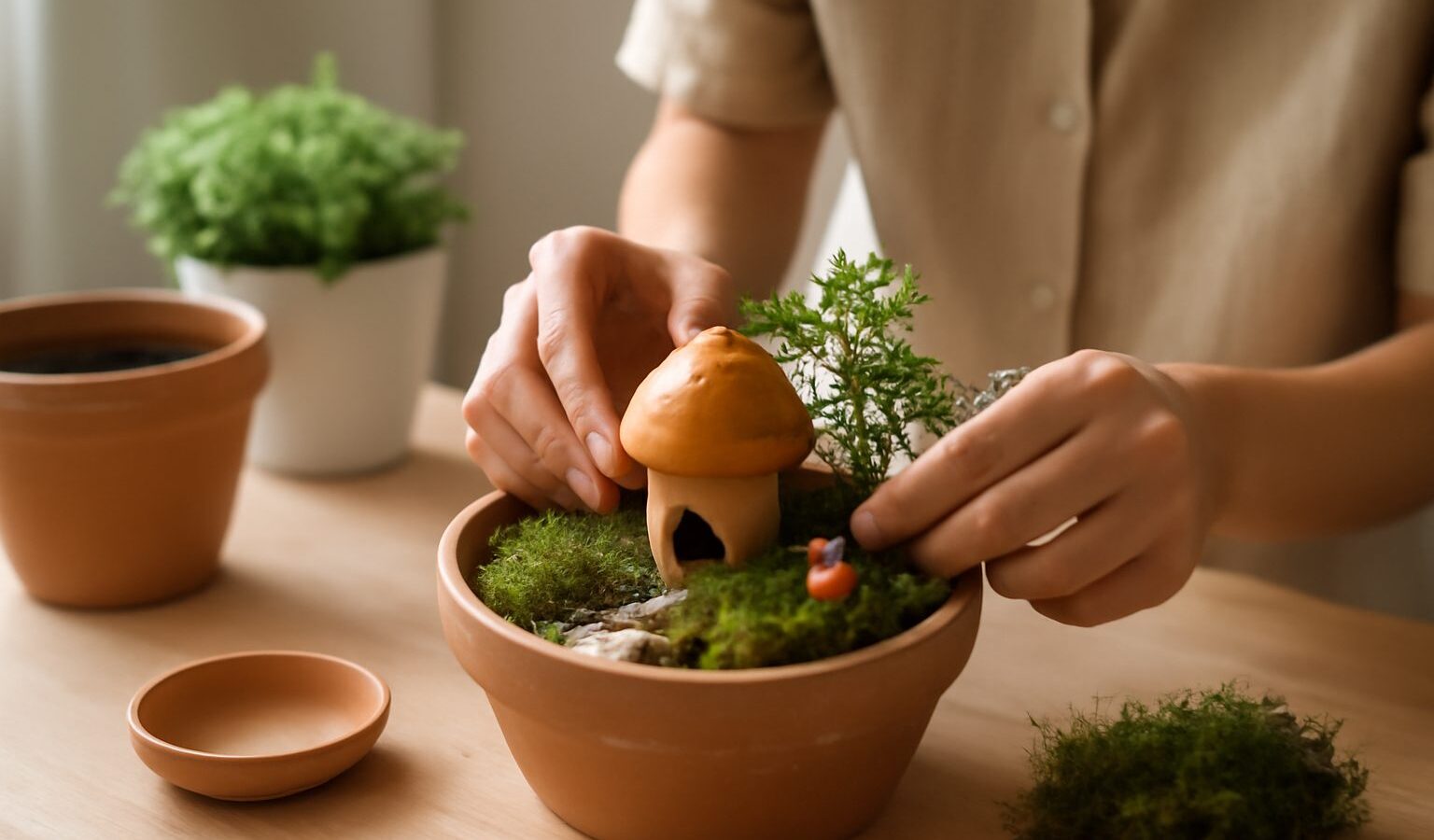
Creating a fairy garden in Singapore is a delightful way to pack a whole tiny world into a single pot, tray or shallow bowl, and it is perfect for our small-space homes. A fairy garden, also called a miniature garden, is a little planted landscape decorated with small figures, tiny paths, miniature furniture and other whimsical touches. It fits on a balcony ledge, a windowsill or a sideboard, costs very little to start, and turns out to be one of the most fun projects to do with children. Best of all, our warm climate means the small tropical plants that suit it grow happily all year round.
Choosing your container and plants
Almost anything shallow and wide works as a base. A broad ceramic bowl, a wooden tray lined with plastic, an old drawer, or a low pot all give you a good canvas. What matters most is drainage, because a waterlogged mini garden will quickly rot in our humidity. Make sure there is a drainage hole, or add a generous layer of light clay balls at the bottom so excess water has somewhere to go before it reaches the roots.
For plants, small and slow-growing is the goal. You want greenery that stays in scale with your tiny figures rather than swamping them within weeks. Good choices for Singapore include:
- Small succulents for a sunny, low-water look
- Baby’s tears and moss for soft, lawn-like ground cover
- Miniature ferns for a shady, woodland feel
- Small-leaved creeping plants to trail over pebbles
- A tiny herb like thyme if you want fragrance
Group plants with similar needs together. Do not mix thirsty ferns with drought-loving succulents in the same tray, because you cannot water them well at the same time. If you are drawn to the low-water route, our guide to caring for succulents and cacti in Singapore will help you keep them happy in a small container.
Building the little world
Once your plants are in, the fun really begins. Lay a winding path of fine gravel or sand, add a few smooth pebbles as stepping stones or boulders, and set out your miniature pieces: a bench, a little door tucked against a stone, a bridge over a “stream” of blue glass beads. Vary the height by mounding the soil at the back so the scene has depth, and leave some open space so it does not look cluttered.
This is a wonderful activity to share with little ones, who love arranging the tiny details and inventing stories about who lives there. Our guide to gardening with kids in Singapore has more ideas for turning plant care into play. One safety note worth keeping in mind: some small ornamental plants are mildly toxic if chewed, and small decorative pieces can be a choking hazard, so supervise young children and place the finished garden where toddlers cannot help themselves to a handful. If in doubt about your plant list, cross-check our child-safe plants for family homes guide.
Keeping it looking good in the tropics
The main upkeep task in our climate is stopping plants from outgrowing the scene. Pinch back and trim regularly so everything stays miniature, and replace anything that gets too big with a smaller cutting. In the heat, check moisture often, but resist the urge to overwater, because a shallow container with poor airflow can stay soggy and invite mould. During a hazy or very wet spell, move a delicate arrangement to a sheltered spot.
Refresh the decorations whenever you fancy. Swapping in seasonal touches or rearranging the paths keeps the garden feeling new, and it is a low-pressure way to keep enjoying the hobby. Choose weatherproof ornaments if the garden lives outdoors, as our sun and rain will fade and warp cheaper materials over time.
Position matters more than most beginners expect. A fairy garden built with shade-loving ferns and moss will sulk on a blazing west-facing balcony, while a succulent-based one will stretch and lose colour in a dim corner. Match the spot to the plants you chose, and if a plant clearly is not thriving after a few weeks, swap it out rather than fighting the location. Feeding is barely necessary: a very dilute, occasional feed during active growth is plenty, since you actually want these plants to stay small. Watch too for pests sneaking in, as snails, ants and mealybugs all love a damp, sheltered miniature landscape, and deal with them early before they spread through the tray.
A fairy garden asks for very little space and rewards you with a charming, ever-changing scene you can tend for years. Start with one small container, a few tiny plants, and a handful of decorations, then let your imagination and Singapore’s easy growing conditions do the rest.